HOMEBlogHow to Choose the Right Inkjet Canvas for Aqueous, Solvent, Latex and UV Printing
Blog
How to Choose the Right Inkjet Canvas for Aqueous, Solvent, Latex and UV Printing
Choosing the right inkjet canvas is not simply a matter of comparing GSM, fabric composition or price. For professional large-format printing, one of the most important questions is much more basic: what printer and ink technology will actually be used?
A canvas that performs extremely well with an aqueous pigment printer may behave differently on an eco-solvent, latex, UV or UVgel system. Each printing technology interacts with the printable surface in a different way, so ink receptivity, drying, curing, adhesion, heat exposure, surface gloss and flexibility can all influence the final result.
For professional canvas printers, photo labs, wall-art manufacturers, fine-art reproduction companies and distributors, the most reliable approach is therefore to match the canvas construction and coating to the complete production workflow—not simply to a target weight such as 340 gsm, 380 gsm or 400 gsm.
This guide focuses specifically on choosing printable canvas for aqueous pigment, solvent and eco-solvent, latex, UV and UVgel printing. For a broader introduction to canvas materials, coatings, GSM, texture, quality control and purchasing considerations, read our complete guide to printable canvas .
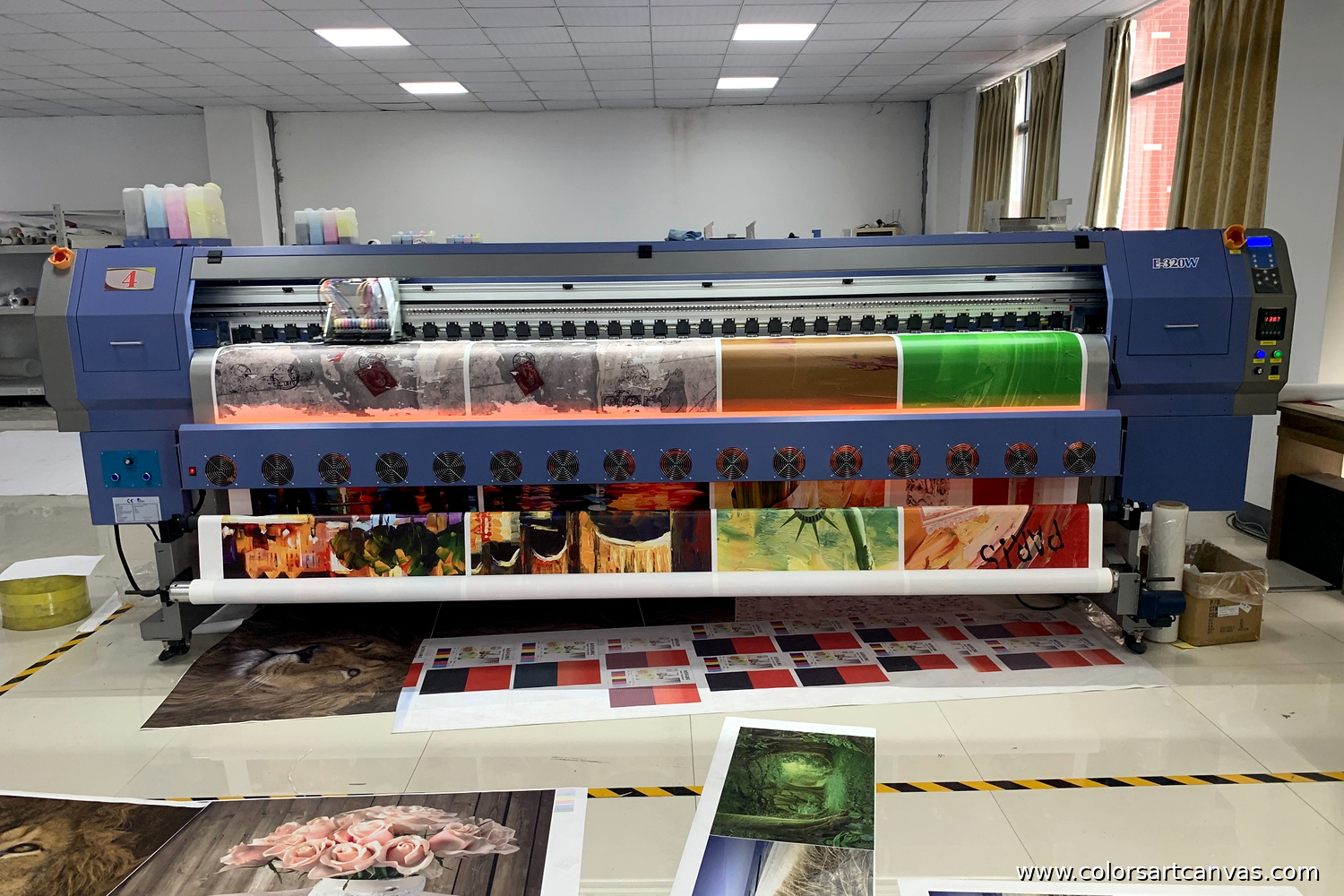
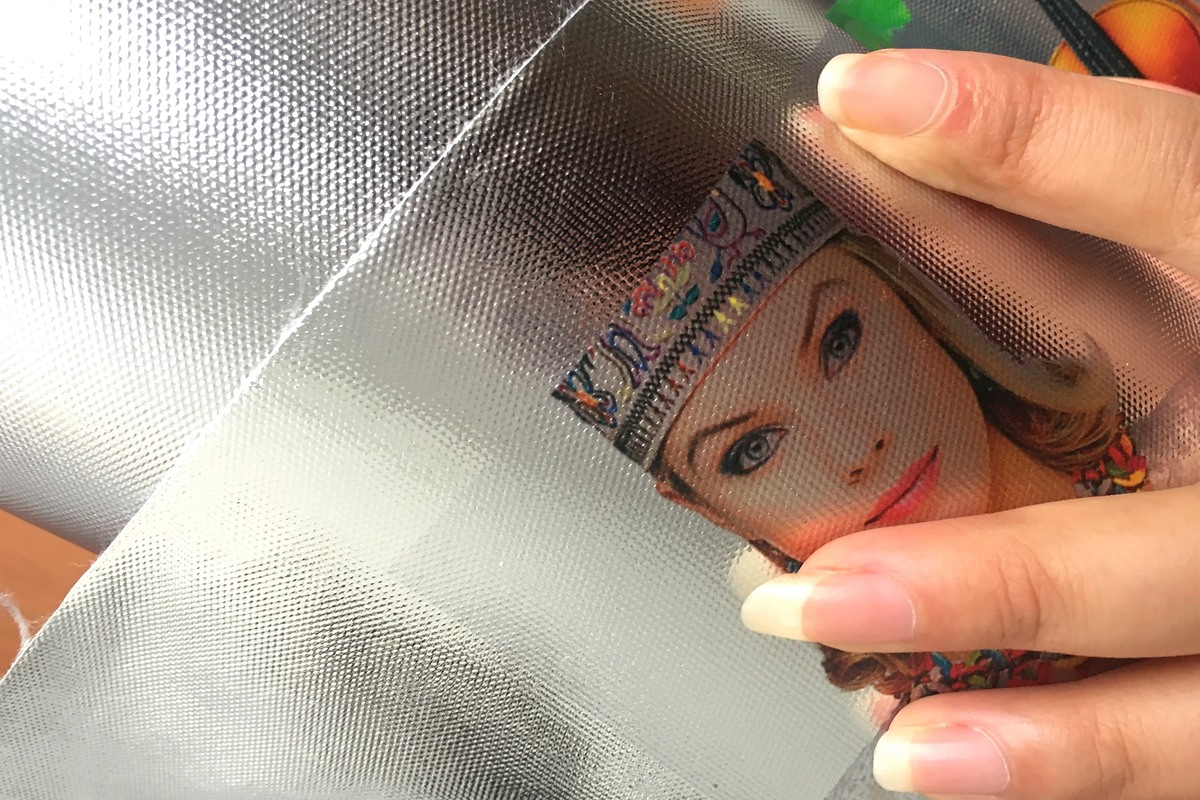
Real printer testing helps evaluate color reproduction, coating response and media compatibility before bulk production.
1. Start with the Printer, Not Just the Canvas Specification
The term inkjet canvas covers a large family of coated textile media. Two products may both be described as “380 gsm polyester canvas,” yet their printing performance can be noticeably different because the yarn, weave, base treatment, coating formulation, coating weight and surface finish are not necessarily the same.
This is why a professional canvas supplier should normally ask about the printer before recommending a product. At minimum, the following information is useful:
Printer manufacturer
Exact printer model
Ink technology
Current canvas specification, if available
Preferred cotton, polyester or poly-cotton construction
Matte, semi-matte or glossy finish
Required texture
Roll width and length
2-inch or 3-inch core
Final application
Whether the printed canvas will be stretched
For example, asking for a “380 gsm matte canvas” still leaves many technical questions unanswered. Saying that the media will be used on an HP Latex printer for stretched wall-art production provides far more useful information.
If you are still comparing different materials, finishes and printer-compatible products, browse our professional inkjet printable canvas rolls for an overview of available canvas constructions and applications.
2. Aqueous Pigment Canvas: Ink Receptivity Is Critical
Aqueous pigment printing is widely used for photographic output, fine-art reproduction and indoor canvas applications. In this system, the printable coating plays a major role in controlling how the ink is received by the media.
If ink reception is not properly controlled, a print may suffer from weak color, insufficient black density, poor fine detail, excessive ink spread, slow drying or inconsistent surface appearance.
What Should You Evaluate on Aqueous Pigment Canvas?
Color density: Are saturated colors sufficiently rich?
Black density: Do dark areas appear deep or washed out?
Fine detail: Are small lines and image details well defined?
Gradient reproduction: Are transitions smooth?
Neutral grays: Are there unwanted color casts?
Ink control: Is there visible bleeding or excessive dot spread?
Drying: Can the media move efficiently into finishing?
Surface appearance: Does the finished print match the required finish?
Professional media specifications provide a useful example of why GSM alone is not enough. Epson's Exhibition Canvas Natural Matte is a specially coated cotton-polyester blend developed for professional photographic and fine-art printing. Epson highlights characteristics such as DMax, color gamut, deep blacks and tonal gradations rather than describing the media only by weight.
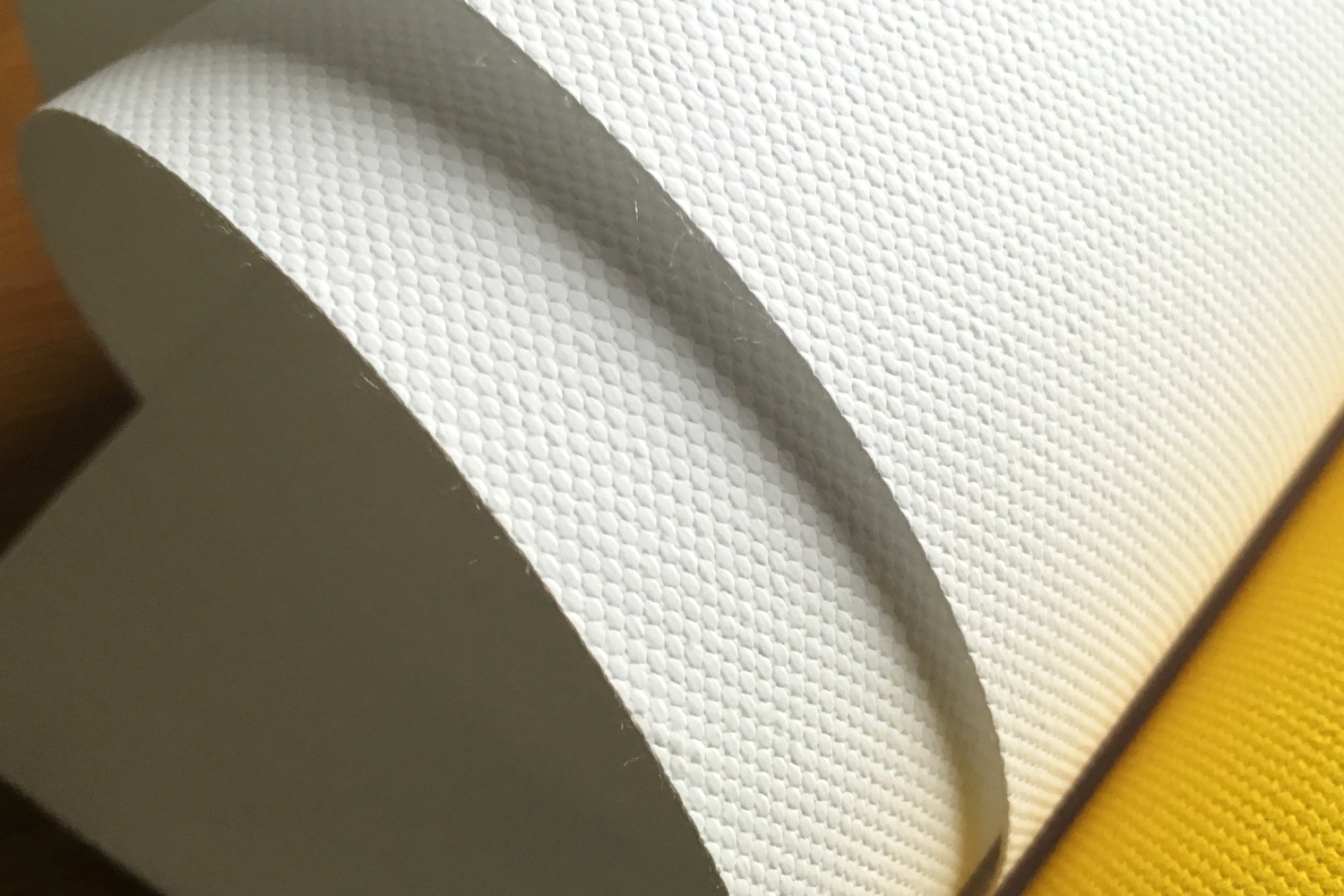
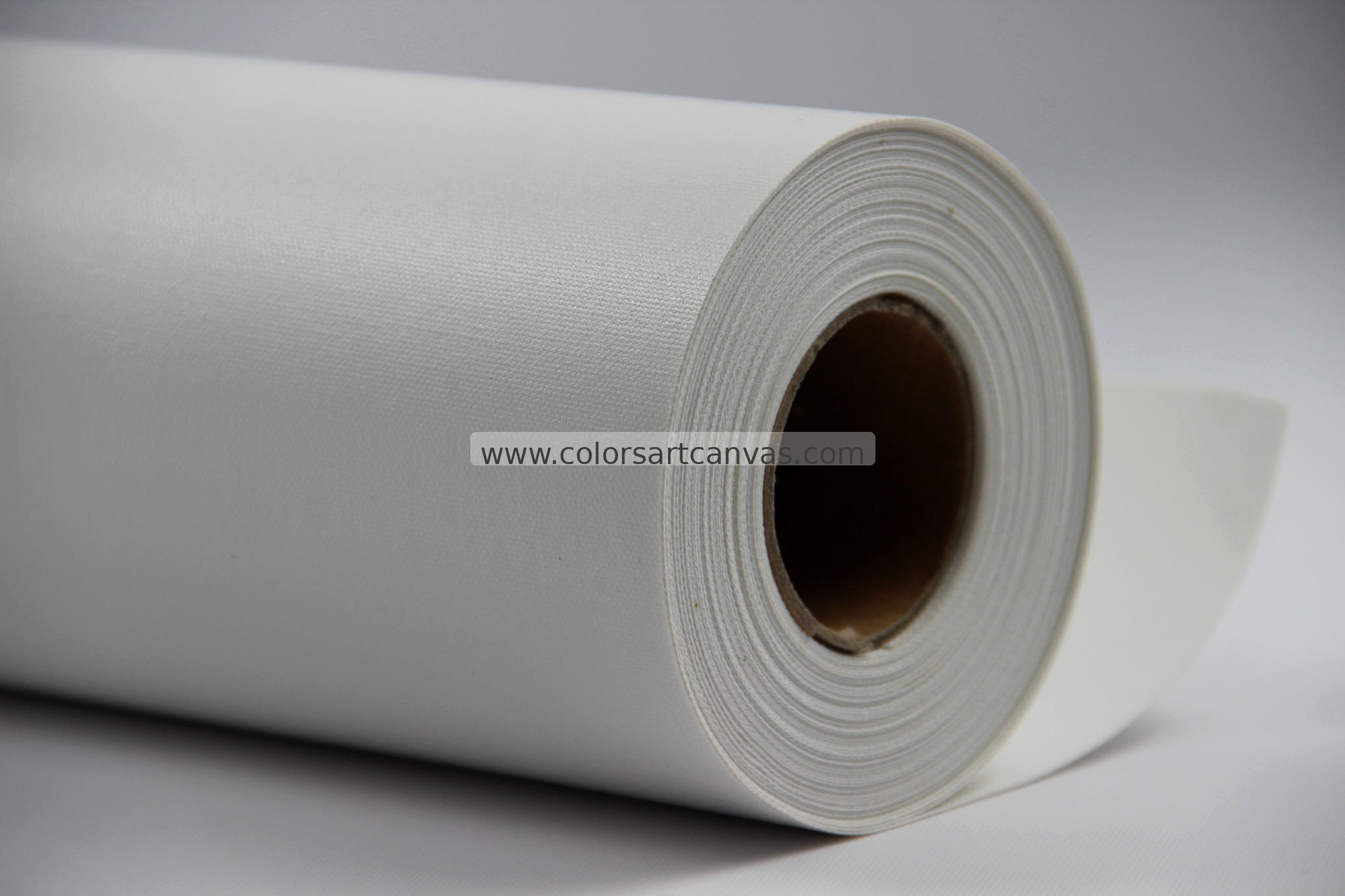
Close-up of the coated printable canvas surface showing its fine texture for aqueous pigment ink printing.
Matte vs Glossy Aqueous Canvas
Surface finish also changes how a print is perceived. Matte canvas is often selected for fine-art and low-reflection applications, while satin or glossy surfaces can increase the perception of contrast and color richness.
However, “matte” and “glossy” are not absolute descriptions. Two suppliers may both call a product matte while the actual level of surface reflection is noticeably different.
When replacing an existing canvas, it is therefore useful to compare the new sample directly with the customer's current media under the same lighting conditions.
3. Solvent and Eco-Solvent Canvas: Look Beyond Initial Color
Solvent and eco-solvent printing remains widely used for commercial graphics, decorative printing and roll-to-roll production.
Mimaki identifies its JV200 Series as a professional roll-to-roll eco-solvent inkjet printer, illustrating the type of production environment in which solvent-compatible canvas may be used.
With eco-solvent canvas, a print that looks attractive immediately after printing is not necessarily enough. Professional production also requires attention to drying, adhesion, handling and finishing.
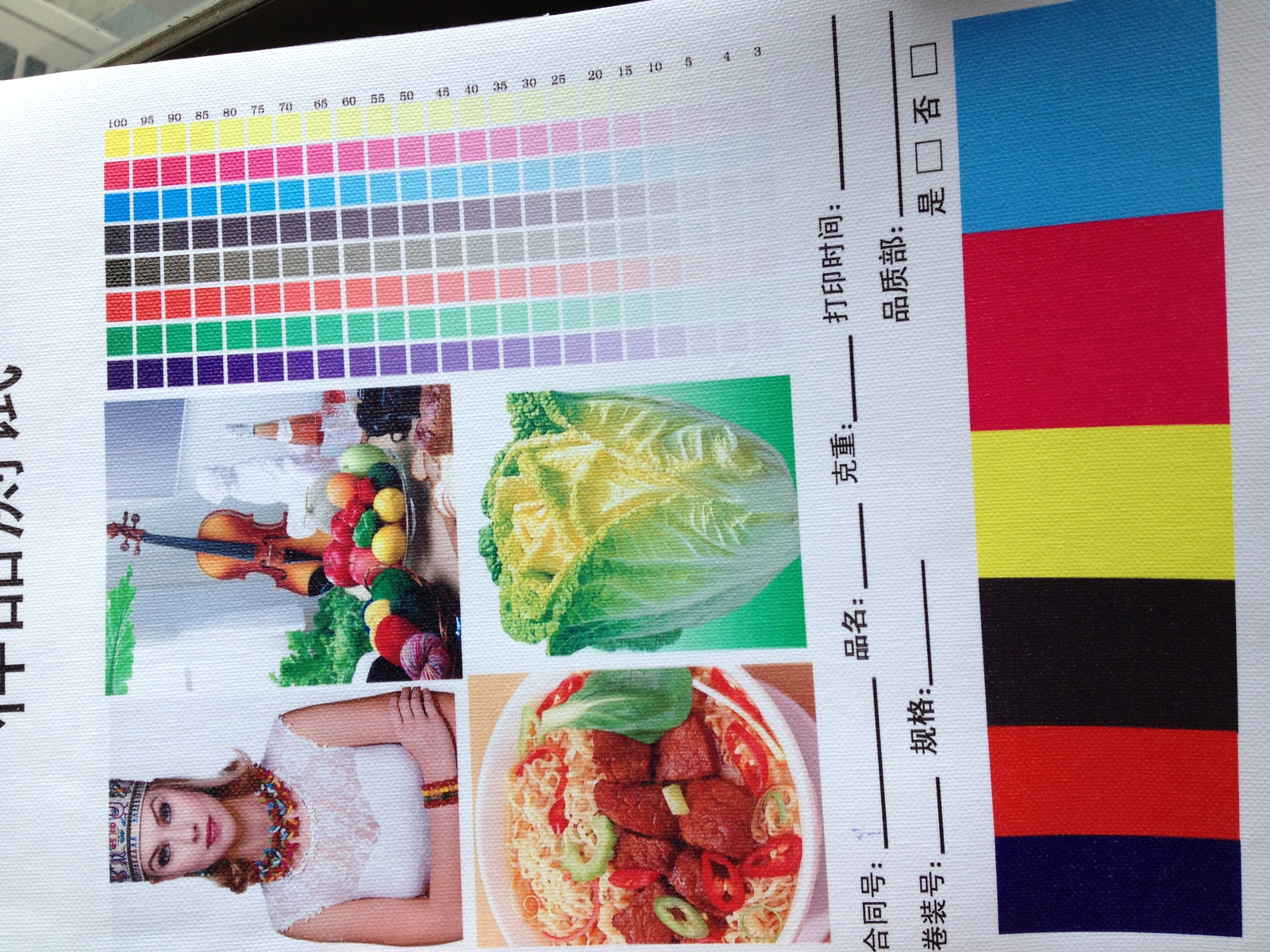
Color reproduction test on eco-solvent printable canvas showing image detail, tonal gradients and saturated colors.
Why Stretching Changes the Test
Many canvas prints are not used flat. They are stretched over wooden stretcher frames. This introduces mechanical stress at the edges and particularly at the corners.
A print may appear perfect while flat but show surface damage after stretching. Possible problems include micro-cracking, visible whitening, loss of ink at sharp bends or marks caused during handling.
If gallery-wrap production is the final application, the approval process should therefore include a real stretching test rather than only a flat-print inspection.
For professional gallery-wrap production, you can also review our wooden canvas stretcher bars , including standard, gallery-wrap, heavy-duty and custom profiles.
Customers requiring ready-assembled framing solutions can also explore our wooden canvas frames for stretched canvas and wall-art production.
4. Latex Canvas: Heat, Curing, Surface and Finishing Must Work Together
Latex printing is widely used in wall décor, photographic output and other large-format applications. Its workflow can allow printed material to move efficiently into finishing, but this does not mean every canvas behaves identically on a latex printer.
HP's official guide for printing canvas on the Latex 700 and 800 printer series covers substrate preparation, the printing process, post-print finishing and installation. This is a useful reminder that media performance should be evaluated throughout the complete workflow.
A particularly important issue is the relationship between print quality and surface durability. A formulation can produce very attractive color while still failing the customer's handling or scratch-resistance requirements.
For high-volume wall-art manufacturers, the question is therefore not simply: “Can this canvas print on my latex machine?”
A better question is: “Can this canvas repeatedly print, cure, handle and stretch correctly under my actual production conditions?”
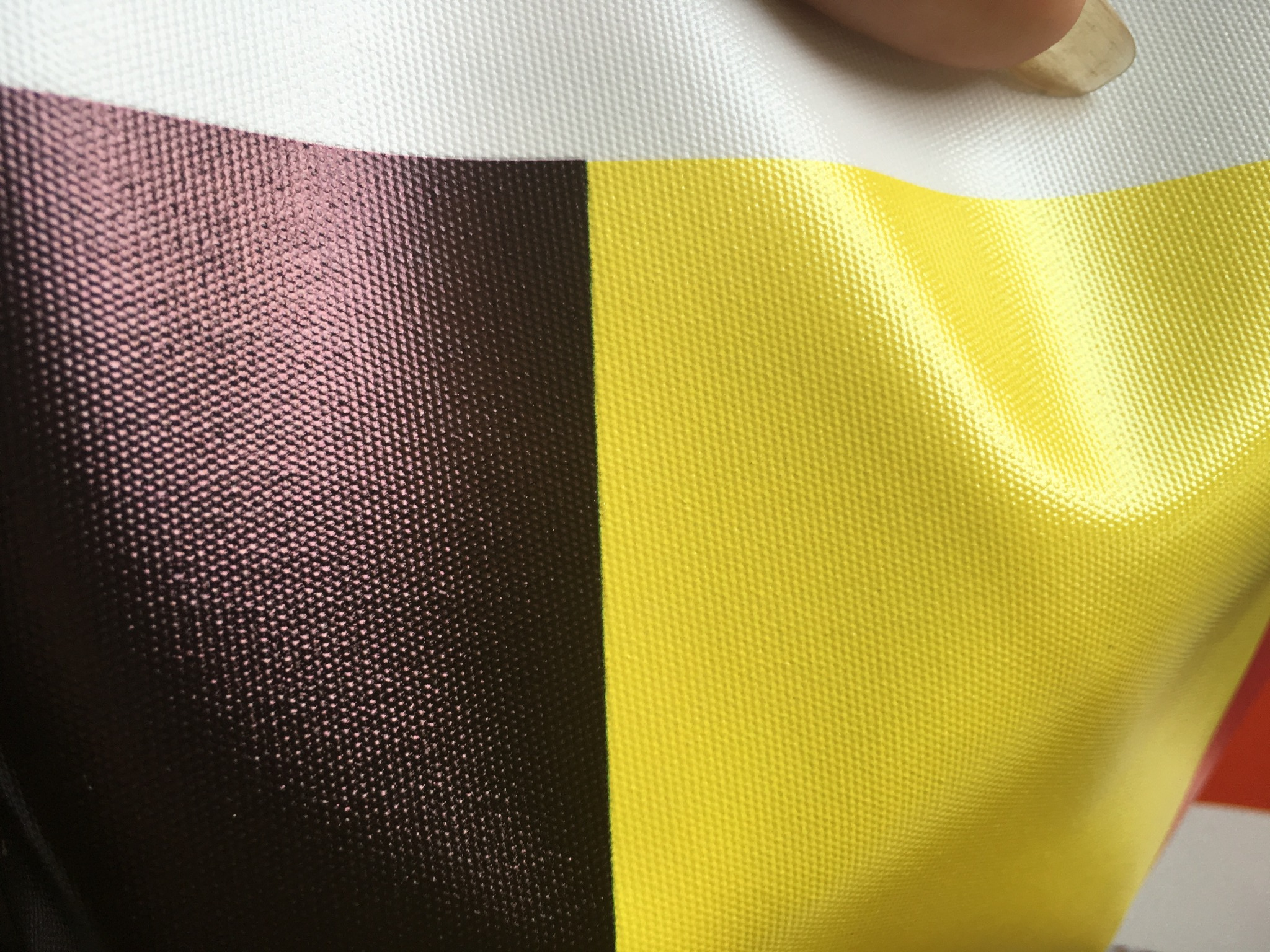
Latex canvas evaluation should include both image quality and the condition of the printed surface after curing and handling.
5. UV and UVgel Canvas: Adhesion and Flexibility Become Even More Important
UV printing differs fundamentally from aqueous and solvent workflows because UV-curable ink is cured using ultraviolet energy. This changes the relationship between the ink and media surface.
Canon's Colorado M-Series is a roll-to-roll printer built around Canon's UVgel technology. For canvas buyers, this type of printing system makes surface compatibility, adhesion and downstream flexibility important considerations.
The printable coating is the interface between the ink and the textile substrate. Its formulation influences how ink behaves on the surface and therefore affects characteristics such as color density, image detail, drying, adhesion, gloss and durability.
This is one reason why visually similar raw fabrics can produce very different results after coating. The fabric underneath matters, but the printable surface is equally important.
When comparing two canvas samples, professional buyers should therefore avoid assuming that similar material composition and GSM mean equivalent printing performance.
For a closer look at the manufacturing side of this process, see Inside Colors Art’s Printable Canvas Coating Production , which shows the relationship between production, surface evaluation, converting and finished-roll preparation.
Fabric construction, weave and coating formulation work together to create the printable canvas surface.
8. Why Higher GSM Does Not Automatically Mean Better Printable Canvas
GSM is one of the easiest specifications to compare, which is why it often receives too much attention. A 420 gsm canvas sounds heavier and may appear more premium than a 340 gsm canvas, but weight alone does not determine print quality.
A lighter product with a stable fabric structure and well-developed coating may outperform a heavier product on a specific printer.
Buyers should evaluate:
Fabric construction
Yarn quality
Weave stability
Coating formulation
Coating uniformity
Surface texture
Whiteness
Ink compatibility
Stretching performance
Professional buyers should therefore evaluate the complete media construction rather than choosing a canvas only because it has a higher GSM.
9. Cotton vs Polyester vs Poly-Cotton: Which Is Better?
There is no universal winner because the correct choice depends on the customer's visual preference, printing workflow, handling requirements and target market.
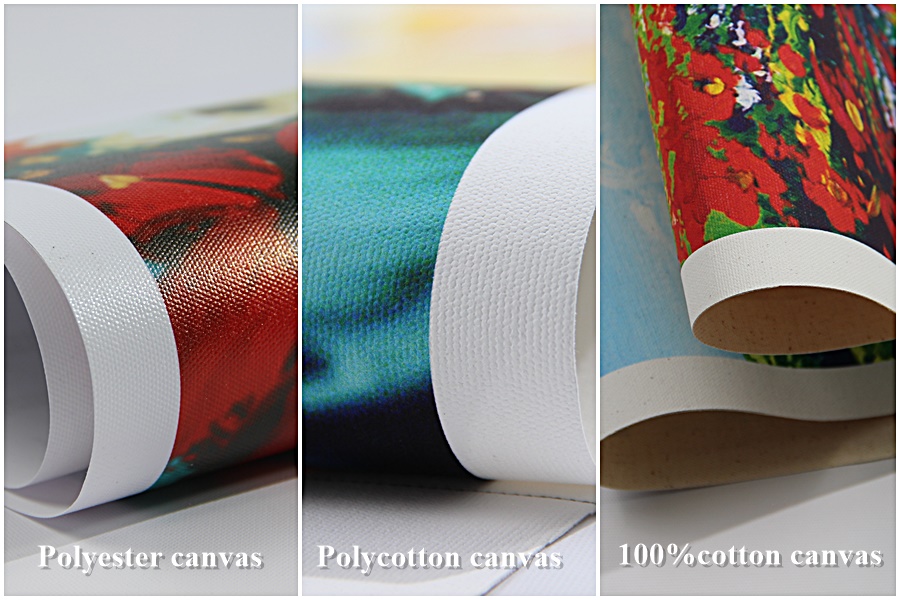
100% Cotton Canvas
Cotton is often selected for its traditional textile character and natural appearance. It is particularly familiar in fine-art and photographic canvas applications.
100% Polyester Canvas
Polyester can offer useful dimensional consistency and predictable manufacturing characteristics. Modern polyester constructions can also be engineered with textures that resemble more traditional cotton or poly-cotton fabrics.
Poly-Cotton Canvas
Poly-cotton combines characteristics of cotton and polyester and is widely used in professional canvas printing.
The important point is that fiber composition does not replace coating compatibility. A premium cotton base with an unsuitable printable surface can still perform poorly on a particular printer.
For a broader explanation of canvas materials, coating systems, surface finishes and applications, see our complete Inkjet Canvas Guide .
Base material affects texture and handling, but coating and printer compatibility remain essential to final printing performance.
10. ICC Profiles, Media Presets and Color Management
Canvas quality is only one part of a controlled printing workflow. Printer configuration, RIP settings, ink limits and color management can also change the result.
The International Color Consortium maintains the ICC profile specification used throughout professional color-management workflows. The current ICC.1:2022 specification corresponds to profile version 4.4.
When evaluating a new canvas, using a suitable media preset or ICC profile can make the test more meaningful. If the printer is configured for a very different substrate, poor results may reflect the configuration rather than the full potential of the canvas.
However, an ICC profile cannot correct fundamental physical incompatibility. If adhesion, coating response, curing or flexibility is poor, profiling alone will not solve the problem.
11. Troubleshooting Common Printable Canvas Problems
When a canvas does not perform as expected, the visible problem can provide clues about what should be checked. The table below is a practical starting point rather than a substitute for printer-specific diagnosis.
Problem
Possible Factors
What to Check
Colors look weak
Coating, ink load or media profile
Profile, ink limits and coating compatibility
Black is not deep enough
Ink reception or color configuration
DMax, profile, ink load and media preset
Fine details look soft
Excessive ink spread or unsuitable settings
Coating response, resolution and ink limits
Ink scratches easily
Ink/coating adhesion or insufficient curing
Ink system, coating, curing and handling
Surface becomes too glossy
Ink/coating interaction or high ink load
Finish, ink density and curing conditions
Cracking after stretching
Coating or cured ink layer lacks flexibility
Corner test, stretch test and ink compatibility
Slow drying
Media/ink mismatch or excessive ink
Coating, ink load and printer settings
Uneven appearance across the roll
Fabric or coating inconsistency
Cross-web uniformity and batch consistency
White points visible in dark areas
Texture, ink coverage or coating behavior
Viewing angle, ink load, texture and surface coating
12. Why Sample Testing Should Come Before a Bulk Order
A technical data sheet is useful, but it cannot reproduce every customer's production environment. Printer generation, ink configuration, RIP software, media preset, temperature, humidity, ink load, operator settings and finishing method can all influence performance.
This is why sample testing remains one of the most reliable steps before approving a new canvas for volume production.
A Good Canvas Test File Should Include:
Solid black
Dark shadow areas
Highly saturated colors
Skin tones
Neutral grays
Fine lines and small text
Smooth gradients
High ink-load areas
The test should then continue beyond printing. Depending on the application, buyers may also need to evaluate scratch resistance, handling, coating or varnishing compatibility and stretching.
13. Batch Consistency Matters More as Production Volume Increases
A sample that performs well is only the first step. A professional printing company also needs the next order to behave similarly.
For high-volume printers, significant differences between production batches can create extra profiling, machine adjustment, waste and production delays.
Important consistency points include:
Fabric weight
Weave and texture
Whiteness
Surface finish
Coating weight
Coating uniformity
Ink reception or adhesion
Roll width
Roll length
Finished roll condition
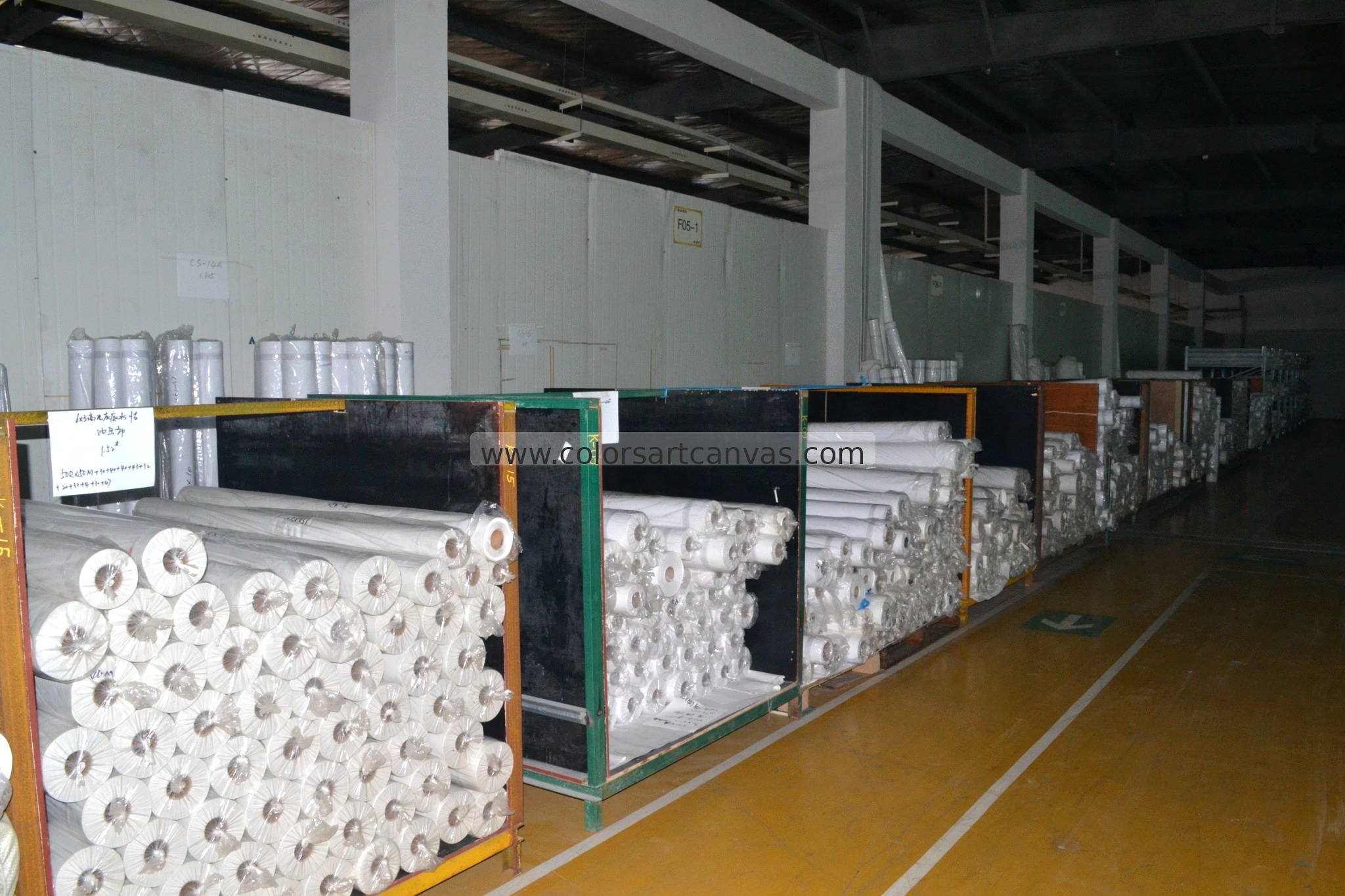
Repeatable coating and finished-roll consistency are important for distributors and high-volume canvas printing operations.
14. Digital Printing Is Expanding Across Décor and Textile Applications
Printable canvas sits within a much broader movement toward digital, customized and shorter-run production. The wider digital textile printing market provides useful context for this shift.
According to Smithers, global digital textile printing volume was approximately 3.3 billion square meters in 2022 and is forecast to reach approximately 5.5 billion square meters in 2028, representing an estimated 8.3% CAGR for 2023–2028.
These figures describe the wider digital textile printing market—not the printable canvas market alone—but they illustrate the continued expansion of digital textile production.
15. Buyer Checklist: What to Tell Your Canvas Supplier
A supplier can make a much more useful recommendation when the inquiry contains real production information. Instead of sending only “I need 380 gsm canvas,” provide the following:
Printer Brand and Exact Model
Do not send only “HP printer,” “Mimaki printer” or “UV printer.” Different models can use different ink technologies, configurations and media settings.
Ink Technology
Specify aqueous pigment, solvent, eco-solvent, latex, UV, UV-LED or UVgel where applicable.
Your Current Canvas
If you already use a canvas successfully, provide its material, GSM, finish, width and texture. A physical reference sample can be even more useful when an exact match is required.
Final Application
Tell the supplier whether the canvas will be sold as a roll, displayed flat, varnished, laminated, stretched, gallery wrapped or used in another finishing process.
Surface Preference
Specify whether you require pure matte, semi-matte, satin, semi-gloss or glossy. Visual reference samples can help because finish terminology varies between suppliers.
Roll Specification
Provide width, roll length and core requirement. This is particularly important for high-volume production where roll handling and machine compatibility affect efficiency.
16. How Colors Art Approaches Printable Canvas Development and Testing
Colors Art manufactures printable canvas in cotton, polyester and poly-cotton constructions with different textures, weights and surface finishes for professional large-format printing applications.
Our approach is based on the principle that base fabric specifications alone cannot determine printing performance. Coating formulation and actual printing behavior also need to be evaluated.
Different applications may prioritize different properties. A photographic customer may focus strongly on color and surface appearance, while a high-volume stretched-canvas producer may place additional emphasis on scratch resistance, flexibility and batch consistency.
For this reason, customers evaluating a new media are encouraged to provide their printer model, ink technology and application so that suitable samples can be selected for actual machine testing.
Can one inkjet canvas work with aqueous, solvent, latex and UV printers?
Some products can perform with more than one ink technology, but universal compatibility should not be assumed. The coating, printer, ink, settings and final application should be evaluated together.
What is the best canvas for HP Latex printing?
There is no single canvas that is best for every HP Latex printer and application. The appropriate choice depends on the printer model, coating, fabric construction, finish, media preset, curing conditions and finishing requirements.
Can UV or UVgel printers print on canvas?
Suitable canvas media can be used with many UV printing systems. The important issues include adhesion, curing and flexibility, particularly when the final print will be stretched.
Is 420 gsm canvas always better than 340 gsm or 380 gsm canvas?
No. GSM measures weight, not overall printing quality. A lighter canvas with suitable fabric construction and coating can outperform a heavier product on a specific printer.
Why does ink scratch off some printable canvas?
Possible factors include ink/coating incompatibility, insufficient curing or drying, surface characteristics, ink load and handling conditions. The exact cause should be evaluated on the actual printer.
Why does printed canvas crack when stretched?
Cracking can be related to the flexibility of the coating, printed ink layer or finishing system. A gallery-wrap stretch test should be included when approving canvas for stretched applications.
Do I need an ICC profile for canvas?
A suitable ICC profile or media preset can improve color control and repeatability, although it cannot correct fundamental physical incompatibility between the ink and canvas surface.
Should I test samples before ordering a container or large quantity?
Yes. For professional production, testing on the actual printer and through the intended finishing process is one of the most reliable ways to approve a new canvas.
Conclusion: Choose Canvas as Part of the Complete Printing Workflow
The best printable canvas is not simply the heaviest product, the most expensive product or the product with the longest specification sheet.
A professional selection process starts with the printer and ink technology, then considers the coating, base fabric, texture, surface finish, color performance, adhesion, drying or curing, flexibility and final application.
For aqueous pigment printing, ink receptivity and image quality are major priorities. For solvent and eco-solvent printing, ink interaction, drying and finishing matter. For latex printing, printing, curing, surface durability and stretching need to work together. For UV and UVgel, adhesion and cured-layer flexibility become especially important.
Finally, no specification can completely replace testing on the actual production equipment. For professional printers and distributors, a representative sample test remains one of the most practical ways to reduce risk before approving a new canvas for volume purchasing.
Need help selecting printable canvas for your printer?
Send Colors Art your printer brand and model, ink technology, current canvas specification, preferred material, GSM, texture, finish, roll size and final application. We can recommend suitable printable canvas options for sample testing before bulk purchasing.