The Ultimate Guide to Printable Canvas (2026)
Everything You Need to Know About Printable Canvas—from Materials and Coatings to Printing Performance, Quality Inspection and Supplier Selection.
Estimated reading time: 18 minutes
Everything You Need to Know About Printable Canvas—from Materials and Coatings to Printing Performance, Quality Inspection and Supplier Selection.
Estimated reading time: 18 minutes
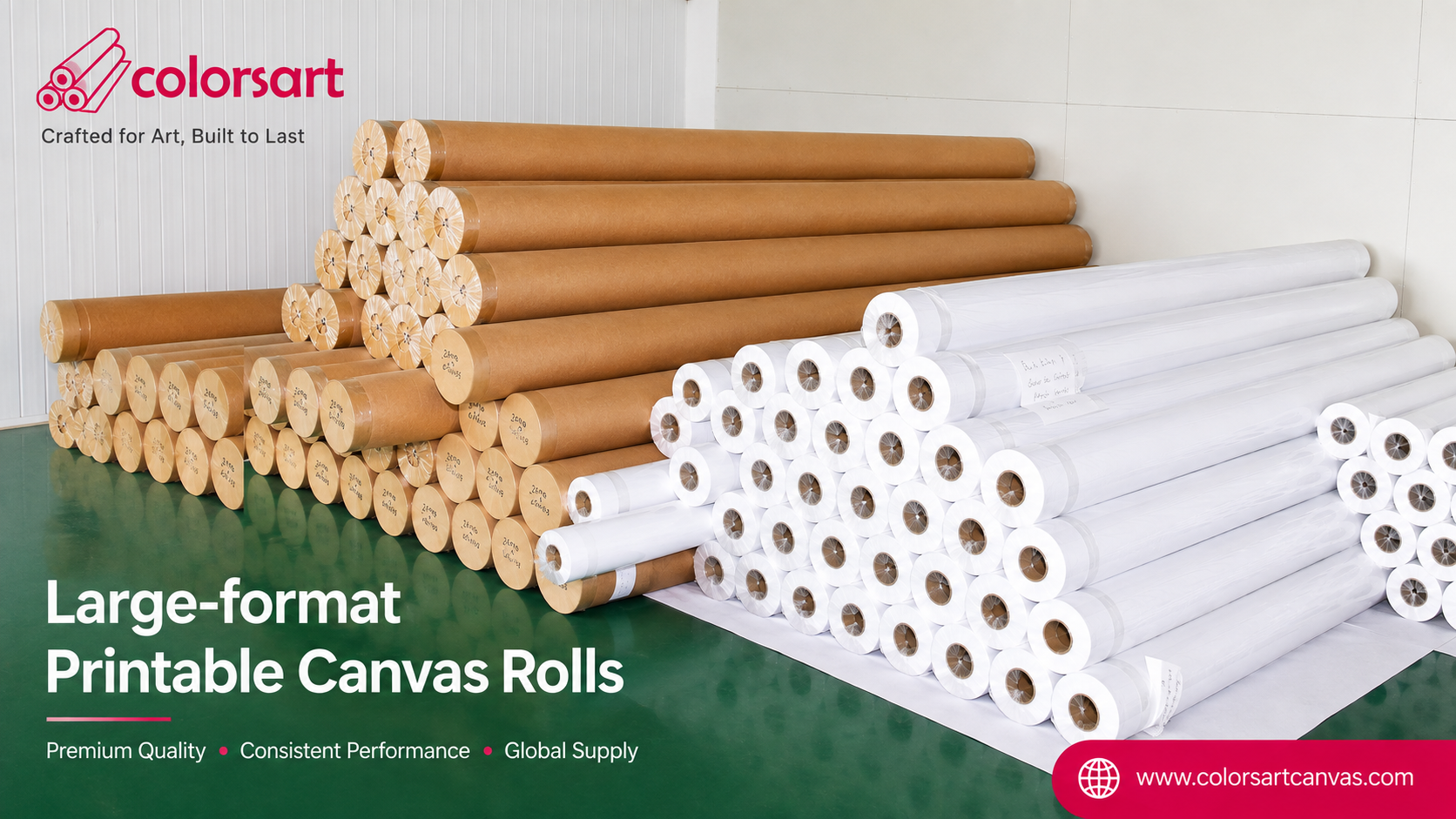
Printable canvas is a specially coated fabric designed for digital inkjet printing. Unlike traditional artist canvas, which is intended for hand painting with oil or acrylic paints, printable canvas is engineered to receive ink accurately, reproduce detailed images, and maintain long-term print quality.
Modern printable canvas is widely used for fine art reproduction, photo printing, gallery wraps, home décor, commercial displays and personalized wall art. Depending on the printing technology, the surface coating can be optimized for aqueous pigment ink, dye ink, eco-solvent ink, latex ink or UV-curable ink.
A high-quality printable canvas is more than just fabric. It is a complete engineered system that combines the base cloth, surface coating, texture, ink compatibility and production consistency.
Over the past decade, personalized wall décor has experienced significant global growth. Consumers increasingly choose customized canvas prints instead of mass-produced artwork because they offer greater personalization, emotional value and interior design flexibility.
At the same time, improvements in digital printing technology have enabled printable canvas to achieve higher image quality, wider color gamut, improved scratch resistance and better production efficiency than ever before.
Today, printable canvas is widely used by photo labs, online print providers, commercial printing companies, interior decoration manufacturers and artwork reproduction studios around the world.

| Industry | Typical Products |
|---|---|
| Photo Labs | Canvas photo prints |
| Wall Art Manufacturers | Gallery wrapped canvas |
| Commercial Printing | Decorative graphics |
| Hotels & Interior Design | Large decorative wall art |
| Museums | Fine art reproduction |
| E-commerce | Personalized print-on-demand products |
| Feature | Printable Canvas | Artist Canvas |
|---|---|---|
| Main Purpose | Digital inkjet printing | Hand painting |
| Surface | Ink receptive coating | Gesso primer |
| Compatible Media | Pigment, Latex, UV, Eco-solvent* | Oil & Acrylic Paint |
| Image Resolution | Photographic | Manual artwork |
| Production Method | Industrial printing | Hand painting |
*Compatibility depends on the specific coating formulation.
Many buyers compare printable canvas only by GSM or price. In reality, printing performance depends on the combination of the fabric, coating formulation, printer compatibility and manufacturing consistency. Two products with the same weight can produce completely different printing results.
One of the most common questions buyers ask is, "What is printable canvas actually made of?" While many products are simply advertised as "canvas," the base fabric can vary significantly. The material directly influences print quality, color reproduction, flexibility, durability, stretching performance, and long-term stability.
Professional printable canvas is not just a piece of fabric with a coating. It is a carefully engineered combination of textile substrate and ink-receptive coating designed for specific digital printing technologies.
Today, most printable canvas falls into three major categories:
Each material offers different advantages depending on the printing application, ink technology, production speed, and customer expectations.
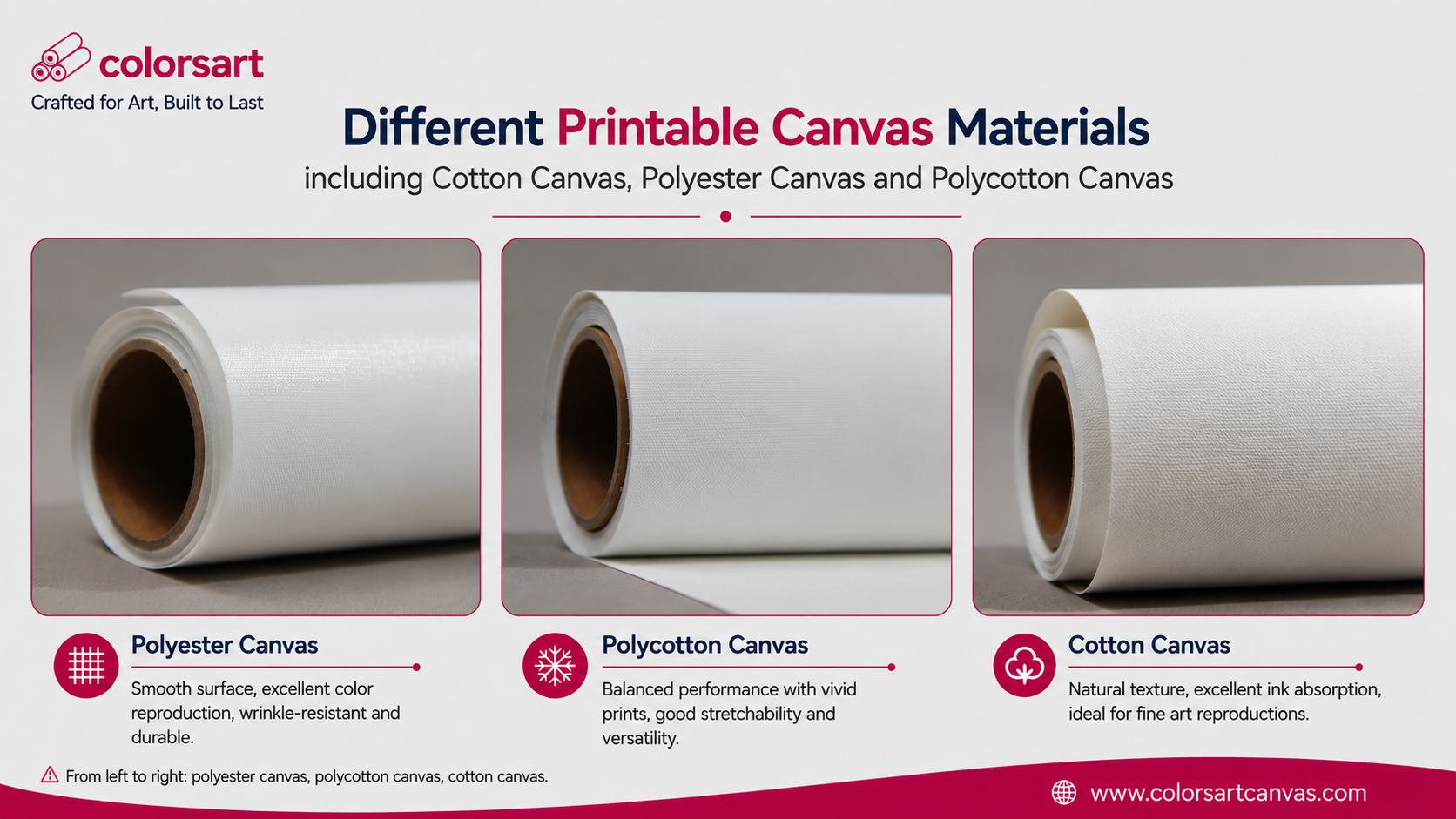
Unlike traditional artist canvas, printable canvas consists of multiple functional layers working together to produce consistent image quality.
| Layer | Function |
|---|---|
| Base Fabric | Provides mechanical strength, flexibility and texture. |
| Surface Coating | Receives ink droplets and controls image quality. |
| Printed Image | Final photographic or artistic reproduction. |
| Optional Protective Finish | Improves scratch resistance and surface durability. |
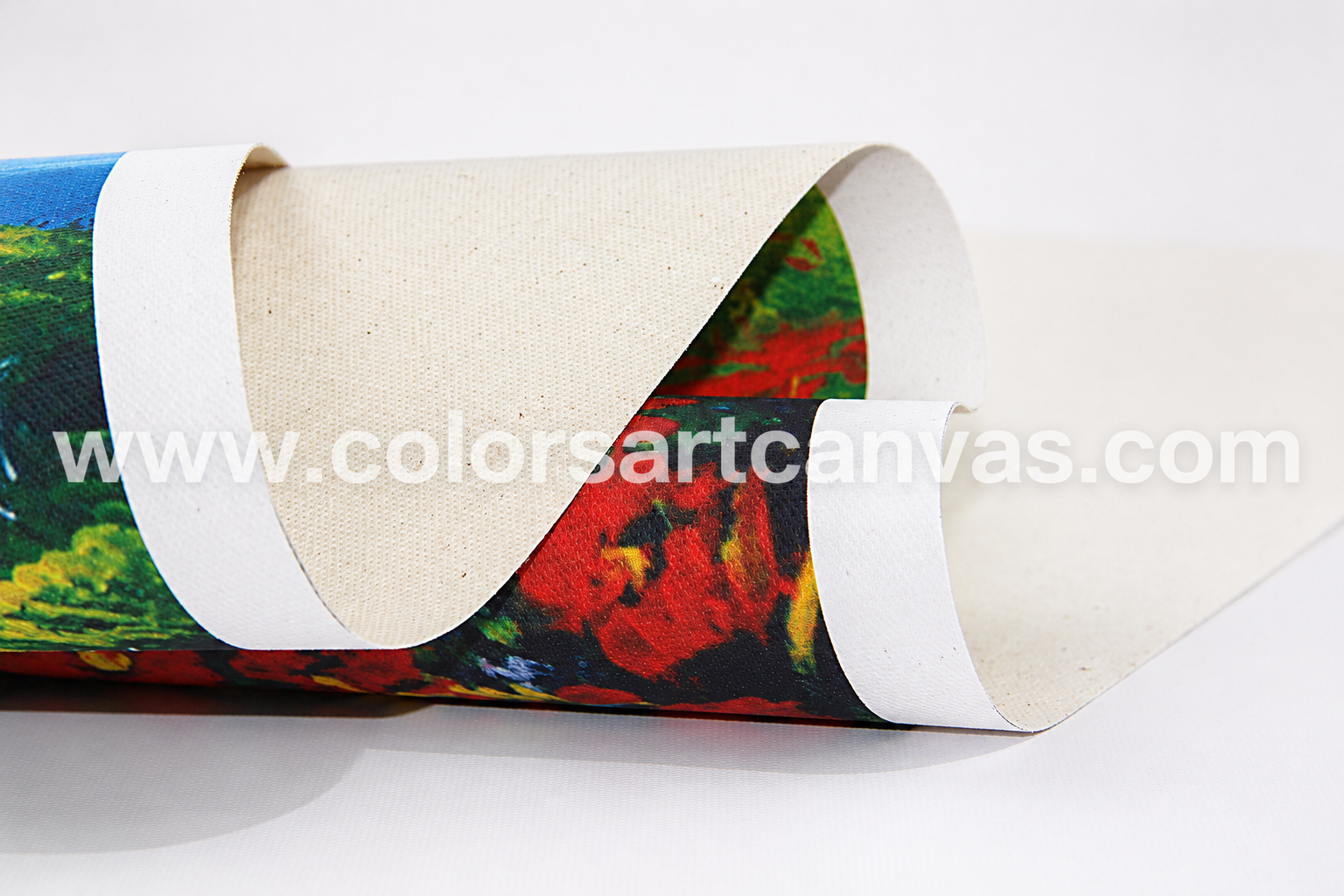
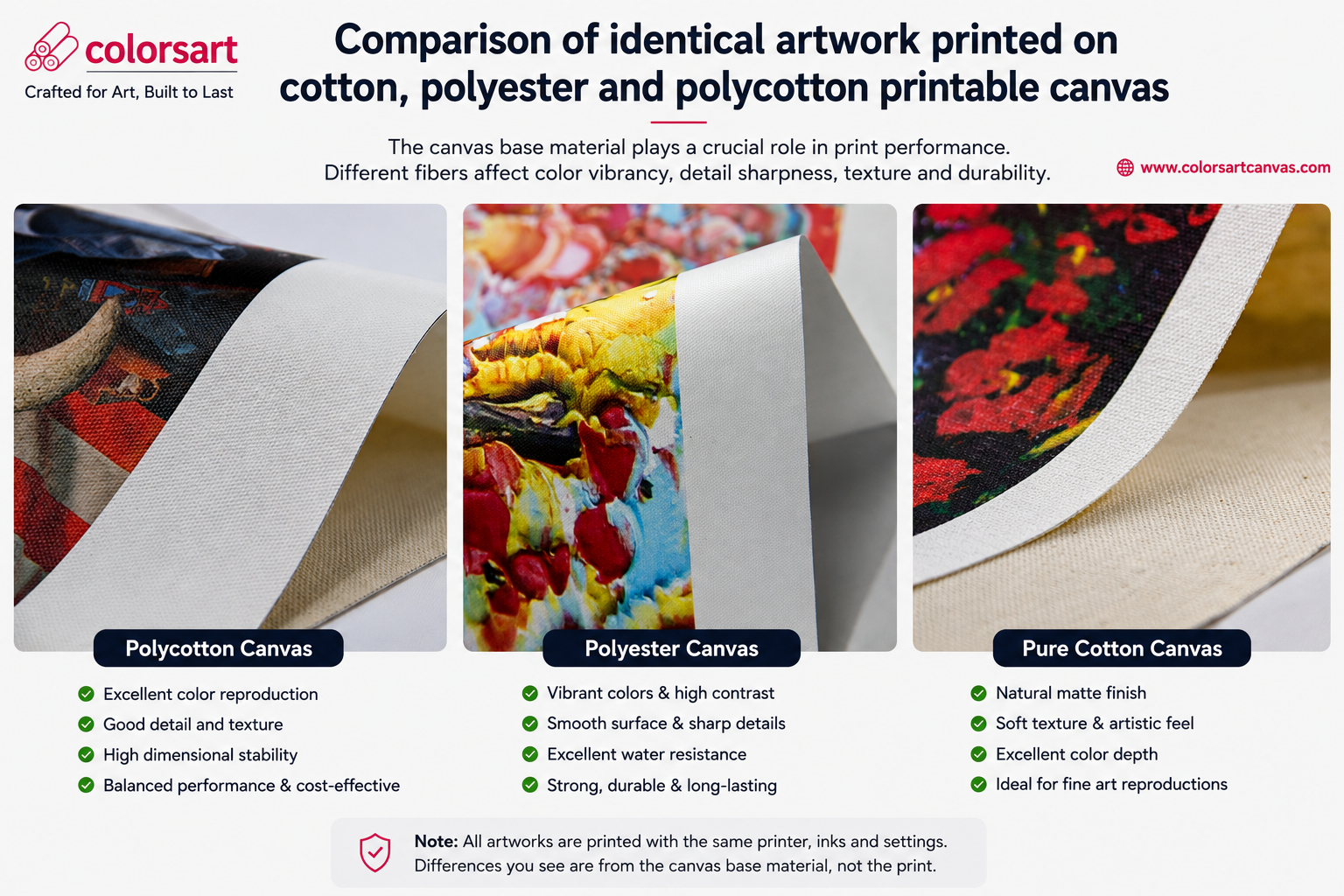
Cotton canvas has long been regarded as the premium material for fine art printing. Natural cotton fibers create an authentic canvas texture that closely resembles traditional artist canvas, making it popular for museum-quality reproductions, photography and high-end wall décor.
Because cotton fibers naturally absorb moisture, the surface coating plays a critical role in controlling ink placement and preventing excessive penetration. Modern coating technologies allow cotton canvas to produce excellent image sharpness while maintaining the natural textile appearance.
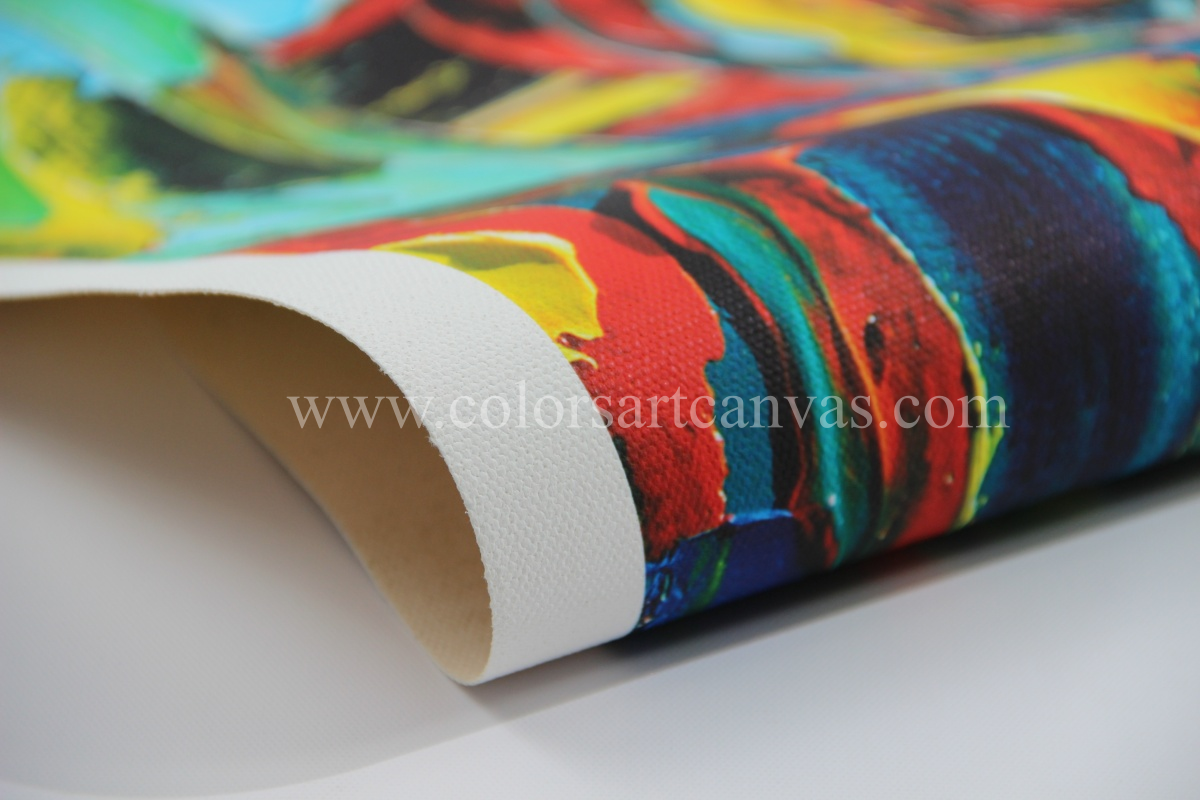
Polyester printable canvas has become increasingly popular because of its excellent dimensional stability and production consistency. Unlike natural fibers, polyester is manufactured under highly controlled conditions, allowing suppliers to produce rolls with consistent width, weight and mechanical properties.
Polyester canvas is widely used in commercial printing, high-volume production and photo labs where production efficiency and repeatability are essential.
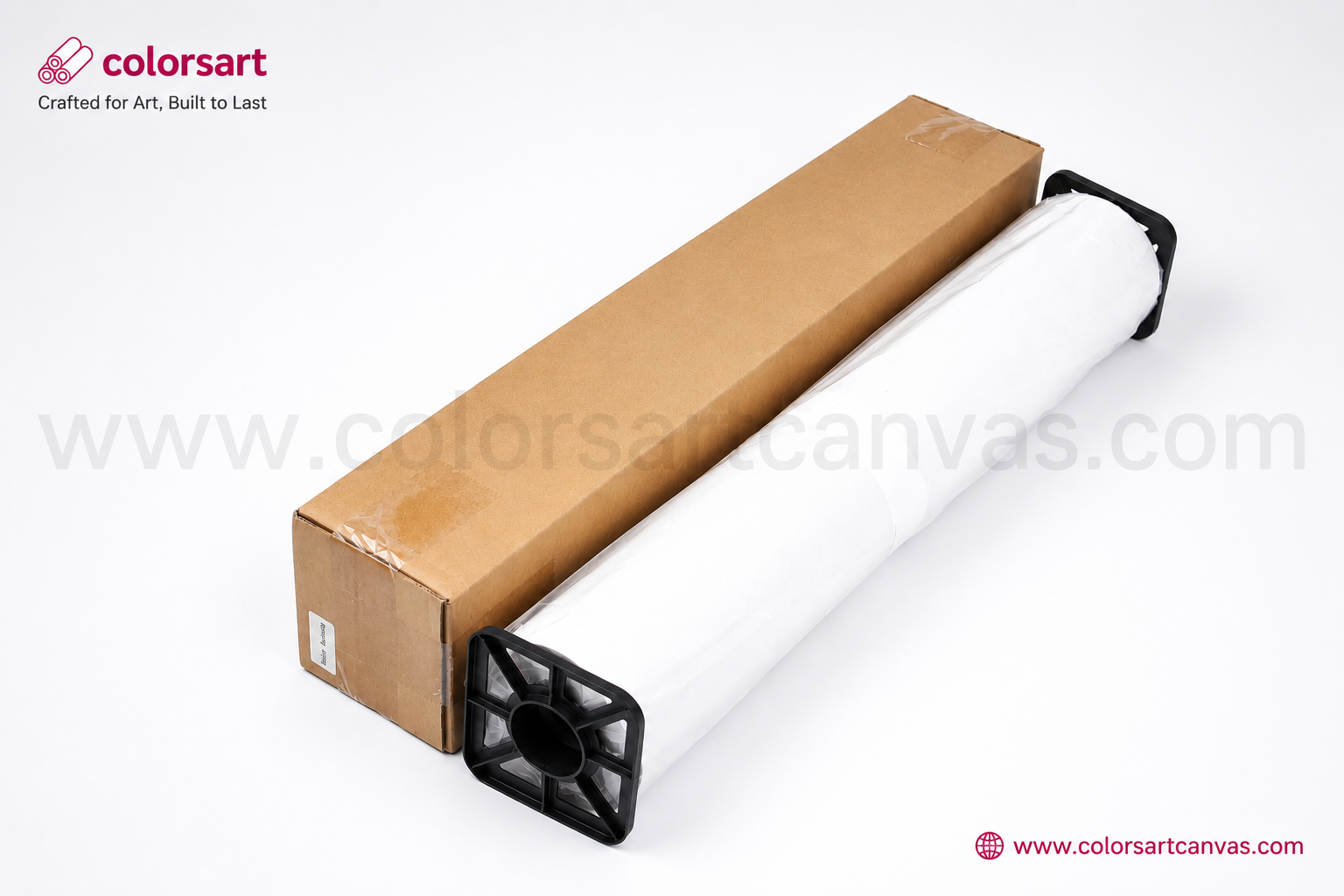
Many buyers believe cotton automatically produces better prints than polyester. In reality, modern coating technology often has a greater influence on image quality than the base fabric itself. Two canvases made from different materials can produce nearly identical visual results when their coating systems are properly engineered.
Although many printable canvases look similar before printing, their performance can vary significantly once they enter production. The difference is often hidden in the coating formulation rather than the fabric itself.
A professional coating should deliver consistent print quality throughout an entire production roll—not just on the first few meters. This is especially important for photo labs and print factories running continuous production.
| Performance Item | High-Quality Coating | Poor-Quality Coating |
|---|---|---|
| Image Sharpness | Fine details remain clear | Edges appear blurry |
| Color Reproduction | Rich, consistent colors | Dull or uneven colors |
| Drying Speed | Fast and uniform drying | Slow drying and smudging |
| Scratch Resistance | Better surface durability | Surface scratches easily |
| Batch Consistency | Stable from roll to roll | Noticeable variation between batches |
| Stretching Performance | Coating remains flexible | May crack during stretching |
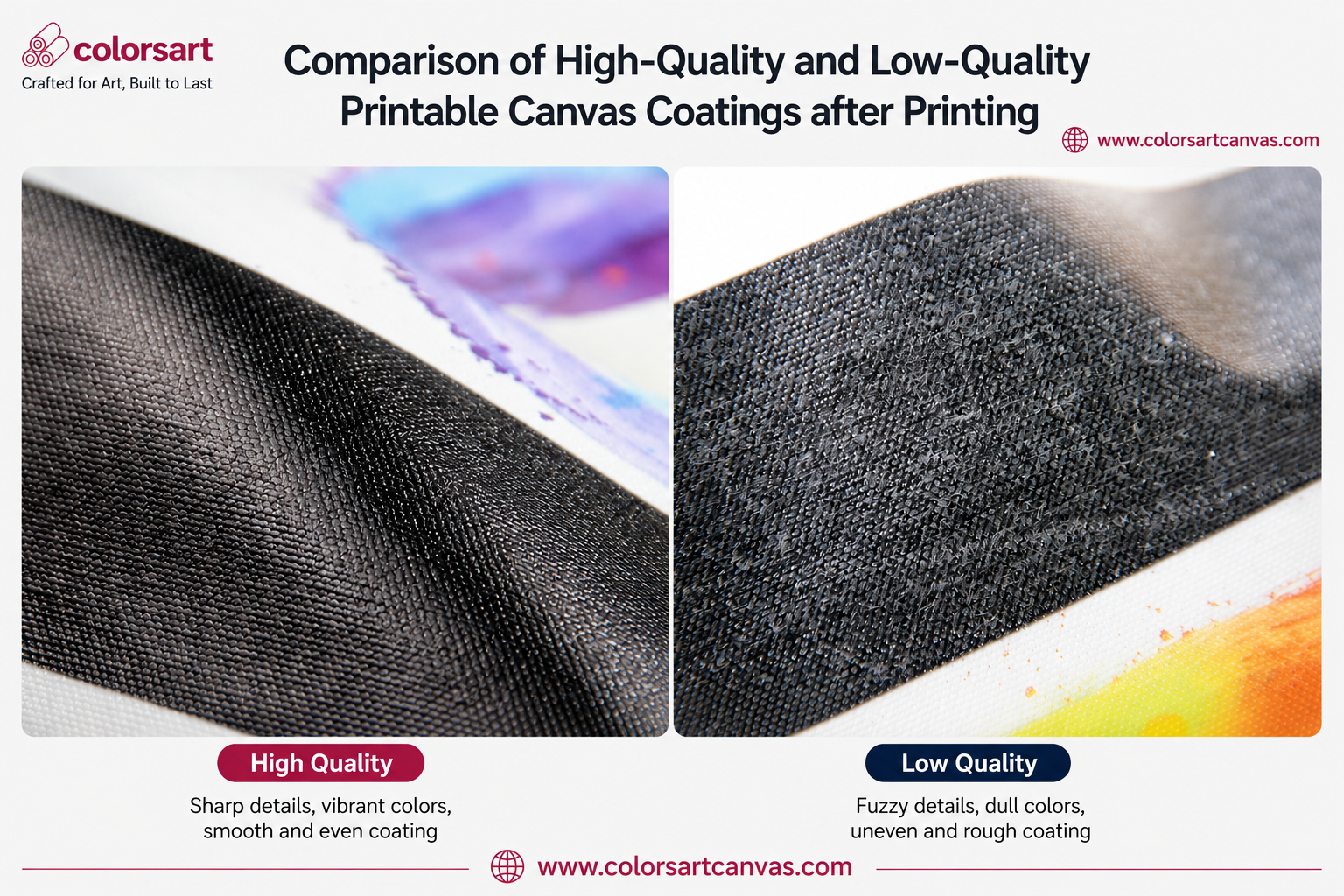
One of the primary functions of a printable canvas coating is to control ink absorption. If too much ink penetrates into the fabric, colors become weak and fine details disappear. If too little ink is absorbed, drying may become slower and surface defects can occur.
An optimized coating balances these two extremes by holding the ink close to the surface while allowing controlled penetration into the coating layer.
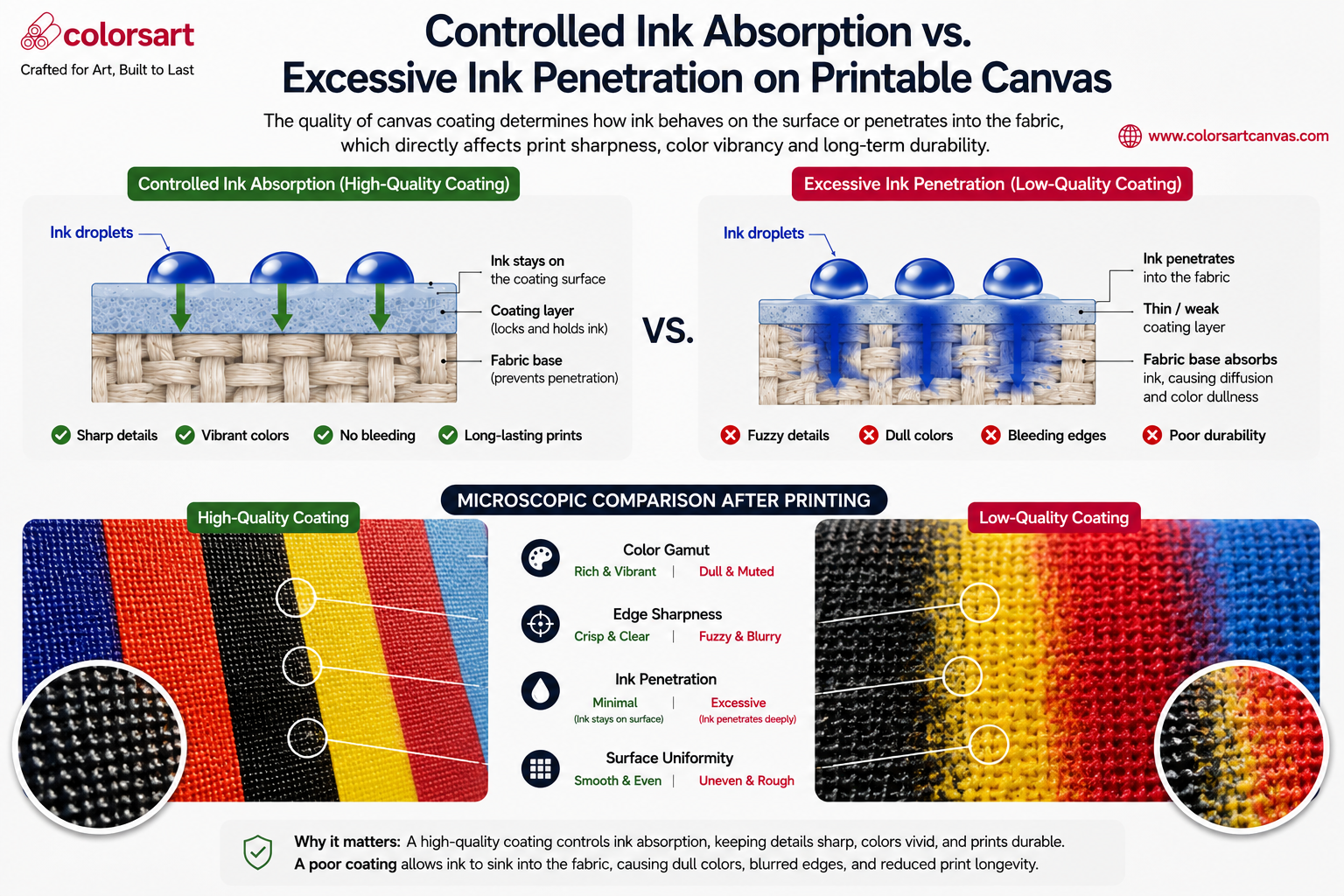
During production, coating consistency is just as important as coating chemistry. Even a well-designed formula can produce inconsistent print quality if the coating thickness varies across the width of the roll. Professional manufacturers therefore monitor coating weight, surface uniformity and batch consistency throughout production.
Before purchasing printable canvas, ask your supplier the following questions:
One of the most frequently asked questions from buyers is: "Which printable canvas material is the best?" The answer is not as simple as choosing cotton over polyester or vice versa. The ideal material depends on your printing technology, production workflow, target market and customer expectations.
Rather than asking which material is universally "better", professional buyers should ask:
| Feature | Cotton | Polyester | Polycotton |
|---|---|---|---|
| Appearance | Natural | Smooth | Balanced |
| Texture | Traditional canvas feel | Uniform texture | Natural with improved stability |
| Stretchability | Excellent | Very good | Excellent |
| Production Consistency | Good | Excellent | Very Good |
| Typical Cost | Highest | Lowest | Medium |
| Common Applications | Fine Art | Commercial Printing | Premium Wall Art |
Many people automatically assume cotton always produces better printing results. In reality, image quality depends on multiple factors, including the coating formulation, printer settings, ICC profile and ink technology.
When using a professionally engineered coating, all three materials are capable of producing excellent image quality. The differences are often more noticeable in texture, handling characteristics and production consistency than in the printed image itself.
| Application | Recommended Material |
|---|---|
| Museum Reproduction | Cotton |
| Gallery Wraps | Cotton or Polycotton |
| Photo Labs | Polyester |
| Print-on-Demand | Polyester or Polycotton |
| Interior Decoration | Polycotton |
| Commercial Graphics | Polyester |
| High-Speed Production | Polyester |
| Premium Wall Art | Cotton or Polycotton |
Products with the same GSM may deliver completely different printing performance because of coating technology.
Lower-priced materials may increase waste, reprints and customer complaints.
Always match the printable canvas to your specific ink technology.
Printed samples provide far more useful information than a specification sheet.
From a manufacturing perspective, there is no single "best" printable canvas material. Over the years, we have supplied cotton, polyester and polycotton canvas to customers in different industries. Fine art publishers often prioritize natural texture, while photo labs and print-on-demand factories typically focus on production efficiency and consistency. The most successful buyers select the material based on the final application rather than marketing claims.
When comparing printable canvas, many buyers focus on one specification—GSM. While weight is an important parameter, it is only one part of the overall product performance. Professional buyers evaluate printable canvas by considering multiple specifications together, including weight, thickness, roll width, core size, coating type and printer compatibility. Choosing a canvas based only on GSM can lead to disappointing printing results and unnecessary production costs.
| Specification | What It Means | Why It Matters |
|---|---|---|
| Material | Cotton, Polyester or Polycotton | Determines texture and mechanical properties. |
| GSM | Weight per square meter | Affects handling and product positioning. |
| Thickness | Finished material thickness | Influences printer compatibility and stretching. |
| Surface Finish | Matte, Satin or Glossy | Changes visual appearance and reflection. |
| Roll Width | Printable width | Determines production efficiency. |
| Core Size | Inner diameter of the roll | Must match the printer. |
| Ink Compatibility | Supported printing technology | Ensures reliable printing performance. |
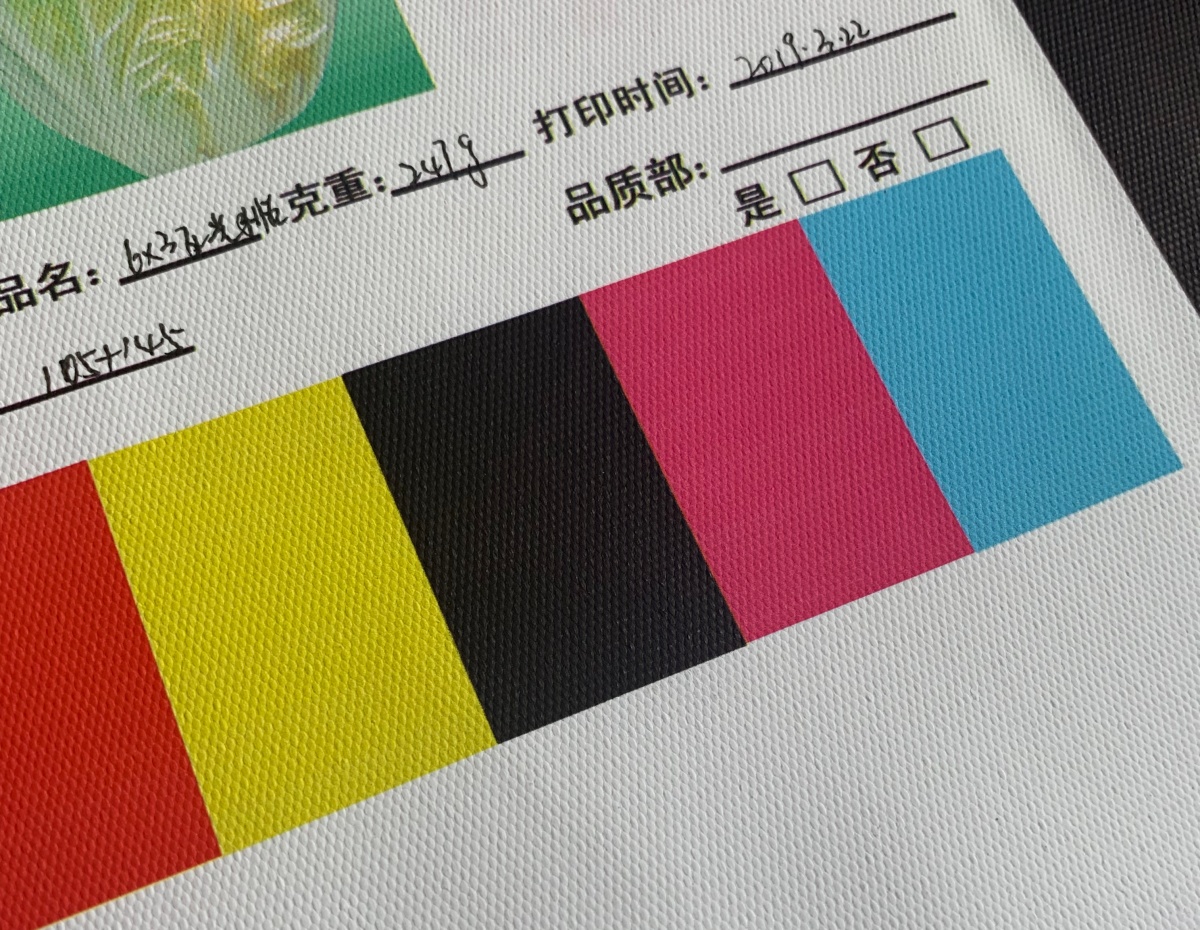
GSM stands for grams per square meter. It indicates the finished weight of one square meter of printable canvas. For example, a 380gsm canvas weighs approximately 380 grams per square meter after coating.
However, GSM does not describe image quality, coating performance, color reproduction or durability. It is simply a measurement of weight.
No. A heavier canvas is not automatically a better canvas.
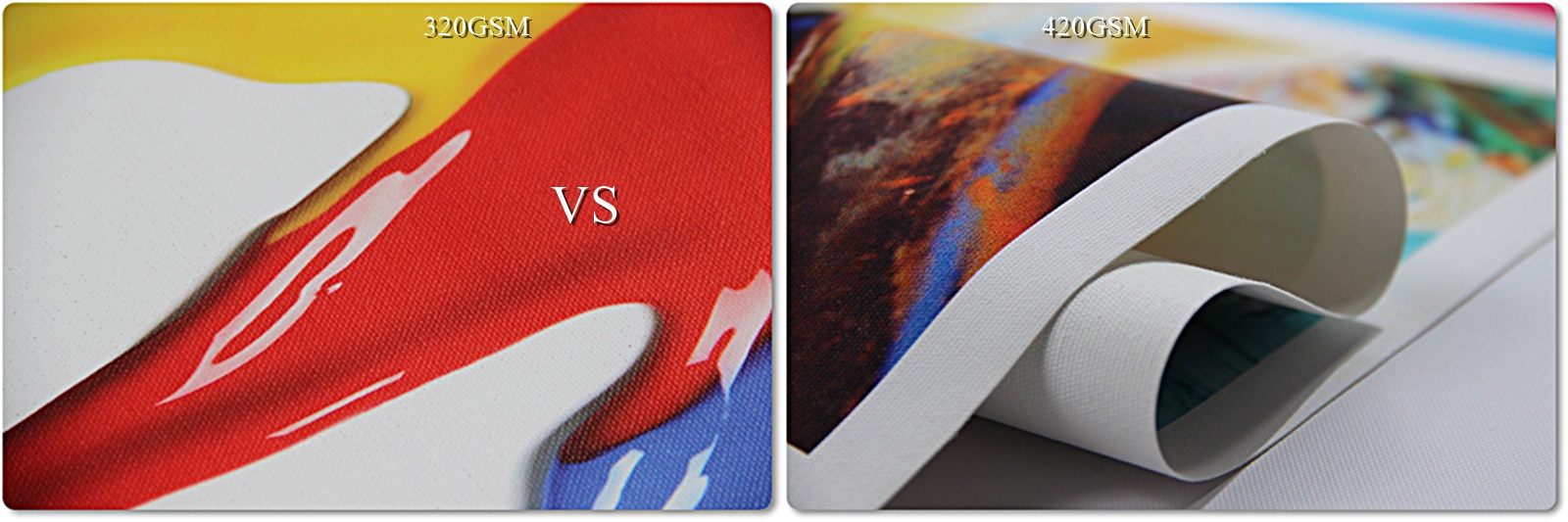
A 420gsm product with poor coating quality may produce lower image quality than a well-engineered 320gsm printable canvas. Similarly, increasing weight does not necessarily improve color gamut, scratch resistance or printing consistency.
| Finished GSM | Typical Application |
|---|---|
| 240–260gsm | Economy photo printing |
| 280–320gsm | General wall décor |
| 340–380gsm | Premium canvas prints |
| 400–420gsm | Heavy-duty premium products |
Many customers initially request the highest GSM available because they assume it represents the highest quality. In practice, experienced buyers usually begin by defining the printing application, target market and production workflow. Once those requirements are clear, they select the most appropriate combination of material, coating and weight. This approach generally produces better results than choosing the heaviest product available.
Selecting printable canvas is about much more than choosing the highest GSM or the lowest price. The right product should match your printing technology, production workflow, target market and quality expectations.
Professional buyers normally evaluate several factors together before approving a new printable canvas.
The first question is not "Which canvas is the best?" The first question is:
Which printer and ink system will be used?
Different coating formulations are designed for different printing technologies.
| Printing Technology | Typical Canvas Requirement |
|---|---|
| Aqueous Pigment | High-resolution coating with excellent color reproduction |
| Latex | Heat-resistant flexible coating |
| UV | Excellent ink adhesion and flexibility |
| Eco-solvent | Fast drying with controlled absorption |
Different customers expect different products. A museum-quality art publisher usually values natural texture and premium appearance. A photo lab producing thousands of prints each week often prioritizes production efficiency and consistency.
| Customer Type | Typical Priority |
|---|---|
| Fine Art Studio | Texture and premium appearance |
| Photo Lab | Stable production |
| Print-on-Demand Factory | Cost efficiency |
| Commercial Printer | Productivity |
| Interior Decoration Brand | Premium visual quality |
Surface finish changes how customers perceive the final artwork. Matte, satin and glossy surfaces each provide different visual effects. The choice should be based on the intended application rather than personal preference.
A specification sheet cannot fully demonstrate printing performance. Always request printed samples using the same printer, ink and artwork that will be used in production.
Evaluate the samples under normal production conditions before making purchasing decisions.
Professional buyers should inspect more than image quality.
The cheapest canvas often generates higher production costs through waste and reprints.
Fabric alone does not determine printing performance.
Every printer behaves differently. Always test before ordering.
Heavier material is not automatically better.
Many customers initially compare only price and GSM. However, after testing printed samples, they often choose a different product because factors such as color consistency, stretching performance and production stability have a greater impact on their final production costs. In our experience, successful long-term buyers evaluate the entire production process rather than a single specification.
| If Your Priority Is... | Recommended Focus |
|---|---|
| Lowest Production Cost | Stable polyester canvas |
| Premium Fine Art | High-quality cotton canvas |
| Best Overall Balance | Polycotton canvas |
| Large Production Volume | Production consistency |
| Luxury Wall Art | Premium coating quality |
Even the highest-quality printable canvas cannot deliver excellent results if it is used with the wrong printing technology. The coating formulation must be compatible with the ink chemistry and printing process. Professional manufacturers therefore develop different printable canvas products for different printer platforms instead of using one universal coating.
Before purchasing printable canvas, always confirm that it is designed for your printer and ink system.
| Printing Technology | Typical Ink | Typical Applications |
|---|---|---|
| Aqueous Pigment | Water-based pigment | Photo printing, fine art reproduction |
| Dye Ink | Water-based dye | Photography, indoor graphics |
| Latex | HP Latex ink | Wall décor, commercial printing |
| Eco-solvent | Eco-solvent ink | Signage and decorative graphics |
| UV | UV-curable ink | Industrial and commercial printing |
Aqueous pigment printing is widely used for professional photography, museum-quality reproductions and premium wall art. Because pigment inks remain close to the coating surface, the canvas must provide excellent ink control to achieve high image resolution and accurate color reproduction.
*Long-term durability depends on the complete print system, including ink, media, display conditions and environmental exposure.
Latex printing has become increasingly popular for wall décor and commercial graphics because it combines high productivity with durable prints. Canvas for latex printing should have a coating that tolerates curing temperatures while maintaining flexibility for stretching.
UV-curable inks remain primarily on the surface of the canvas and are cured immediately by ultraviolet light. A UV-compatible canvas coating should provide strong ink adhesion and sufficient flexibility to reduce the risk of cracking during stretching.
Eco-solvent printers are commonly used for decorative graphics and indoor signage. Canvas for eco-solvent printing requires a coating designed to withstand solvent-based inks while maintaining image sharpness and controlled drying.
| Printer Type | Recommended Canvas |
|---|---|
| Epson Pigment | Pigment-coated canvas |
| Canon imagePROGRAF | Pigment-coated canvas |
| HP Latex | Latex-compatible canvas |
| Mimaki UV | UV-compatible canvas |
| Roland Eco-solvent | Eco-solvent canvas |
Rather than using a single coating for every application, professional printable canvas manufacturers typically develop different formulations for different ink systems. This helps achieve better image quality, production consistency and long-term reliability.
Choosing printable canvas should not rely solely on product specifications or supplier quotations. Professional buyers evaluate printable canvas through a combination of visual inspection, printing tests, mechanical performance and production consistency. A comprehensive quality inspection helps reduce production risks, improve customer satisfaction and ensure repeatable printing results.
The first quality inspection begins before printing. Every production roll should be visually inspected for surface defects and dimensional consistency.
| Inspection Item | Purpose |
|---|---|
| Surface Cleanliness | Detect dust, stains and contamination. |
| Roll Edges | Check cutting quality. |
| Wrinkles | Prevent feeding problems. |
| Coating Uniformity | Ensure stable print quality. |
| Roll Width | Verify dimensional accuracy. |
| Core Condition | Ensure stable printer loading. |
A professional evaluation should include more than visual appearance. Test images should contain photographs, gradients, fine text, solid colors and neutral gray areas.
| Evaluation Item | Expected Result |
|---|---|
| Sharpness | Fine details remain clear. |
| Color Accuracy | Natural and consistent. |
| Black Density | Deep blacks without bleeding. |
| Gradients | Smooth transitions. |
| Fine Text | Readable without feathering. |
Most printable canvas will eventually be stretched over a wooden frame. Therefore, stretching performance is just as important as print quality.
Scratch resistance is particularly important for wall décor products that may be handled during stretching, transportation and installation. A controlled scratch test can help compare different coating formulations.
Consistent production quality is essential for long-term cooperation. Buyers should compare multiple production batches rather than evaluating only one sample roll.
| Inspection Area | Consistency Requirement |
|---|---|
| Color | Stable |
| Texture | Stable |
| Thickness | Stable |
| Coating | Uniform |
| Stretching | Consistent |
Many production issues reported by end users originate from inconsistent batches rather than from a single defective roll. For long-term projects, evaluating repeatability across multiple production batches is often more valuable than comparing a single sample.
Below are some of the most common questions buyers, printers and distributors ask before purchasing printable canvas.
Not necessarily. Cotton provides a traditional natural texture that is popular for fine art reproduction, while polyester offers excellent production consistency and dimensional stability. The final print quality depends on the combination of the fabric, coating formulation, printer and color management rather than the fabric alone.
No. GSM only measures the finished weight of the material. It does not indicate coating quality, image sharpness, color reproduction or durability. A professionally coated 320gsm canvas may outperform a poorly coated 420gsm canvas.
Most Epson pigment printers perform best with a high-quality aqueous pigment coated canvas. Always confirm media compatibility and use the correct ICC profile for optimal color accuracy.
Some products are designed for multiple applications, but there is no universal canvas that delivers the best performance on every printing system. Professional manufacturers usually develop different coating formulations for pigment, latex, UV and eco-solvent printing.
The best choice depends on the final application. Matte reduces reflections, satin provides a balance between texture and contrast, while glossy offers a more reflective appearance. The decision should be based on the artwork and display environment.
Testing samples with your own printer, ink and workflow is the most reliable way to evaluate print quality, stretching performance and production consistency before committing to volume purchases.
Choosing the right printable canvas is about finding the best combination of material, coating technology and production consistency for your specific application.
Instead of comparing products by GSM or price alone, professional buyers evaluate how the canvas performs throughout the entire production process—from printing and drying to stretching, packaging and long-term display.
By understanding the differences between materials, coatings, printer compatibility and quality control, buyers can make more informed purchasing decisions and achieve more consistent production results.
Colors Art is a professional manufacturer of printable canvas, artist canvas and stretcher bars with more than 15 years of manufacturing experience. Our products are supplied to photo labs, wall art manufacturers, print-on-demand companies and distributors in more than 70 countries. We provide OEM and private-label solutions with a wide range of coating formulations developed for different digital printing technologies.
If you are looking for a reliable printable canvas manufacturer or would like to compare different materials, coatings or printer-compatible products, our technical team will be happy to assist.
We can help you select the most suitable canvas according to your printer, ink technology and production requirements.