Blog
Inkjet Canvas Guide: Choose the Right Canvas for Digital Printing
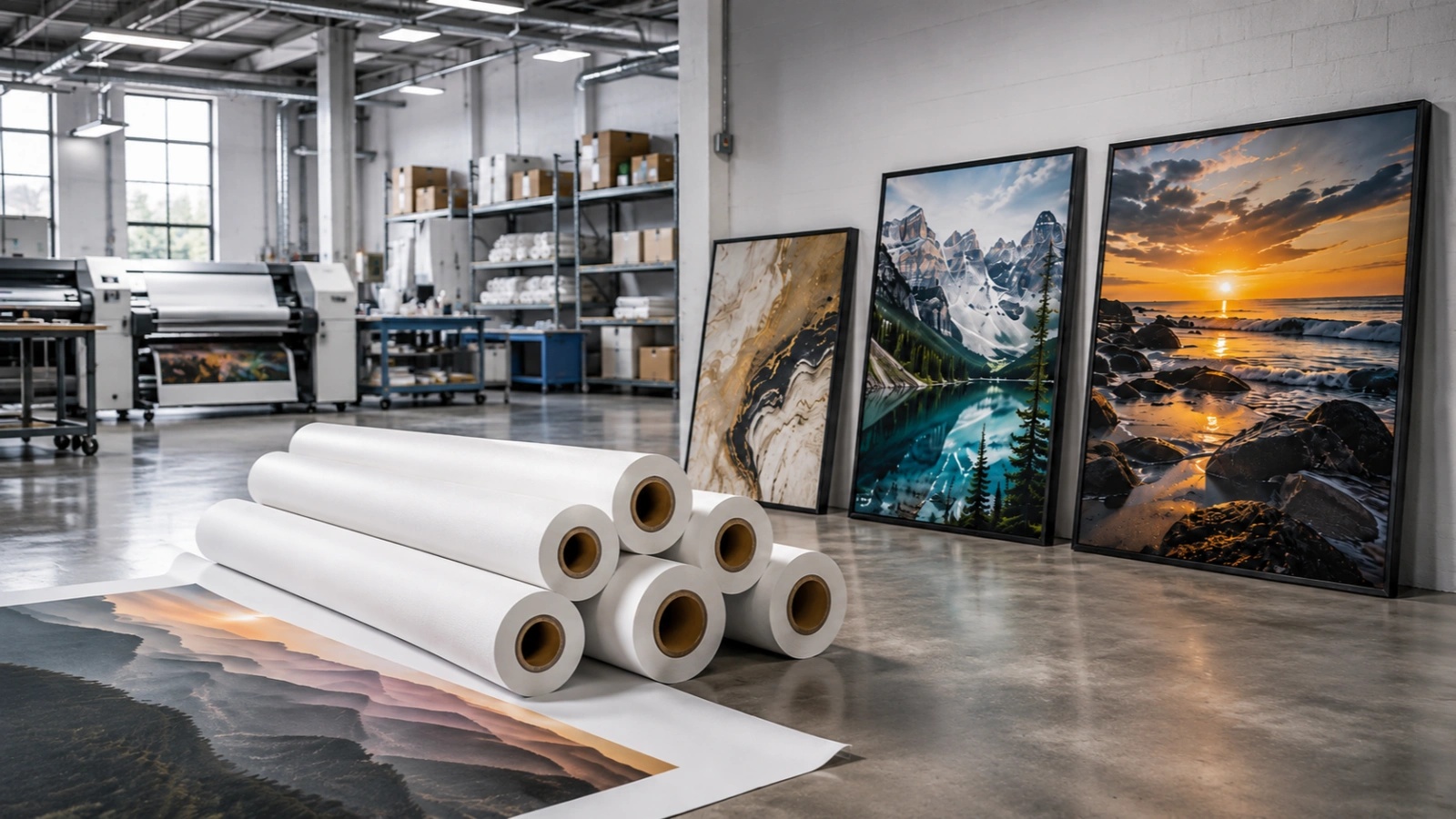
Inkjet canvas is widely used for fine art reproduction, wall décor, photo printing, and commercial display graphics. This guide explains how to choose cotton, poly-cotton, or polyester canvas based on your printer, ink system, application, and finishing requirements.
INKJET CANVAS: A PRACTICAL GUIDE TO MATERIALS, COATINGS, AND PRINT APPLICATIONS
Inkjet canvas gives digital prints a more finished, tactile, and decorative appearance.
It combines the texture of traditional woven canvas with the flexibility of modern digital printing. Today, inkjet canvas is widely used for wall art, photo canvases, framed décor, fine art reproductions, hotel artwork, retail displays, exhibitions, and made-to-order canvas prints.
For print studios, distributors, décor brands, and large-format printing companies, choosing the right canvas is not only about surface texture. The final result also depends on the fabric composition, coating system, ink compatibility, printer settings, finishing process, and intended application.
WHAT IS INKJET CANVAS?
Inkjet canvas is a woven fabric prepared for digital printing. The base fabric may be made from cotton, polyester, or a blend of both materials.
To make the surface printable, the canvas is coated for specific ink systems. The coating helps control ink absorption, color development, drying speed, image sharpness, and surface appearance.
Without the right coating, ink may spread too deeply into the fabric. Fine details can become soft. Black areas may lose depth. Colors may appear less vivid or less consistent.
A well-matched inkjet canvas should provide clear image detail, stable printing performance, and reliable handling during stretching, framing, laminating, or shipping.
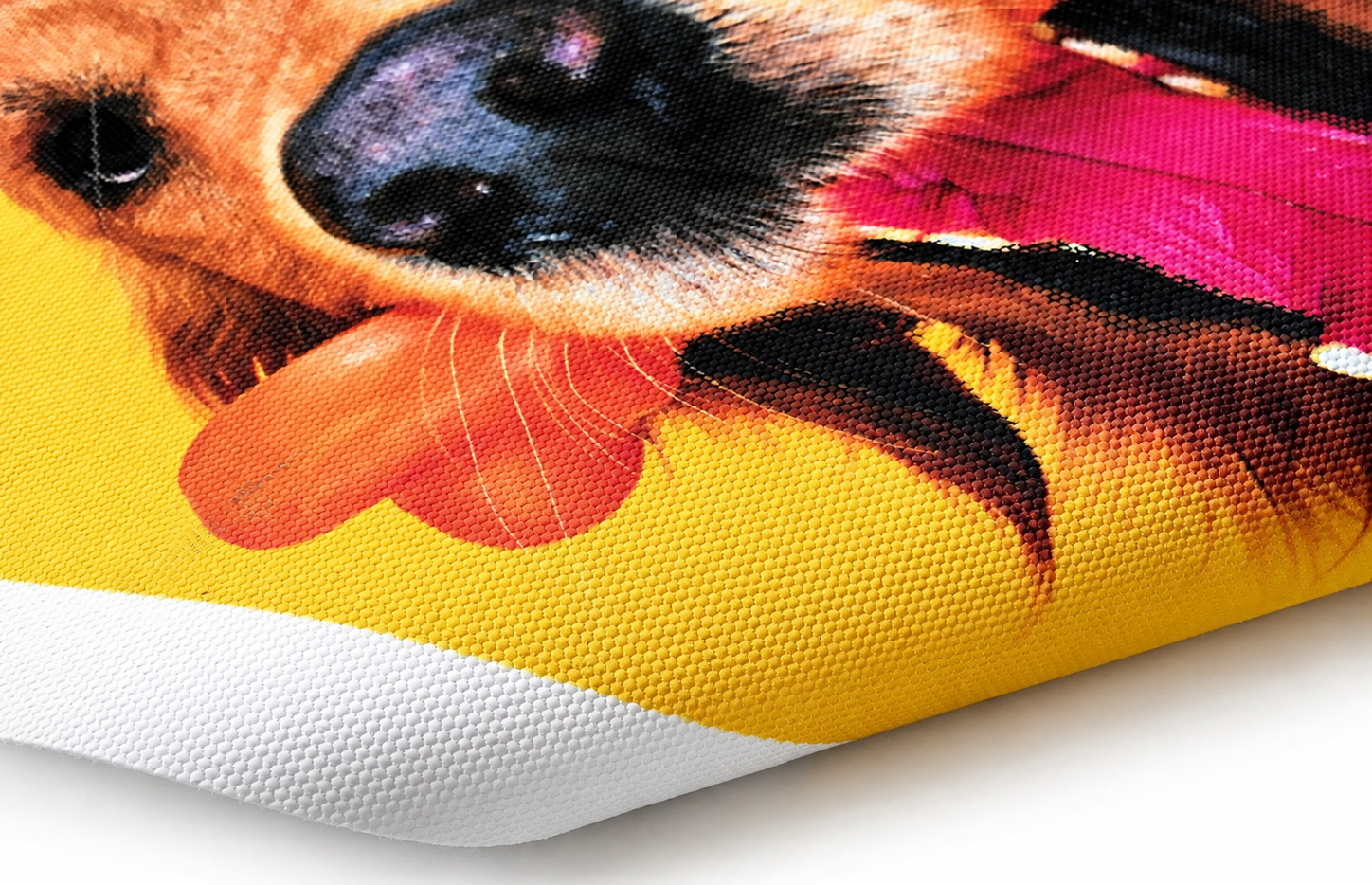
The texture, coating quality, and ink performance all affect the final appearance of a canvas print.
THE THREE MAIN TYPES OF INKJET CANVAS
The most common inkjet canvas materials are cotton canvas, poly-cotton canvas, and polyester canvas. Each material has a different visual character and production advantage.
| Canvas Type | Surface Character | Best Applications | Main Buyer Benefit |
|---|---|---|---|
| Cotton Canvas | Natural woven texture with a traditional art feel | Fine art reproduction, premium wall art, gallery-wrap prints | Premium appearance and authentic canvas hand feel |
| Poly-Cotton Canvas | Natural-looking texture with improved stability | Photo canvas, decorative art, hotel artwork, framed décor | A balance of texture, stability, and cost |
| Polyester Canvas | Uniform woven surface with stable handling | Commercial décor, exhibitions, retail graphics, high-volume printing | Efficient production and dependable dimensional stability |
COTTON CANVAS FOR FINE ART AND PREMIUM DÉCOR
Cotton canvas is often selected when the final print needs a more traditional art appearance.
Its natural woven texture can add depth to portraits, landscapes, oil-painting-style images, and fine art reproductions. It is a strong choice for premium wall décor, gallery-style artwork, and projects where the material itself adds visible value.
Cotton canvas is commonly used for:
• Fine art reproductions
• Premium canvas wall art
• Oil-painting-style prints
• Gallery-wrap artwork
• Limited-edition art collections
Before large-scale production, buyers should test print density, image sharpness, ink absorption, stretching performance, and edge-crack resistance.
POLY-COTTON CANVAS FOR BALANCED PERFORMANCE
Poly-cotton canvas combines the natural texture of cotton with the stability of polyester. It is often the most practical all-round choice for professional canvas printing.
The cotton content helps create a more artistic surface. The polyester content supports more consistent handling during printing, stretching, framing, and transport.
Poly-cotton canvas is commonly used for:
• Decorative wall art
• Photo canvas prints
• Hotel and hospitality artwork
• Online custom-print stores
• Framed artwork collections
• Exhibition and display paintings
For many print businesses, poly-cotton canvas is a dependable core material because it offers a good balance of appearance, performance, and cost.
POLYESTER CANVAS FOR COMMERCIAL PRINTING
Polyester canvas is designed for stable and efficient production.
It is often selected for wide-format printing, commercial wall décor, retail displays, exhibition graphics, and repeat print orders. Compared with cotton-based materials, polyester canvas can offer more predictable handling and good dimensional stability.
This makes it suitable for businesses that need consistent output across larger production runs.
Polyester canvas is commonly used for:
• Large-format decorative prints
• Retail displays
• Exhibition graphics
• Commercial interior projects
• Budget-friendly canvas print collections
• High-volume wall décor production
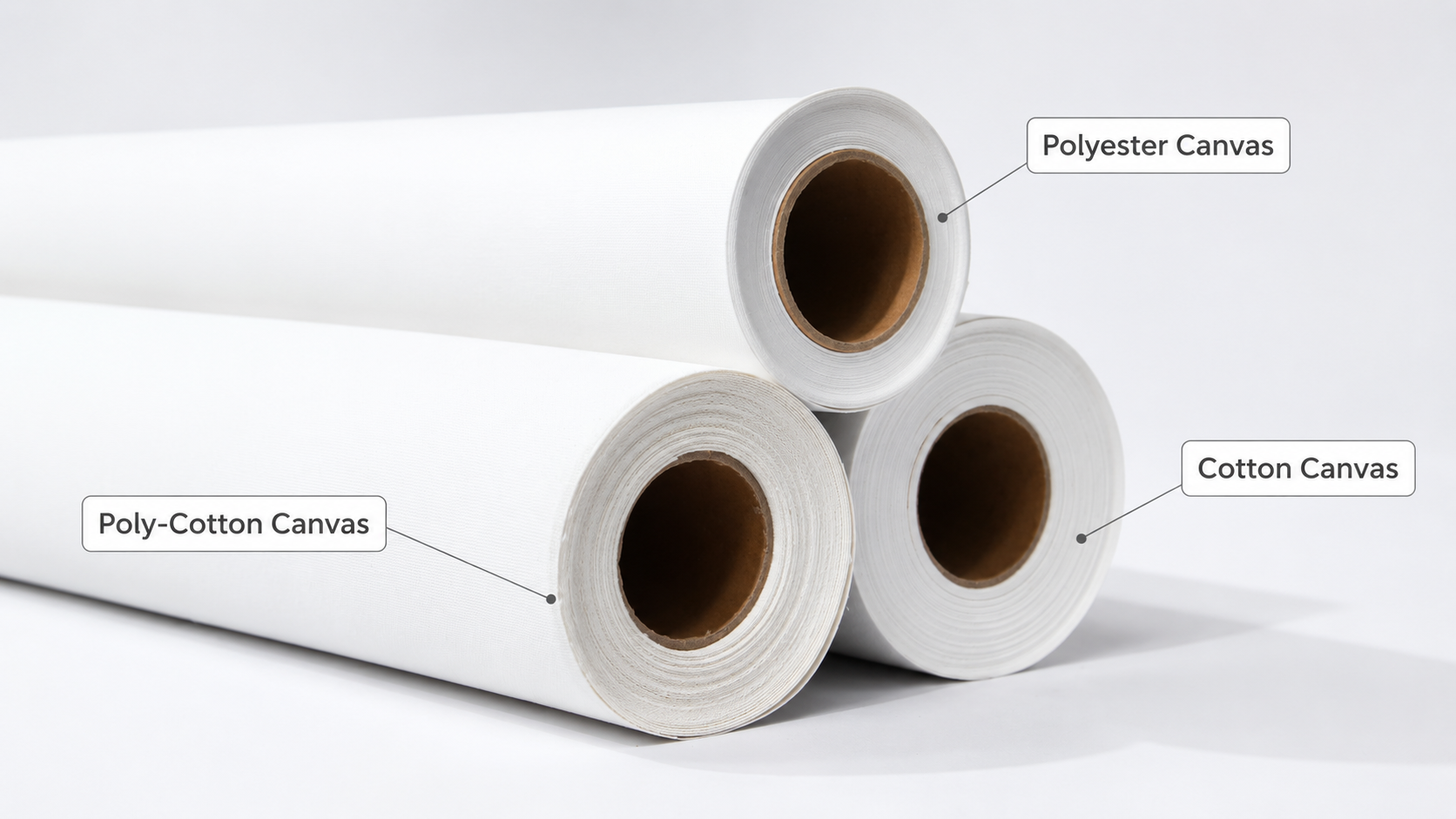
Image Caption:
Cotton, poly-cotton, and polyester canvas each offer a different balance of texture, stability, and production efficiency.
WHY CANVAS COATING MATTERS
The base fabric is only one part of the product. The coating is what turns woven fabric into printable inkjet canvas.
A good coating helps control how ink lands on the surface. It affects color density, contrast, drying speed, scratch resistance, water resistance, and image sharpness.
Different coatings are designed for different printer technologies. Always confirm that the canvas is compatible with your ink system before placing a bulk order.
| Ink System | Canvas Requirement | Typical Applications | What to Test |
|---|---|---|---|
| Aqueous Pigment Ink | Fine-art coating with strong color control | Fine art prints, photography, indoor wall art | Color density, drying time, black point, image detail |
| Eco-Solvent Ink | Coating designed for eco-solvent ink chemistry | Decorative graphics, commercial canvas printing | Ink adhesion, drying performance, surface appearance |
| Solvent Ink | Durable solvent-compatible coating | Wide-format graphics and commercial printing | Ink compatibility, surface durability, roll flatness |
| UV Ink | Surface suitable for UV curing | Customized décor and short-run production | Flexibility after curing, stretching performance, cracking |
| Latex Ink | Heat-tolerant coating and stable fabric structure | Wall décor, interior graphics, commercial printing | Heat resistance, color appearance, finishing performance |
COLOR MANAGEMENT FOR CANVAS PRINTING
High-quality canvas printing is not only about fabric composition and coating. Color management also plays an important role.
Canvas has a textured surface. Different coatings absorb ink differently. The same artwork may look different when printed on cotton canvas, poly-cotton canvas, or polyester canvas.
Professional printers should use the correct media profile, printer settings, and RIP workflow for each canvas type. A proper ICC color management workflow helps improve consistency between the digital file, printer, ink set, and finished canvas print.
Before full production, test color density, shadow detail, skin tones, black point, drying performance, and image sharpness on the selected material.
Industry Reference:
International Color Consortium (ICC)
https://www.color.org/
TECHNICAL DATA BUYERS SHOULD REQUEST
A professional inkjet canvas supplier should provide more than product photos and roll width. Buyers should request a clear technical data sheet before placing a production order.
| Technical Index | Why It Matters |
|---|---|
| Base Fabric Composition | Shows whether the product is cotton, polyester, or a blend |
| Weight | Helps evaluate the body, thickness, and perceived value of the canvas |
| Thickness | Important for printer settings, handling, stretching, and finished appearance |
| Weave Structure | Influences surface texture and the visual character of the final print |
| Opacity | Helps prevent show-through and supports a solid print appearance |
| Whiteness | Affects color reproduction, image brightness, and overall image tone |
| Surface Finish | Matte, satin, and gloss surfaces create different visual effects |
| Compatible Ink Systems | Confirms whether the coating suits your printer technology |
| Printable Width and Roll Length | Helps plan production, freight, stock, and machine compatibility |
| Stretching and Scratch Resistance | Important for gallery-wrap prints, framing, finishing, and shipping |
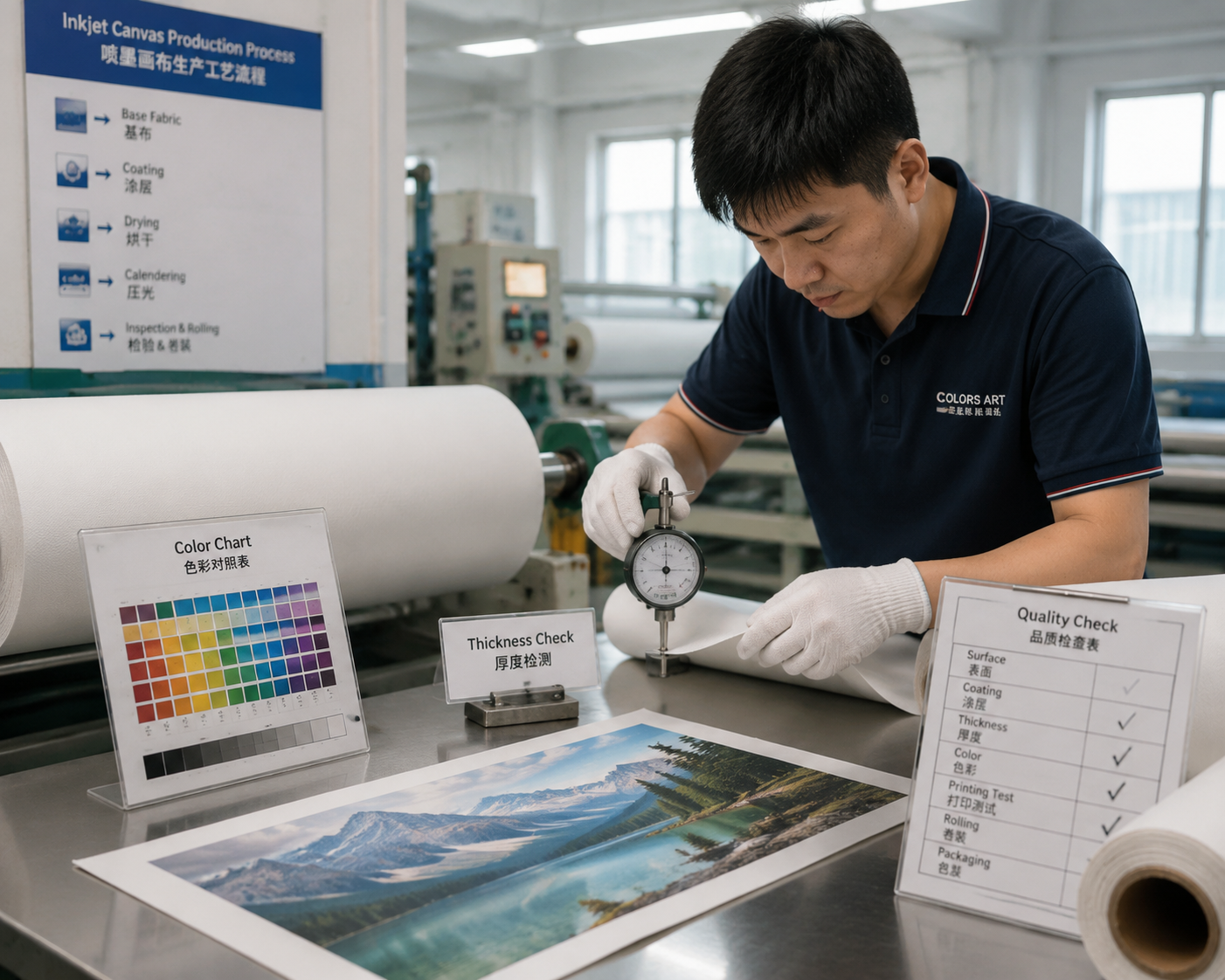
Image Caption:
Technical testing helps ensure stable print quality, reliable handling, and consistent production performance.
HOW TO CHOOSE THE RIGHT INKJET CANVAS
-
Start with Your Printer and Ink System
Always start with compatibility. Confirm whether you are printing with pigment ink, eco-solvent ink, solvent ink, UV ink, or Latex ink.
The coating must be designed for your printing technology. A strong fabric alone is not enough. The coating needs to work with the ink chemistry and your production workflow.
-
Consider the Type of Artwork
Fine art reproduction, photography, abstract décor, commercial graphics, and exhibition artwork do not always need the same canvas.
A fine art print may benefit from a textured matte cotton canvas. A commercial photo canvas may need stronger color density and sharper detail. A high-volume decorative print may need polyester canvas for stable production performance.
-
Test Stretching and Framing Performance
For gallery-wrap applications, printing is only the first step. The canvas must also perform well during stretching.
Test whether the material remains stable around stretcher bars. Check for edge cracking, surface whitening, tension loss, or image distortion after framing.
-
Match the Surface Finish to Your Market
Matte canvas is often preferred for fine art, décor, and low-glare indoor environments.
Satin or semi-gloss canvas can provide stronger contrast and a more vivid image. It may be suitable for photography, commercial graphics, or decorative collections that need more visual impact.
-
Select the Right Product Level
Use cotton canvas for premium art-focused products. Use poly-cotton canvas for a balanced range of wall art and photo canvas prints. Use polyester canvas for efficient production, larger formats, and commercial applications.
APPLICATION-BASED INKJET CANVAS GUIDE
| Application | Recommended Canvas Direction | Recommended Finish | Key Requirement |
|---|---|---|---|
| Fine Art Reproduction | Cotton or premium poly-cotton canvas | Matte | Natural texture, strong detail, premium appearance |
| Photo Canvas Printing | Poly-cotton or coated polyester canvas | Matte or satin | Color density, sharpness, stable stretching |
| Home Décor Wall Art | Poly-cotton or polyester canvas | Matte | Consistent output, attractive texture, good cost balance |
| Hotel and Hospitality Artwork | Poly-cotton or polyester canvas | Matte | Repeatable quality and reliable project delivery |
| Exhibition Artwork | Polyester or poly-cotton canvas | Matte | Easy handling, wide rolls, dependable printing |
| Commercial Canvas Production | Polyester canvas | Matte or satin | Stable size, efficient output, scalable supply |
| Gallery-Wrap Prints | Cotton or poly-cotton canvas | Matte | Stretching performance and crack resistance |
WHY INKJET CANVAS ADDS VALUE TO PRINTED DÉCOR
Inkjet canvas turns a printed image into a décor product.
It gives photography more texture. It makes digital illustrations feel more tactile. It helps print businesses create higher-value wall art rather than relying only on posters or standard photo paper.
Canvas can be used for personalized family photos, art reproductions, hotel interiors, retail decoration, restaurant artwork, office wall décor, and made-to-order online print products.
For buyers and print companies, the right material can improve both the visual quality of the print and the final value of the finished product.
Industry Reference:
PRINTING United Alliance
https://www.printing.org/
INKJET CANVAS FOR LATEX PRINTING
Latex printing is widely used for interior décor, wall graphics, and commercial print production.
When using Latex technology, canvas selection should take account of coating performance, heat resistance, color appearance, and post-print finishing.
Canvas should be tested under real production conditions before bulk purchasing. This includes printing, drying, trimming, stretching, framing, and shipping.
For Latex users, HP provides a useful canvas printing guide covering media preparation, printing, post-print finishing, and installation.
Industry Reference:
HP Latex Canvas Printing Guide
https://www.hp.com/us-en/printers/large-format-printers/articles/how-to-print-on-canvas-with-hp-latex-700-and-hp-latex-800.html
CHOOSE THE RIGHT INKJET CANVAS WITH COLORS INKJET
At Colors Inkjet, we provide printable canvas materials for decorative printing, fine art reproduction, photo canvas production, commercial wall décor, and large-format printing applications.
Our canvas range can support cotton canvas, poly-cotton canvas, polyester canvas, and coating options for different printing technologies.
Whether you are a distributor, print studio, décor brand, or large-format printing company, the right canvas can improve print quality, production efficiency, and final product value.
Contact Colors Inkjet to request samples, technical data sheets, and product recommendations for your canvas printing project.
RELATED PRODUCTS
• Inkjet Canvas
• Cotton Canvas
• Poly-Cotton Canvas
• Polyester Canvas
• Printable Textile Materials
• Request a Sample
FREQUENTLY ASKED QUESTIONS
What is the best inkjet canvas for fine art printing?
Cotton canvas and premium poly-cotton canvas are often suitable for fine art printing because they offer a more natural woven texture and a higher-value appearance. The best choice also depends on the printer, ink system, and required finish.
Is poly-cotton canvas better than polyester canvas?
Neither material is always better. Poly-cotton canvas is often selected for a balance of natural texture and stable handling. Polyester canvas is often preferred for efficient commercial production, wider formats, and consistent output.
Can inkjet canvas be used with UV printers?
Some coated canvas products are designed for UV printing. Always confirm UV compatibility with the supplier and test the material before production.
Why does canvas sometimes crack during stretching?
Cracking can happen when the coating is too rigid, the canvas is stretched too aggressively, or the material was not designed for gallery-wrap finishing. Test the canvas with your own stretcher bars and production process before ordering in bulk.
Should I use an ICC profile when printing on canvas?
Yes. A correct ICC profile and media setting can improve color consistency, shadow detail, black density, and image appearance on different canvas surfaces.