Gallery Wrap Stretcher Bars
Gallery Wrap Stretcher Bars for Professional Canvas Production
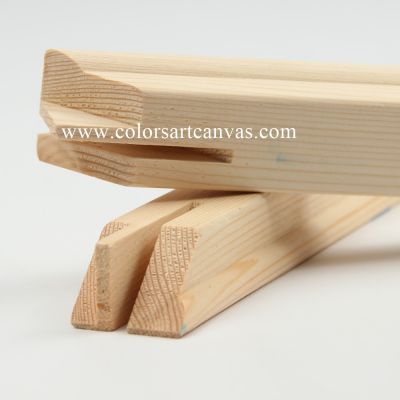
Gallery wrap stretcher bars are deeper wooden stretcher profiles designed for canvas products where the printed or painted canvas continues around the visible sides of the frame and is normally secured at the back. Because the side remains visible, the wooden stretcher profile becomes part of the finished presentation.
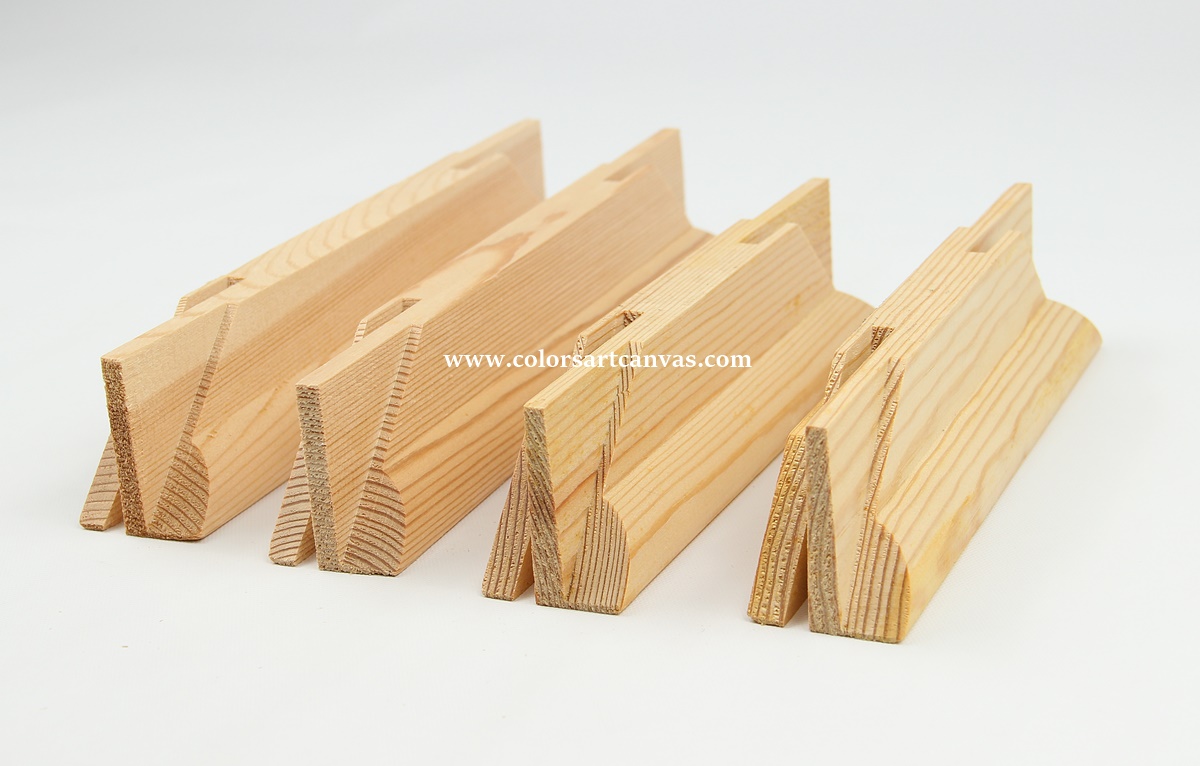
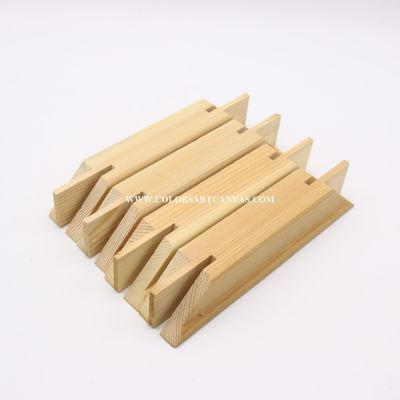
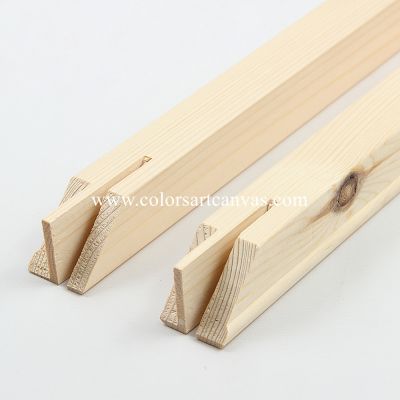
Colors Art manufactures gallery wrap stretcher bars for canvas printing factories, wall-art manufacturers, professional framers, art-material distributors and OEM/private-label programs. Available configurations include different profile depths, sloped or inclined working faces, rounded canvas-contact transitions, supporting bars, custom lengths and customer-specific profiles.
A gallery wrap profile should not be selected by depth alone. Finished canvas dimensions, visible side depth, profile geometry, canvas construction, stretching tension, aspect ratio, corner folding, support structure and packing method should be evaluated together.
View our complete wooden canvas stretcher bar range for Standard, Gallery Wrap, Heavy-Duty, supporting-bar and custom profile options.
Quick Specification Overview
| Product Type | Gallery Wrap Canvas Stretcher Bars |
| Main Material | Selected kiln-dried pine according to the confirmed product specification |
| Wood Grade | Knot-free and selected natural-knot options according to project requirements |
| Finished Wood Moisture | ≤12% |
| Representative Profiles | 32 × 32 mm, 37 × 37 mm, 37 × 38 mm, 38 × 28 mm, 38 × 38 mm and additional/custom gallery-depth profiles |
| Profile Geometry | Deep, sloped / inclined, raised and smoothly rounded canvas-contact structures depending on the individual model |
| Joint Options | According to the confirmed individual profile and customer specification |
| Support Options | Centre bars, supporting bars and cross-brace systems according to frame dimensions and selected profile |
| Supply Form | Loose stretcher bars, ready-to-assemble sets or assembled frames according to project specification |
| OEM Options | Profile geometry, depth, length, joint, support system, wood selection, packing and private label |
| Typical Applications | Photo canvas, fine-art reproduction, wall art, frameless stretched canvas and multi-panel canvas |
| Typical Buyers | Canvas printers, wall-art manufacturers, framing companies, distributors and private-label brands |
Gallery Wrap Is a Finished Canvas System — Not Just a Deeper Wooden Bar
The main difference between a standard stretcher bar and a gallery wrap stretcher bar is not simply that one profile is deeper.
In a gallery-wrap product, the canvas continues around the side of the wooden frame and the side remains visible after installation. This means the stretcher-bar depth, canvas-contact geometry, canvas wrap allowance, corner folding and back fixing all contribute to the final appearance.
For this reason, profile selection should begin with the finished canvas requirement rather than simply selecting the deepest available wooden section.
| Buyer Requirement | What Should Be Evaluated |
|---|---|
| Visible side depth | Required finished gallery-wrap depth and overall wall presence |
| Printed image continues around sides | Available wrap area and final image positioning |
| Mirror wrap or solid-color sides | Side depth and consistency around all four edges |
| Thicker or heavier canvas | Canvas-contact radius, corner-folding bulk and stretching tension |
| Large frame size | Profile stiffness, unsupported span and brace / cross-bar requirement |
| Long rectangular frame | Aspect ratio and longest unsupported stretcher-bar span |
| Multi-panel wall art | Consistent profile depth and frame geometry across all panels |
Choose the Finished Gallery Wrap Depth First
For gallery-wrap canvas, profile depth directly influences how substantial the finished artwork appears on the wall. A deeper profile creates a stronger side presence, while a shallower gallery-depth profile produces a lighter visual effect.
However, gallery-wrap depth and structural duty are not the same thing. A deep wooden profile is not automatically a heavy-duty profile.
Two stretcher bars with similar outside dimensions may also perform differently because their actual cross-section geometry, timber distribution, canvas-contact edge, wood condition, joints and supporting structure may be different.
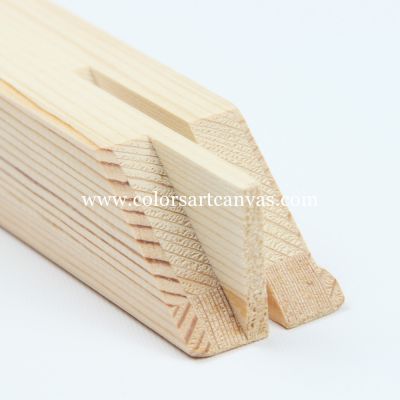
For OEM matching, an actual cross-section drawing, approved sample or physical profile is therefore more useful than nominal width × depth alone.
Representative Gallery Wrap Stretcher Bar Profiles
| Profile | Profile Direction | Selection Logic |
|---|---|---|
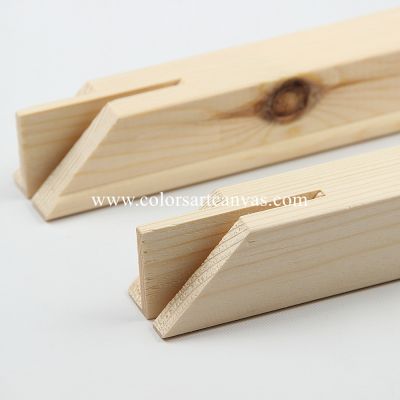
| 32 × 32 mm | Sloped / Inclined Gallery Wrap | Compact gallery-depth construction with an inclined working face and smoothly rounded canvas-contact transition |
| 37 × 37 mm | Sloped / Inclined Gallery Wrap | Deeper member of the inclined profile family for gallery-wrap canvas production |
| 37 × 38 mm | Gallery Wrap | Deep-profile configuration for professional frameless canvas and wall-art production |
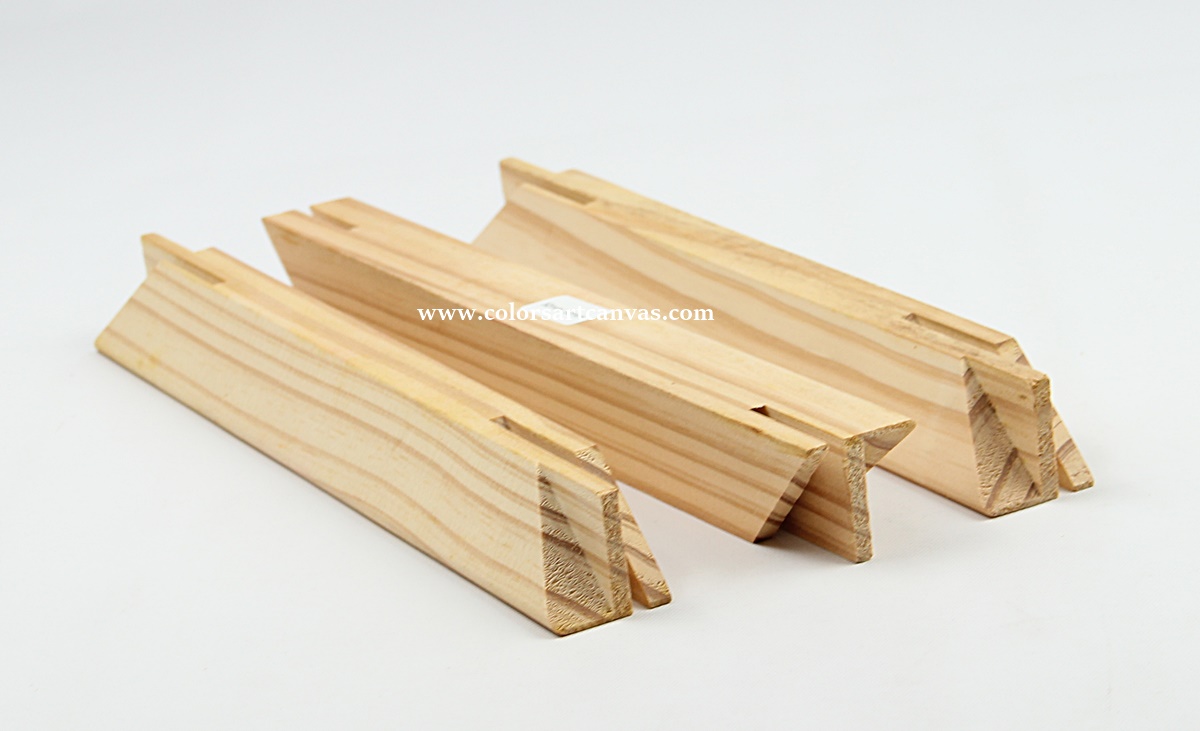
| 38 × 28 mm | Cost-Efficient Gallery Wrap | Combines gallery-style visible depth with a narrower wood width to help control timber use, frame weight and production cost |
| 38 × 38 mm | Deep Gallery Profile | Deep square-format profile for professional stretched-canvas and wall-art programs |
| Custom Profile | Drawing / Sample Matching | For existing canvas-frame systems, customer-specific cross-sections and private-label programs |
For specific product examples, review our 32 × 32 mm Sloped Profile Gallery Wrap Stretcher Bars , 37 × 38 mm Gallery Wrap Stretcher Bars and 38 × 28 mm Pine Gallery Wrap Stretcher Bars .
Cost-Efficient Gallery Wrap Profiles
A deep gallery-wrap appearance does not always require a square or maximum-timber cross-section.
For high-volume photo canvas and commercial wall-art programs, buyers may need to balance finished side depth with timber consumption, frame weight, packing volume and production cost.
The Colors Art 38 × 28 mm Gallery Wrap Stretcher Bar is one example of this design direction. Its 38 mm dimension provides the deeper side appearance associated with gallery-wrapped canvas, while the narrower 28 mm wood width creates a more material-efficient profile.
This type of profile can be useful for commercial programs where the target is not simply to specify the largest wooden section, but to achieve the required finished appearance and structural performance at an appropriate finished-frame cost.
See the 38 × 28 mm Pine Gallery Wrap Stretcher Bars for product specifications, support options and OEM information.
Gallery Wrap Side Treatment: Image Wrap, Mirror Wrap or Solid Edge
For printed canvas production, the visible gallery-wrap side can be handled in several ways. The selected stretcher-bar depth affects how much additional canvas is required around the image and how the final side appears after stretching.
| Wrap Style | Description | Production Consideration |
|---|---|---|
| Image Wrap | The printed image continues around the visible sides | Important image content should not be positioned too close to the wrap transition |
| Mirror Wrap | The edge of the image is mirrored onto the visible sides | Useful when the complete front image composition needs to remain visible |
| Solid-Color Edge | A selected color is printed or finished on the visible sides | Requires consistent side depth and clean corner folding |
| White / Neutral Edge | The visible side is intentionally kept neutral | Profile and stretching consistency become especially noticeable |
Deeper gallery-wrap profiles require more canvas around the finished image area, so wrap method and stretcher-bar depth should be considered together during artwork preparation and production planning.
Canvas-Contact Geometry Matters
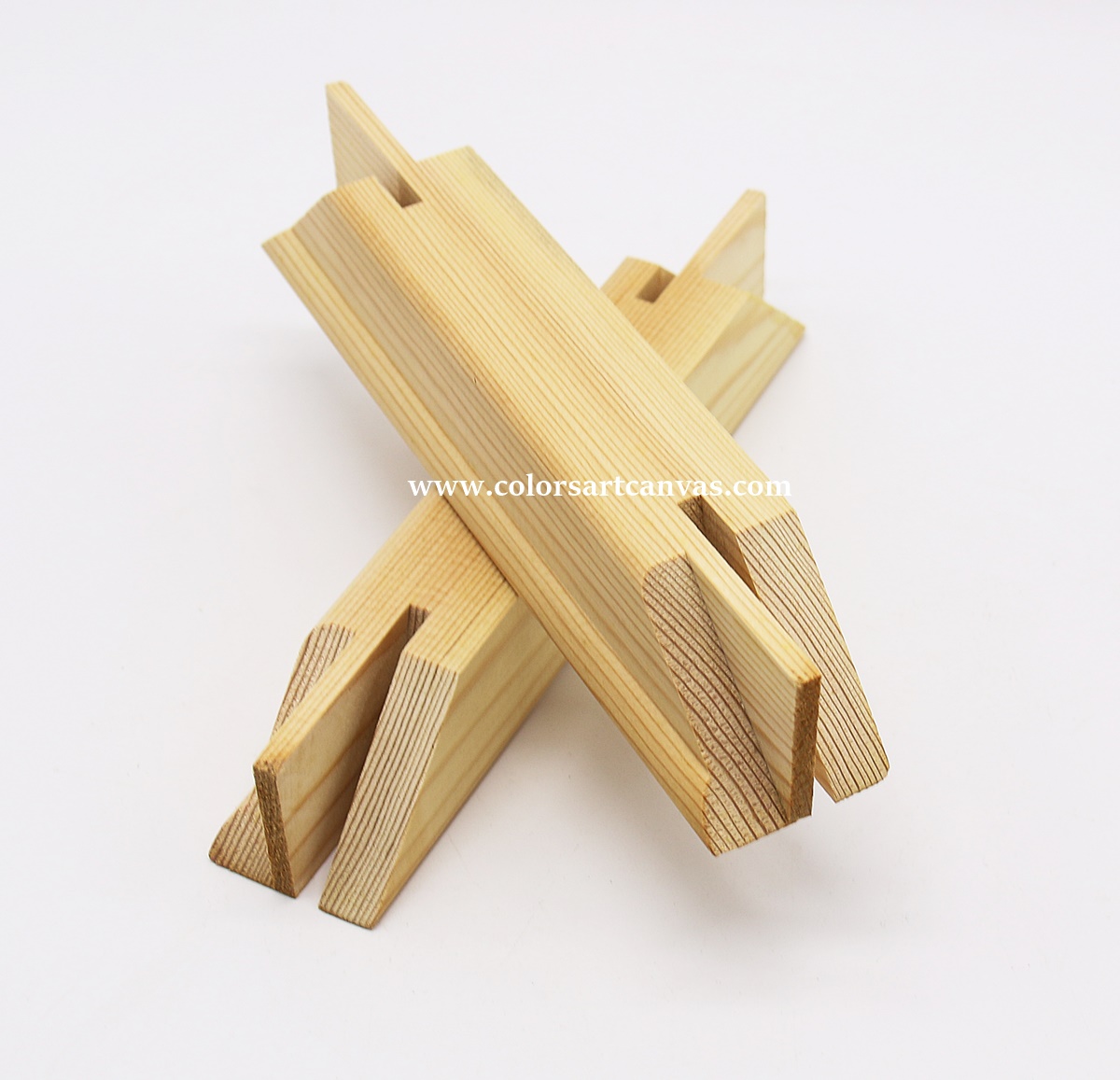
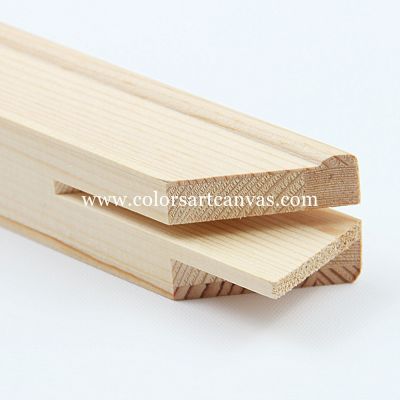
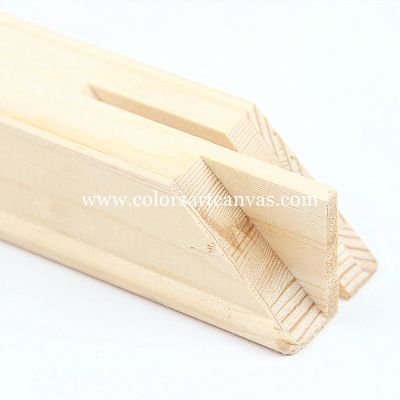
Gallery wrap stretcher bars are not defined only by outside width and depth. The geometry where the stretched canvas passes over the wooden profile toward the front image area is also important.
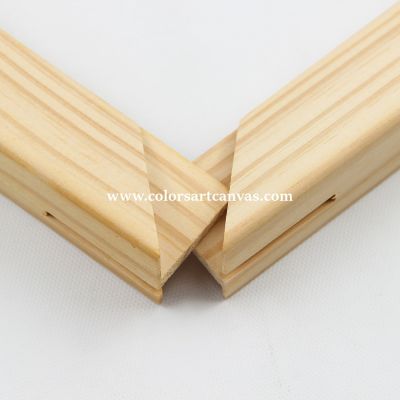
Depending on the individual Colors Art profile, this area may use a raised edge, sloped or inclined working face, rounded edge or smoothly radiused transition.
For example, the Colors Art 32 × 32 mm sloped gallery-wrap profile combines an inclined working face with a rounded canvas-contact transition rather than a simple sharp right-angle working edge.
This type of profile geometry is relevant because excessive contact between stretched canvas and sharp or inadequately bevelled inner stretcher edges can contribute to visible stretcher marks. Independent conservation guidance from the Canadian Conservation Institute also discusses the relationship between canvas contact, stretcher edges and stretcher marks.
Technical reference: Canadian Conservation Institute guidance on stretcher and strainer bars .
For repeat OEM production, buyers should therefore compare the complete cross-section geometry rather than assuming two profiles with similar nominal dimensions are interchangeable.
Corner Folding and Canvas Bulk
Gallery-wrap corners require more attention than conventional framed canvas because the wrapped side remains visible.
The canvas travels around two adjacent sides and folds at the corner before being secured at the back. As profile depth and canvas thickness increase, more material may become concentrated around the corner.
Buyers should therefore evaluate canvas thickness and stiffness, finished side depth, corner-folding method, front-corner appearance, visible-side appearance and back-side material buildup.
For a new OEM program, an actual stretched-frame sample can provide more useful information than evaluating an individual wooden bar alone.
Keep the Visible Sides Clean: Back Fixing Area
Because the side of a gallery-wrap canvas remains visible, staples or other fixing points are normally positioned on the back rather than through the visible side surface.
The stretcher-bar system therefore needs sufficient back fixing area for the customer's stretching method and required canvas tension.
This becomes particularly important in repeat or high-volume production where fixing positions and finished appearance need to remain consistent across multiple frame sizes.
Gallery Wrap Depth Does Not Automatically Mean Heavy-Duty Strength
A deeper gallery-wrap profile can create a stronger visual appearance, but visual depth and structural capacity are different selection requirements.
A profile selected mainly for a deep gallery-wrap appearance may still require additional support as frame span increases.
Conversely, structural performance cannot be determined from depth alone because profile width, cross-section geometry, timber distribution, wood condition, joint construction and internal support all contribute to the complete frame system.
For buyers comparing different structural levels, also read our Stretcher Bar Profile Guide: Light Duty, Standard, Gallery Wrap & Heavy Duty Explained when this technical guide is published.
When Should a Gallery Wrap Frame Use a Brace or Cross Bar?
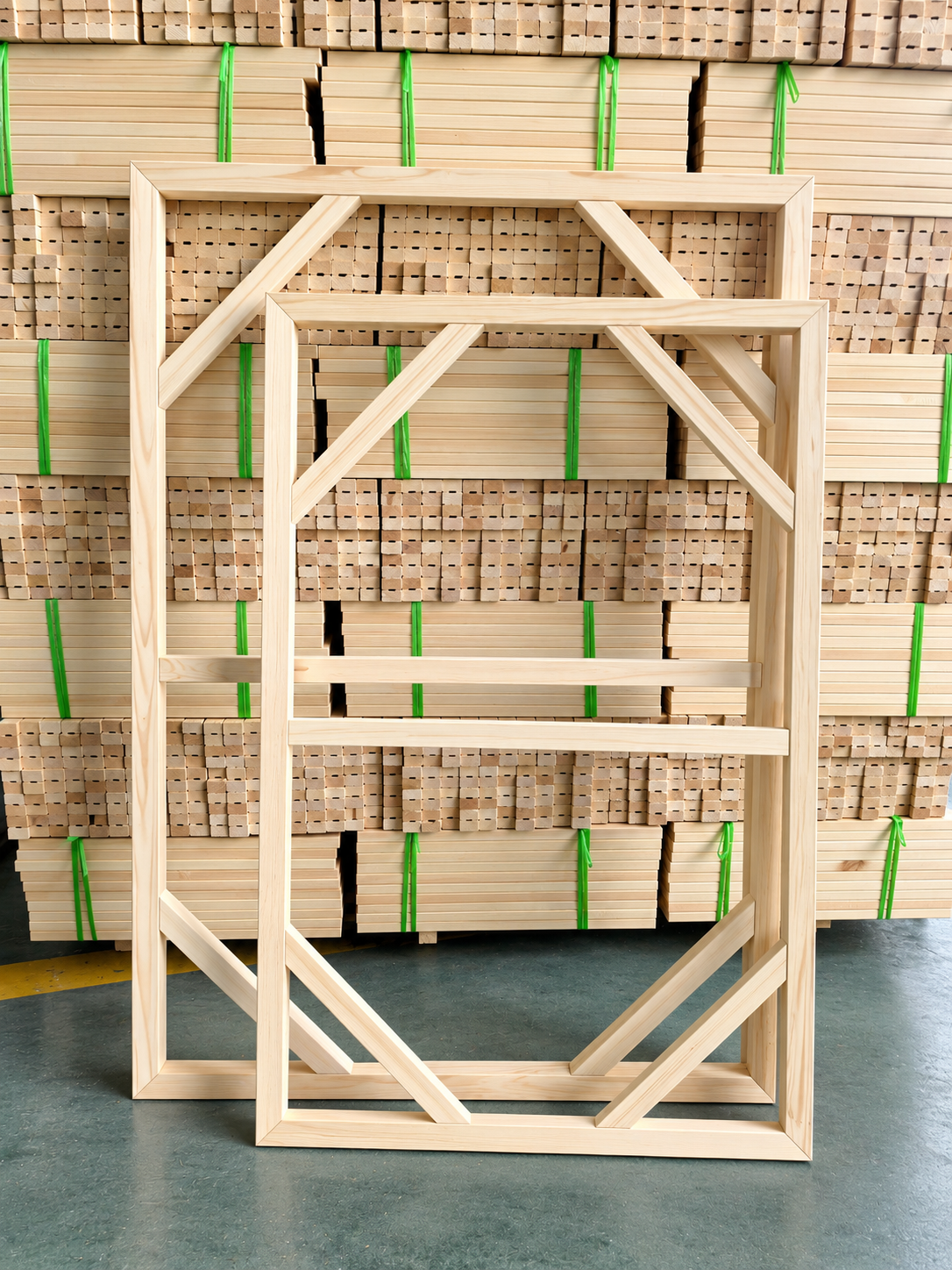
Supporting bars — also called brace bars, centre bars or cross bars — help control unsupported span and frame movement under canvas tension.
There is no single universal size at which every gallery-wrap frame requires exactly the same support arrangement. However, for practical production planning, support should normally begin to be evaluated as the long side approaches approximately 60 cm.
| Approximate Long Side | Typical Support Direction | Main Factors to Check |
|---|---|---|
| Below about 60 cm | Often no internal brace is required when a suitable profile is used | Profile strength, canvas tension and frame proportions |
| About 60–80 cm | Begin evaluating one centre / supporting bar | Unsupported span, profile geometry, canvas tension and aspect ratio |
| About 80–100 cm | One centre support becomes increasingly common | Profile stiffness, frame width, canvas construction and finished use |
| Above about 100 cm | Two intersecting supports or a stronger cross-brace layout should be evaluated | Overall dimensions, aspect ratio, canvas tension and structural stability |
| Oversized / High-Aspect-Ratio Frames | Multiple braces or a heavier structural system may be required | Complete frame structure rather than long-side dimension alone |
Important: these dimensions are practical selection references rather than universal engineering limits. Final support requirements depend on the selected stretcher-bar profile, complete width × height, aspect ratio, wood condition, canvas construction, stretching tension, assembly method, transportation and end-use requirements.
For example, an 80 × 80 cm square frame and a 40 × 120 cm rectangular frame should not automatically use the same support logic simply because their overall canvas areas may appear comparable. The longest unsupported span and aspect ratio also need to be considered.
Multi-Panel and Triptych Canvas Requires Consistent Depth
Gallery wrap stretcher bars are frequently used for multi-panel wall art, triptychs and grouped canvas installations.
In these applications, profile consistency becomes especially important because several independent canvases are viewed together on the same wall.
Buyers should control finished side depth, frame squareness, profile geometry, canvas tension, panel-to-panel alignment and back-support configuration.
Small dimensional or profile differences that may be difficult to notice on a single canvas can become much more visible when several panels are installed next to each other.
Gallery Wrap Packing and Freight Considerations
Profile selection also affects logistics. Deeper stretcher bars and pre-assembled gallery-wrap frames normally occupy more packing volume than shallower standard systems.
For bulk B2B programs, buyers should compare loose bars versus assembled frames, profile dimensions, carton size, pieces per carton, pallet configuration, protection of machined ends and total shipping volume.
The lowest price per metre is therefore not always the lowest finished-frame cost.
Timber use, supporting bars, assembly labour, packing density, shipping volume, rejection rate, rework and customer claims should all be considered when comparing alternative stretcher-bar systems.
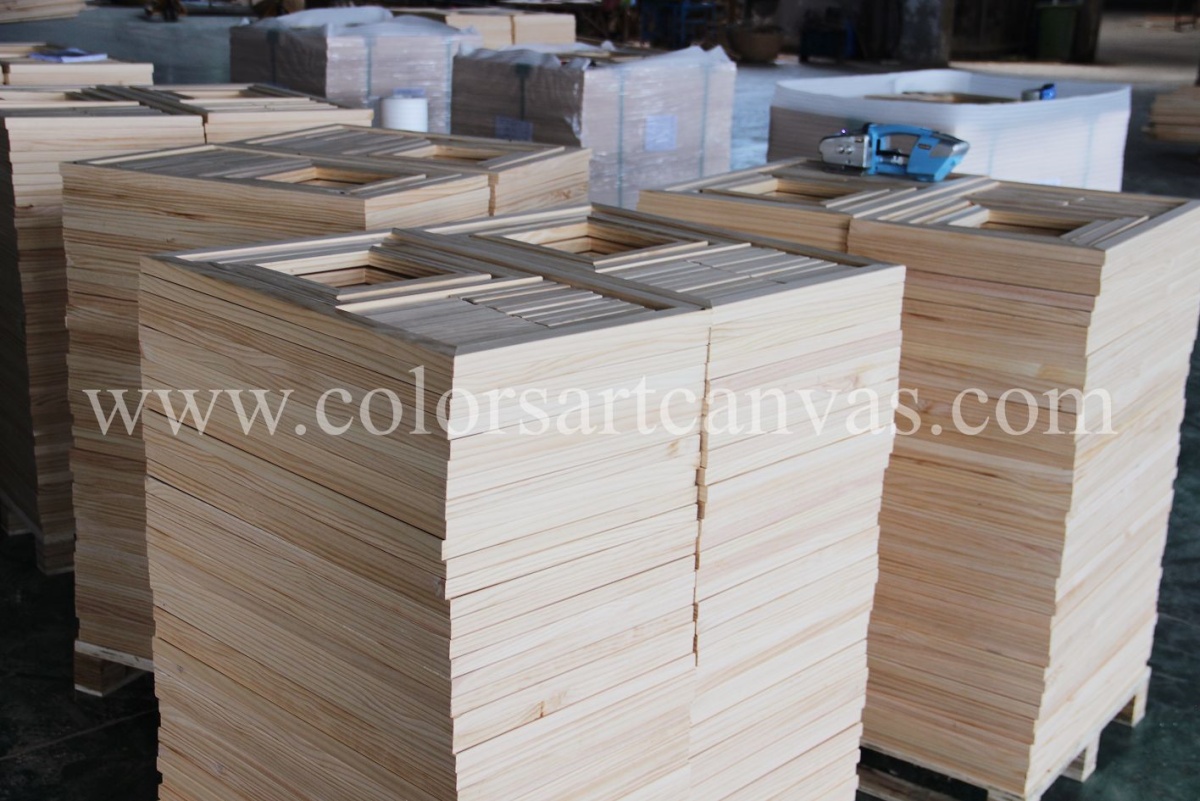
Gallery Wrap Sample Approval Before Bulk Production
For a new OEM gallery-wrap program, approving only an individual wooden bar may not provide enough information. Where practical, the complete frame and canvas system should be evaluated before bulk production.
- Confirm profile dimensions and cross-section geometry.
- Confirm wood requirement and joint structure.
- Check machining and assembly fit.
- Assemble representative finished frame sizes.
- Stretch the actual or representative canvas for validation.
- Check visible side depth, canvas-contact transition and image position.
- Check corner folding and back fixing.
- Evaluate frame stability and supporting-bar requirements.
- Confirm finished dimensions, squareness and packing method.
This type of system-level approval is particularly useful for private-label canvas manufacturers, print-on-demand producers and customers matching an existing gallery-wrap product.
Custom & OEM Gallery Wrap Stretcher Bar Manufacturing
Colors Art can evaluate customer drawings, physical samples and existing stretcher-bar systems for OEM and private-label production.
For an accurate evaluation or quotation, please provide as much of the following information as possible:
- Required profile width × depth
- Cross-section drawing, detailed photographs or physical sample
- Required bar lengths or complete finished-frame size list
- Desired finished gallery-wrap depth
- Canvas material, construction and approximate weight
- Wood species or grade requirement
- Required joint structure
- Required assembly fit
- Centre-bar or cross-brace requirement
- Loose bars or assembled frames
- Packing method
- Private-label requirements
- Estimated order quantity
Providing the complete finished-frame size list is especially useful because profile and support requirements should be evaluated from both width and height rather than from maximum dimension alone.
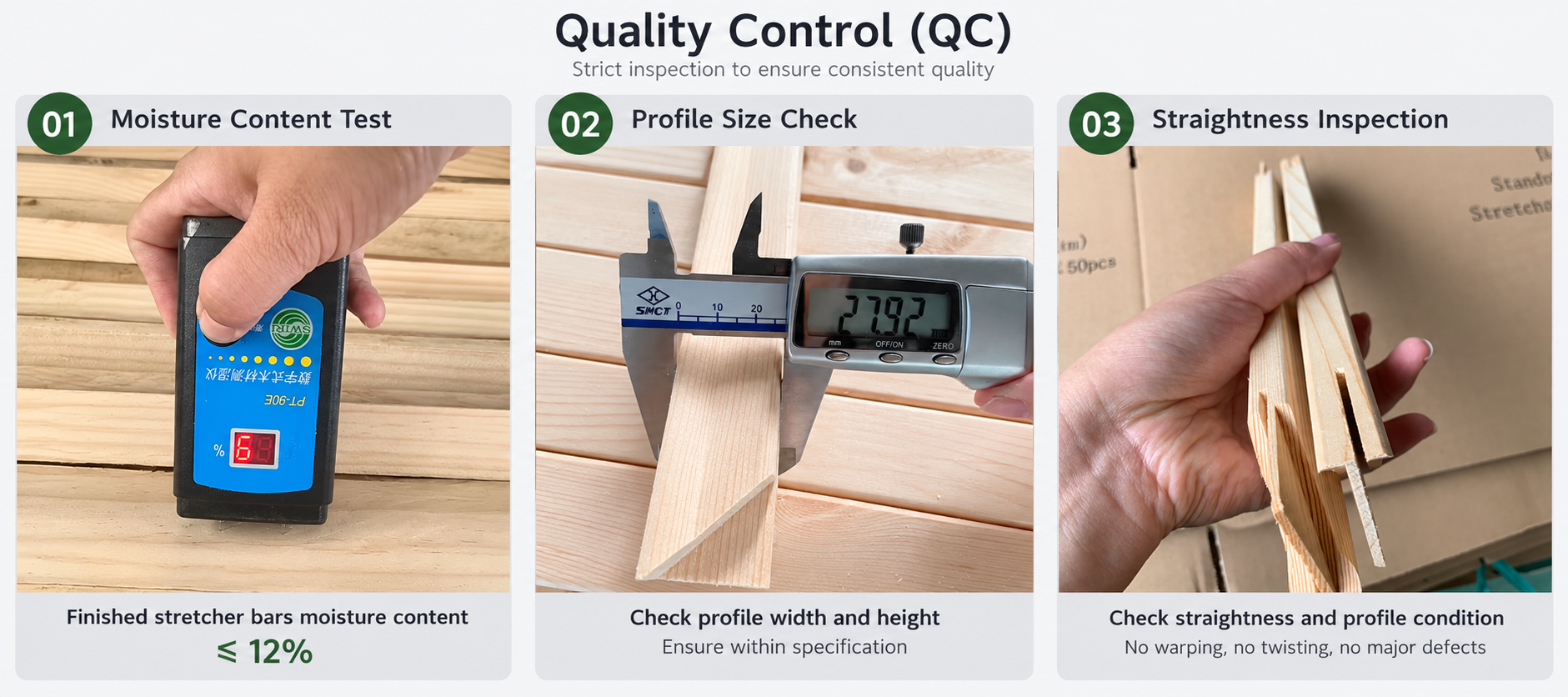
Manufacturing and Quality Control
Gallery wrap stretcher bars should be evaluated as precision wooden frame components rather than simply as cut timber strips.
Colors Art manufactures wooden stretcher-bar products in an approximately 15,000 m² wooden-product manufacturing facility.
For finished stretcher bars, the current Colors Art moisture-control requirement is ≤12%.
Depending on the confirmed product specification, production inspection can include wood condition, finished moisture, straightness, profile dimensions, finished bar length, canvas-contact geometry, joint machining, assembly fit, support preparation, visible surface condition, finished-frame geometry and packing.
Moisture content is only one QC checkpoint. A compliant moisture reading does not by itself guarantee straightness, dimensional accuracy or correct joint fit.
Read our Stretcher Bar Moisture Content, Warping & Straightness Guide for a detailed explanation of moisture, straightness, machining and frame stability.
Gallery Wrap vs Standard vs Heavy-Duty Stretcher Bars
| Type | Main Requirement | Primary Selection Logic |
|---|---|---|
| Standard Stretcher Bars | Regular stretched canvas and conventional framing | Efficient standard frame construction with controlled profile depth |
| Gallery Wrap Stretcher Bars | Frameless canvas with visible wrapped sides | Finished side depth, canvas-contact geometry and presentation |
| Heavy-Duty Stretcher Bars | Large-format or structurally demanding frames | Strength, unsupported-span control and supporting structure |
For a broader comparison of stretcher-bar wood, profiles, dimensions, joints, supports and purchasing requirements, read our Canvas Stretcher Bars Buyer’s Guide .
Gallery Wrap Profile Selection Matrix
| Buyer Input | Why It Matters |
|---|---|
| Finished canvas width × height | Determines unsupported span and structural support requirement |
| Desired visible side depth | Determines the required gallery-wrap profile direction |
| Profile cross-section | Defines geometry more accurately than width × depth alone |
| Canvas type / weight | Influences stretching behaviour, tension and corner folding |
| Image wrap / mirror wrap / solid edge | Affects printable wrap allowance and visible-side appearance |
| Expected canvas tension | Affects profile and support requirements |
| Aspect ratio | Helps identify longer unsupported spans in rectangular formats |
| Outer decorative frame | Helps determine whether Gallery Wrap or Standard may be more appropriate |
| Brace requirement | Affects support preparation, supporting bars and frame assembly |
| Loose bars or assembled frames | Affects packing method and shipping volume |
| Target market / finished product | Helps balance appearance, structure and production cost |
Frequently Asked Questions About Gallery Wrap Stretcher Bars
What are gallery wrap stretcher bars?
Gallery wrap stretcher bars are wooden frame profiles designed for canvas that wraps around the visible sides of the frame and is normally secured at the back. The profile depth therefore becomes part of the finished frameless presentation.
Is a deeper gallery wrap stretcher bar always stronger?
No. Greater depth creates a deeper visual side profile, but structural performance also depends on cross-section geometry, timber distribution, wood condition, finished frame dimensions, joints and supporting structure.
What gallery wrap profile sizes does Colors Art manufacture?
Representative configurations include 32 × 32 mm, 37 × 37 mm, 37 × 38 mm, 38 × 28 mm and 38 × 38 mm, together with additional and custom gallery-depth profiles. Exact geometry should be confirmed from the individual product specification, drawing or approved sample.
What is a cost-efficient gallery wrap profile?
A cost-efficient gallery wrap profile is designed to provide the required visible side depth without necessarily using a full square cross-section. For example, the Colors Art 38 × 28 mm profile combines a 38 mm gallery-style depth with a narrower 28 mm wood width to help control timber use, frame weight and production cost.
At what size should a brace or cross bar be considered?
As a practical starting reference, support should begin to be evaluated when the long side approaches approximately 60 cm. Around 60–80 cm, a centre support may be considered. Around 80–100 cm, centre support becomes increasingly common, while frames above approximately 100 cm should be evaluated for stronger or intersecting support arrangements. These dimensions are selection references rather than universal structural limits.
Does every 60 cm gallery wrap frame require a brace?
No. Approximately 60 cm is a practical point to begin evaluating support rather than an absolute rule. Profile geometry, complete width × height, aspect ratio, canvas construction, stretching tension and application also matter.
Is Gallery Wrap the same as Heavy Duty?
No. Gallery Wrap primarily describes the finished presentation in which the canvas wraps around visible sides. Heavy Duty primarily describes a greater structural requirement. A gallery-wrap frame may or may not require a heavy-duty structure depending on its dimensions, profile and production requirements.
Does heavier canvas always require a heavier stretcher bar?
Not automatically. Canvas weight is only one factor. Fabric construction, elongation, coating or priming, stretching tension, finished frame dimensions and support arrangement should also be considered.
Why does the rounded or bevelled canvas-contact edge matter?
The canvas-contact geometry helps determine how the stretched fabric transitions toward the front image area. A suitable raised, bevelled, inclined or rounded transition can help reduce unnecessary canvas contact with the inner wooden structure. Complete geometry should be evaluated together with canvas tension and finished frame design.
What is the finished wood moisture requirement?
The current Colors Art finished stretcher-bar moisture-control requirement is ≤12%. Moisture inspection should be used together with straightness, dimensional, machining and assembly checks rather than as the only acceptance criterion.
Can Colors Art reproduce an existing gallery wrap profile?
Yes. A detailed cross-section drawing, complete dimensional specification or physical sample is preferred because outside width and depth alone do not define the complete stretcher-bar geometry.
Can Colors Art supply centre bars and cross braces?
Yes. Supporting bars and cross-brace structures can be supplied according to the selected profile, finished frame dimensions and confirmed production specification.
Need Help Selecting a Gallery Wrap Stretcher Bar?
Send Colors Art your finished canvas sizes, required side depth, canvas specification, preferred wood requirement, estimated quantity and existing profile drawing or sample if available.
We can evaluate the appropriate gallery-wrap profile, supporting-bar arrangement, supply format and OEM specification for your canvas production program.
For OEM and wholesale enquiries, contact Colors Art with your required profile and complete finished-frame size list.
- 1/1