HOMEBlogStretcher Bar Moisture Content: Warping & Straightness Guide
Blog
Stretcher Bar Moisture Content: Warping & Straightness Guide
Wood Moisture Content for Stretcher Bars: How It Affects Warping, Straightness and Frame Stability
For professional canvas manufacturers, framing companies and high-volume stretched canvas producers, wood moisture content is an important specification when sourcing wooden canvas stretcher bars. However, moisture content alone does not determine whether a stretcher bar will be straight, dimensionally consistent or stable enough for reliable frame production.
At Colors Art, moisture control starts with the pine timber and continues through production. Finished wooden stretcher bars are required to have a moisture content of 12% or below before shipment. But moisture is only one part of the complete quality-control process.
Timber selection, grain direction, natural defects, drying condition, internal stress, bar length, profile geometry, machining accuracy, straightness, storage and packing can all influence the final performance of a wooden stretcher bar.
This guide explains how moisture content relates to warping, why moisture testing cannot replace straightness inspection, and what professional buyers should check before approving a bulk shipment.
1. Why Does Moisture Content Matter for Wooden Stretcher Bars?
Wood is a hygroscopic material. It naturally exchanges moisture with the surrounding air. As temperature and relative humidity change, wood may absorb or release moisture. The USDA Forest Products Laboratory Wood Handbook explains wood-water relationships, moisture content, shrinkage, swelling and dimensional behavior in detail.
These moisture changes matter because wood can change dimension as its moisture condition changes. For a canvas stretcher bar, dimensional movement may influence straightness, joint fit and ultimately the geometry of the finished frame.
Possible problems associated with dimensional instability include:
Bowing along the length of a bar
Sideways curvature or crook
Twisting
Dimensional movement
Changes in joint fit
Corner misalignment
Loss of finished-frame squareness
The issue becomes particularly important with longer stretcher bars and larger frames, where relatively small deviations may become more visible across a longer span.
The objective is not simply to make the wood as dry as possible. The objective is appropriately dried, stable timber that meets the required moisture, straightness and dimensional standards.
2. Moisture Control Starts with the Pine Timber
Moisture control should not begin only after a stretcher bar has already been machined. The condition of the pine timber should also be considered before it moves further into production.
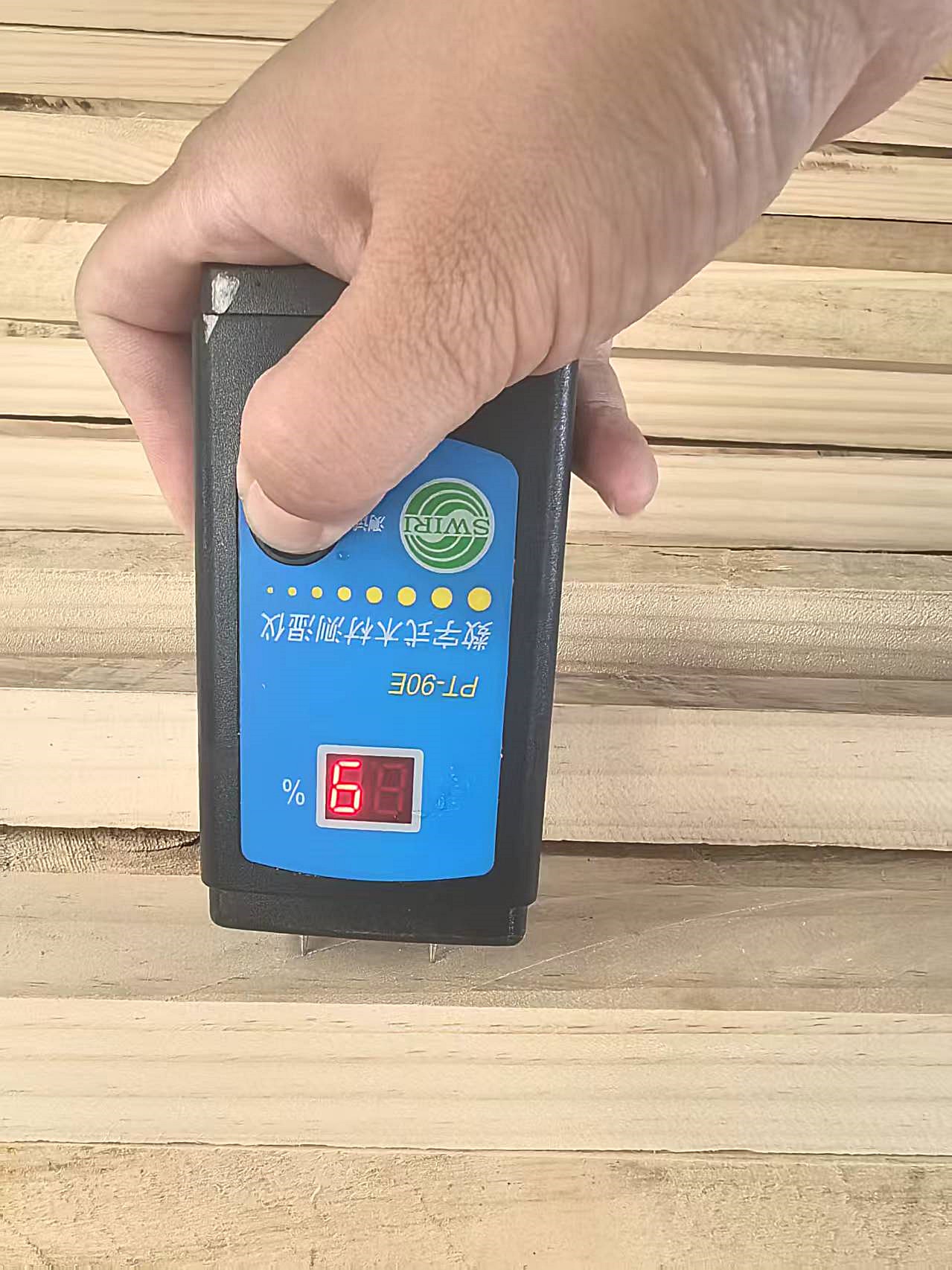
Moisture content is checked on pine timber before stretcher bar production as part of raw-material quality control.
This inspection provides information about the timber before profile machining. It should not be confused with the moisture inspection of the finished stretcher bar.
Kiln drying is an important part of preparing pine timber for stretcher bar production. However, kiln-dried wood does not become permanently isolated from its environment.
After drying, wood remains capable of exchanging moisture with the surrounding air. Its moisture condition can therefore continue to change during storage, machining, finished-goods handling, transportation and later use.
For professional buyers, “kiln dried” is therefore an important description, but it is not the complete finished-product specification.
4. Equilibrium Moisture Content and Destination Climate
Wood tends to exchange moisture with the surrounding atmosphere. The moisture condition toward which wood moves under a particular combination of temperature and relative humidity is commonly described as equilibrium moisture content (EMC).
For a stretcher bar buyer, the practical meaning is straightforward: wood continues responding to its environment after kiln drying.
A shipment may pass through several different environments:
Factory → Warehouse → Container → Port → Destination Warehouse → Framing Facility → Final Indoor Environment
Temperature and relative humidity may vary between these stages. This is why drying, factory handling, finished-product inspection, packing and destination storage should be considered together.
5. Why Do We Check the Finished Stretcher Bar Again?
A raw-material moisture check describes the timber at an earlier production stage. After that point, the wood still passes through storage and machining. The finished component therefore requires its own inspection.
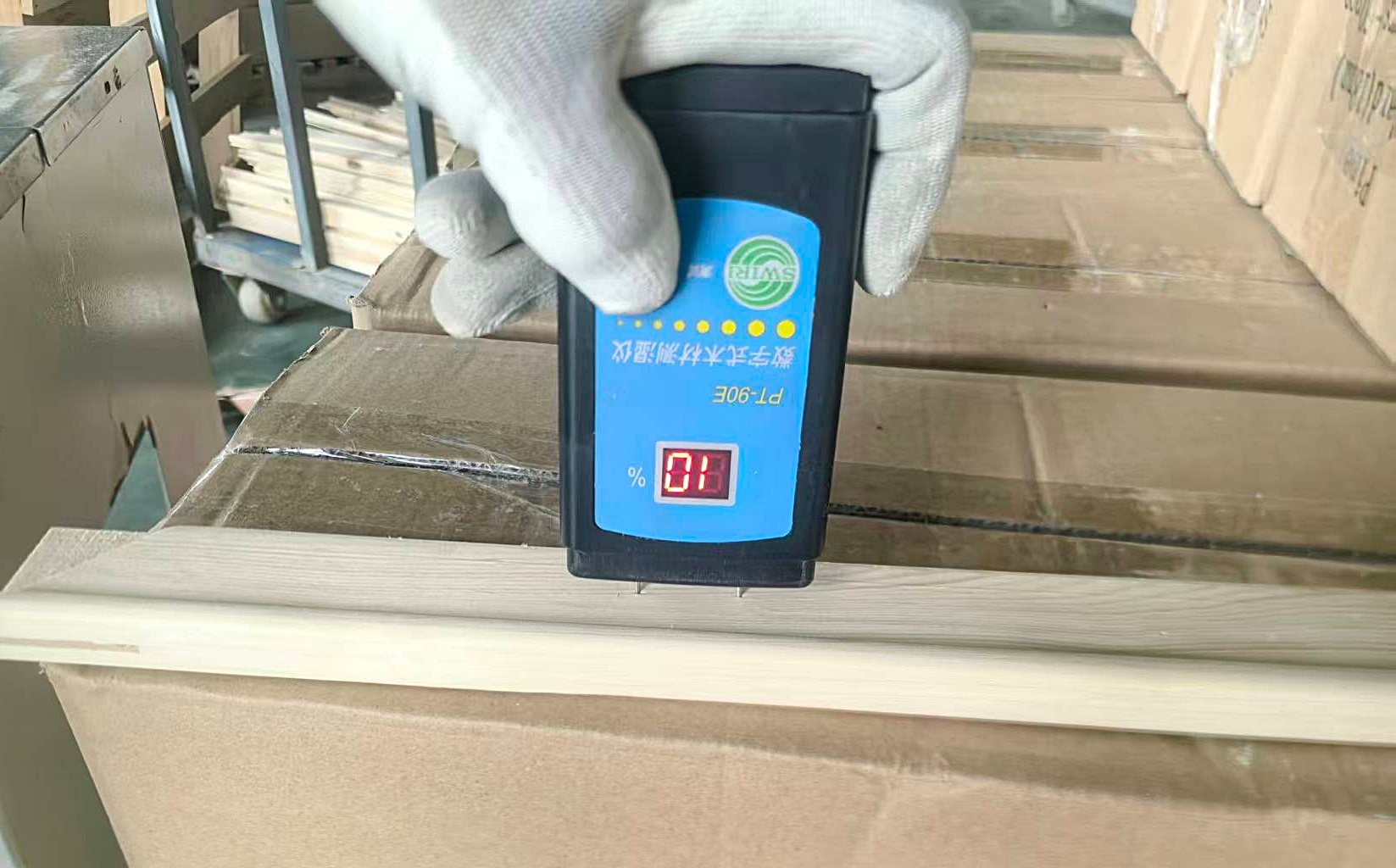
Finished wooden stretcher bars are checked for moisture during quality control. Colors Art requires finished bars to have a moisture content of 12% or below before shipment.
At Colors Art, finished wooden stretcher bars are required to have a moisture content of 12% or below before shipment.
This is a finished-product moisture requirement. It does not mean that passing the moisture check automatically means the stretcher bar passes every other quality requirement.
6. Does Lower Moisture Content Always Mean a Better Stretcher Bar?
No.
A lower moisture reading does not automatically guarantee:
Better straightness
Better dimensional consistency
More accurate machining
Better joint fit
A squarer finished frame
Wood performance depends on more than the final moisture number. Natural wood structure, grain direction, internal stress, drying condition and subsequent processing can all influence the finished component.
A moisture meter tells you about moisture. It does not tell you whether the stretcher bar is straight.
7. What Does a Hand-Held Moisture Meter Actually Tell You?
A hand-held moisture meter is useful in factory QC because it provides a rapid method for checking the moisture condition of timber and finished wooden components.
ASTM also notes that moisture-meter readings can be affected by the actual moisture content, wood variables, environmental conditions, probe geometry and meter design.
This does not make a moisture meter less useful. It means the result should be treated as one QC measurement rather than a complete certificate of stretcher bar quality by itself.
8. One Moisture Reading Does Not Describe an Entire Order
Wood is a natural material. Individual pieces in the same production order can differ in grain pattern, natural characteristics and local moisture condition.
A compliant reading at one selected point or on one selected piece should therefore not be treated as proof that every physical characteristic of an entire shipment is identical.
This is another reason professional stretcher bar QC should continue after moisture testing.
9. Can a Stretcher Bar Still Be Bent When Moisture Is Controlled?
Yes.
Moisture content and straightness are two different quality-control checkpoints. Even when moisture is controlled, finished stretcher bars still need a separate physical inspection for bowing, crook and twist.
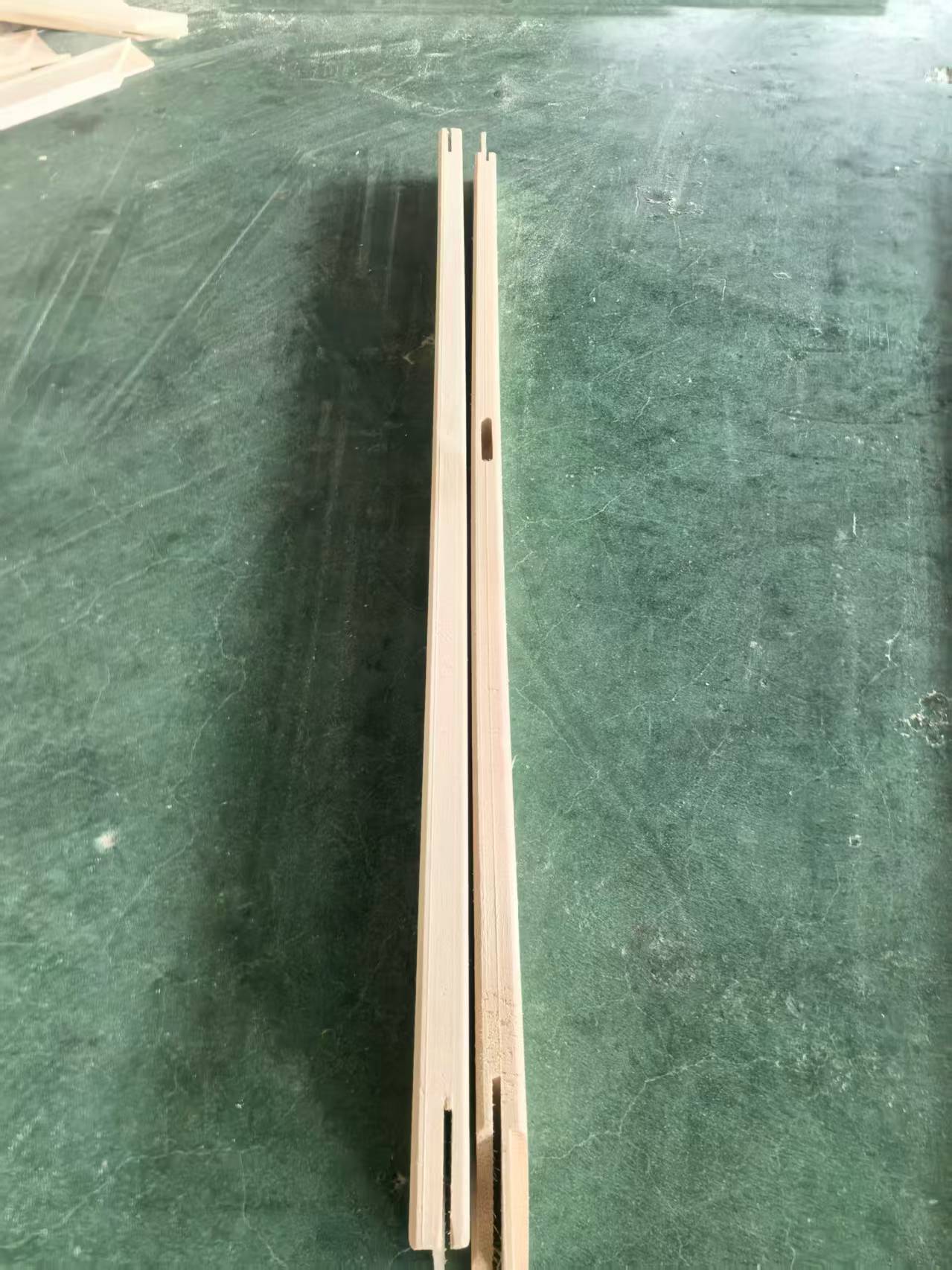
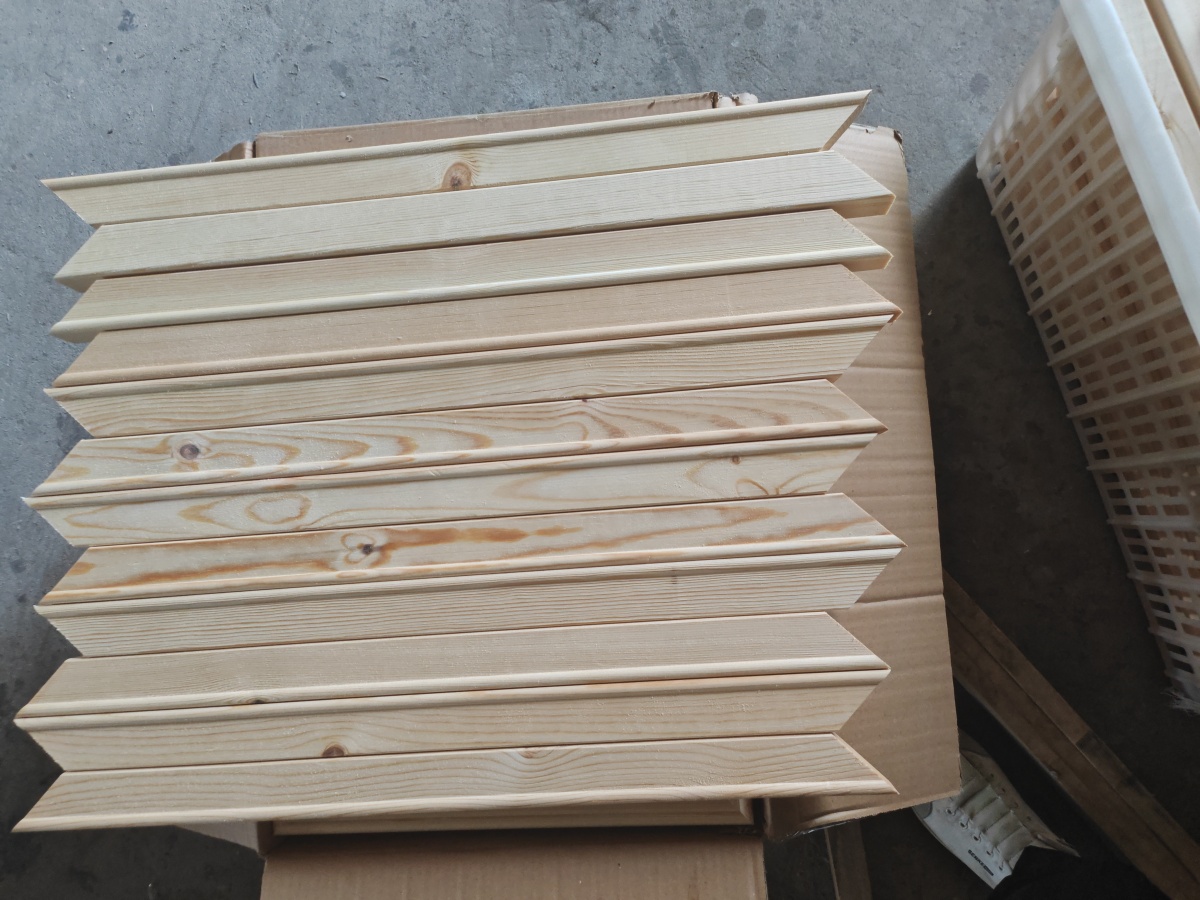
Visible differences in bowing and straightness show why moisture testing cannot replace physical straightness inspection of finished stretcher bars.
Possible reasons for different straightness conditions include:
Grain direction
Knots and other natural timber characteristics
Internal timber stress
Drying uniformity
Profile geometry
Bar length
Machining
Storage and support
This is why diagnosing every warped stretcher bar simply as a “moisture problem” can be misleading.
10. Bow, Crook and Twist Are Different Forms of Distortion
In normal purchasing discussions, the word “warped” is often used for almost any stretcher bar that is not straight. However, several different forms of distortion can occur.
Bow: curvature along the length of the bar.
Crook: sideways curvature along the edge.
Twist: rotation of the cross-section along the length.
Distinguishing the type of deformation is useful because different defects can create different problems during cutting, joining and frame assembly.
11. Why Does Grain Direction Matter?
Wood does not behave identically in every direction. Its natural grain structure therefore matters when dimensional stability is considered.
Irregular grain, knots and other natural timber characteristics can interrupt otherwise consistent wood structure. Internal stresses developed during tree growth, drying or processing may also remain in the timber.
When material is removed during machining, the balance of those internal stresses can change. This helps explain why moisture content alone cannot predict the final straightness of every stretcher bar.
12. Why Are Long Stretcher Bars More Sensitive to Straightness Problems?
Length changes how visible a deviation becomes and how much it can affect frame production. A small deviation may be difficult to notice in a short bar, but the same type of deviation becomes more obvious over a longer span.
Long stretcher bars require particular attention to straightness because even small deviations can become more noticeable as bar length increases.
Long-length stretcher bars therefore deserve particular attention to:
Timber selection
Natural defects
Moisture condition
Straightness
Profile machining
Storage support
Packing
13. Profile Geometry Also Matters
A stretcher bar is not simply a rectangular piece of dried timber. Its finished profile affects how the canvas sits on the frame, how the bar performs structurally and how consistently it can be assembled.
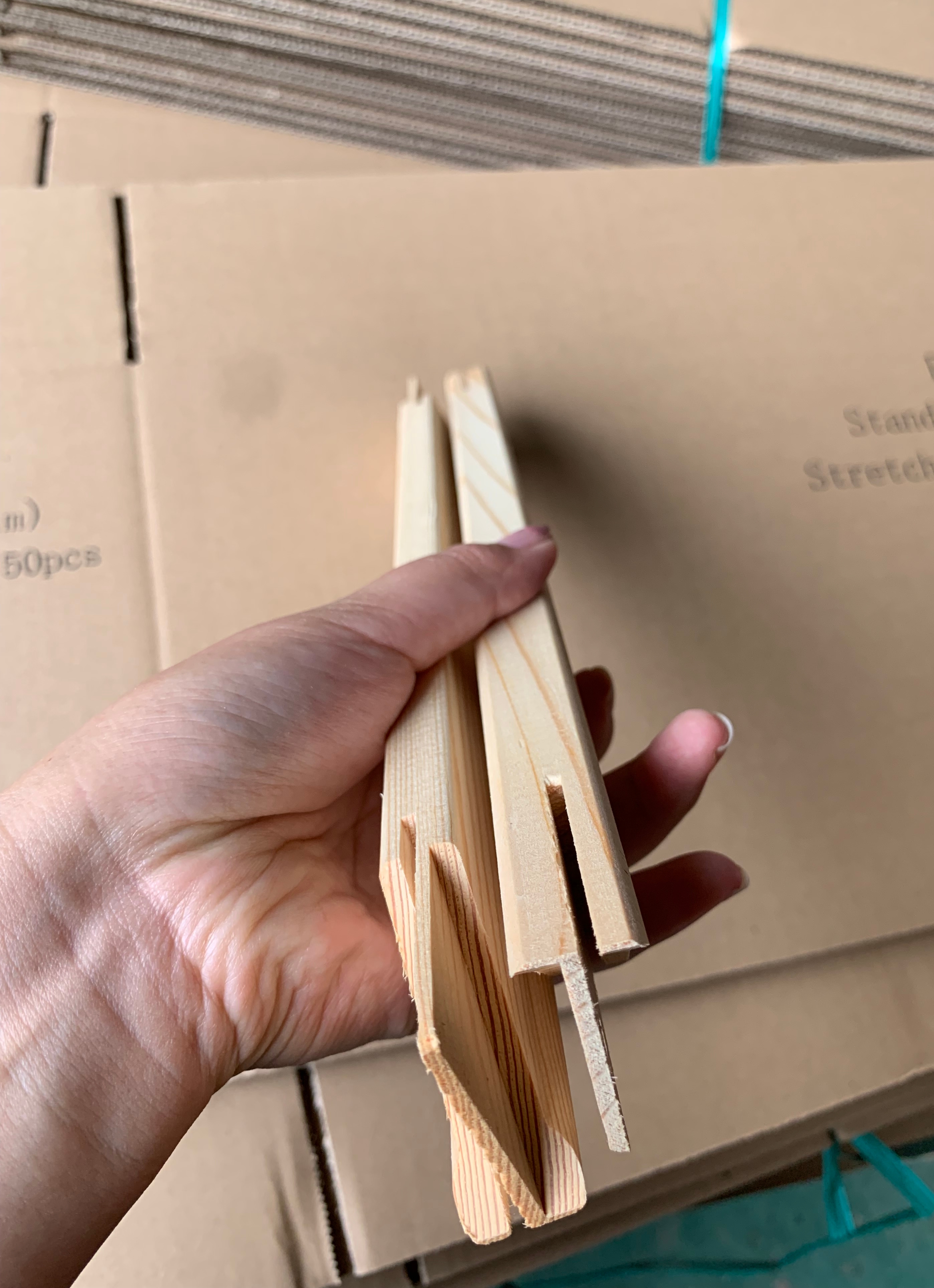
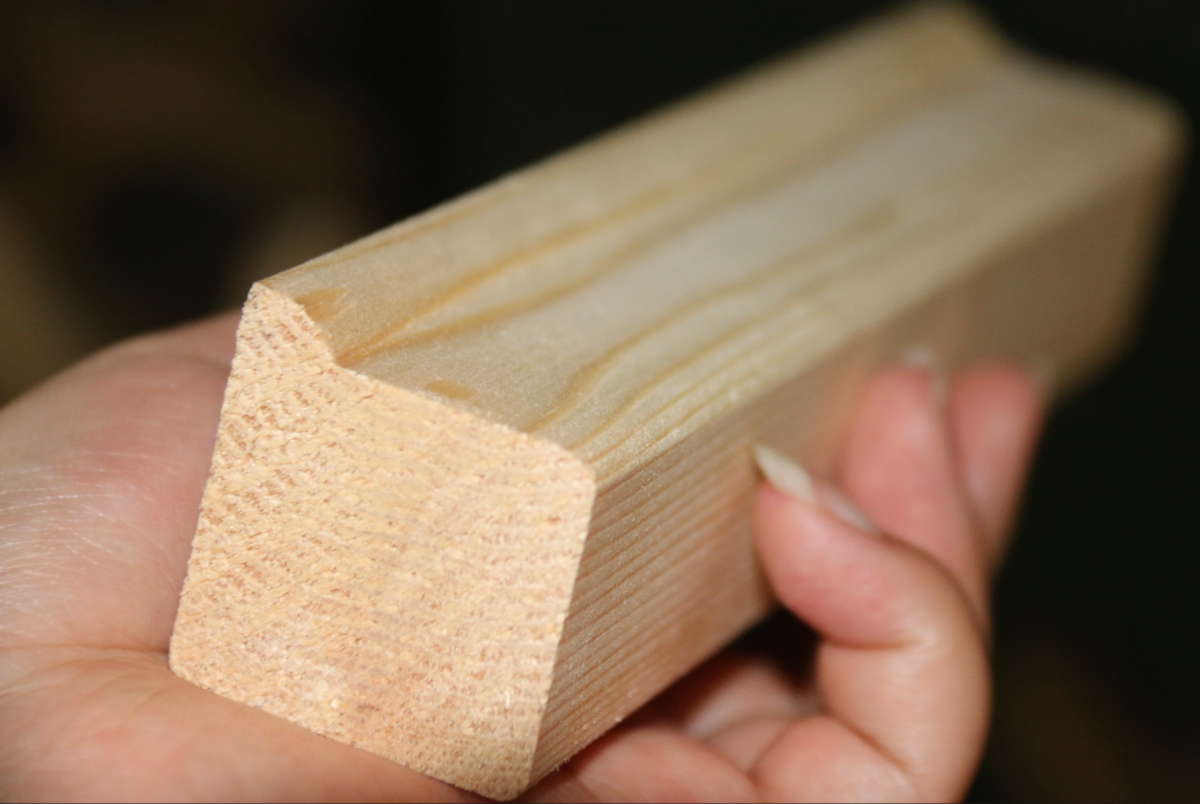
The cross-section shows the finished rounded profile and natural wood structure. Profile geometry and machining consistency are separate quality factors from moisture content.
The rounded canvas-contact profile helps keep the stretched canvas away from the broader face of the wooden bar. The profile should also be smooth and consistent enough to avoid unnecessary pressure or visible impressions on the canvas surface.
14. Moisture Control Does Not Replace Dimensional Inspection
Even a straight bar with acceptable moisture content still needs to meet the required dimensional specification.
Depending on the product, dimensional QC may include:
Profile width
Profile thickness or depth
Finished bar length
Profile consistency
Machined features
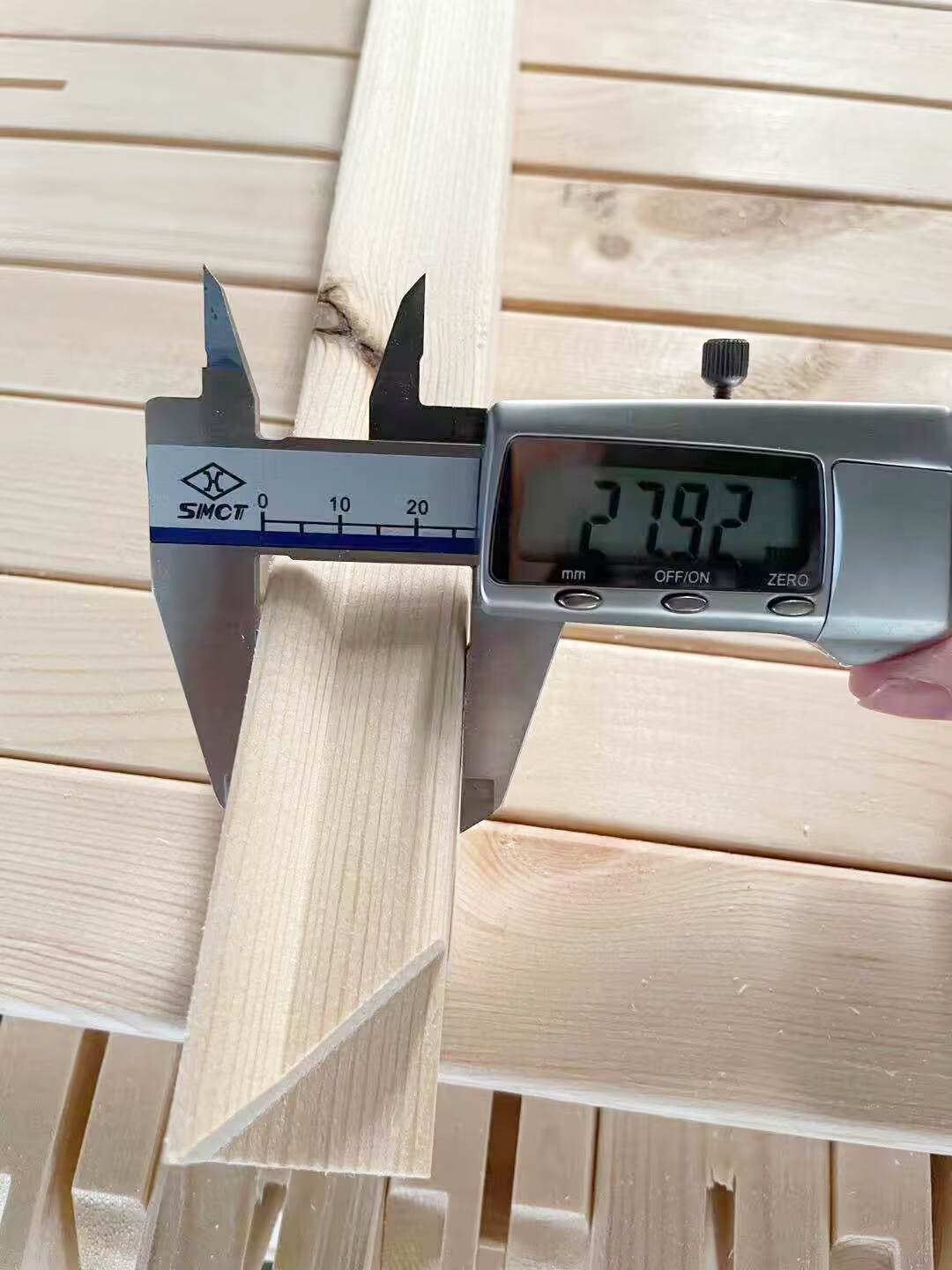
Profile width and thickness are checked separately from moisture to support consistent cutting, joint fit and finished-frame dimensions.
For example, the Colors Art 38×28mm Gallery Wrap Pine Stretcher Bar uses a 38 × 28 mm profile for professional canvas printing, gallery wrap and stretched-canvas production.
15. Why Machining Accuracy Still Matters After Moisture Is Controlled
A stretcher bar is a machined wooden component that must work reliably in the buyer's production system.
Depending on the required supply format, processing may include:
Profile machining
Cutting to length
45° miter cutting
Tenon or interlocking-joint machining
Sanding
Frame assembly
45° Miter-Cut Stretcher Bars
For 45° miter-cut components, correct angle and length are necessary for the corners to close correctly during frame assembly.
Accurate 45-degree cutting and consistent bar dimensions help frame corners fit correctly during assembly.
Tenoned or Interlocking Stretcher Bars
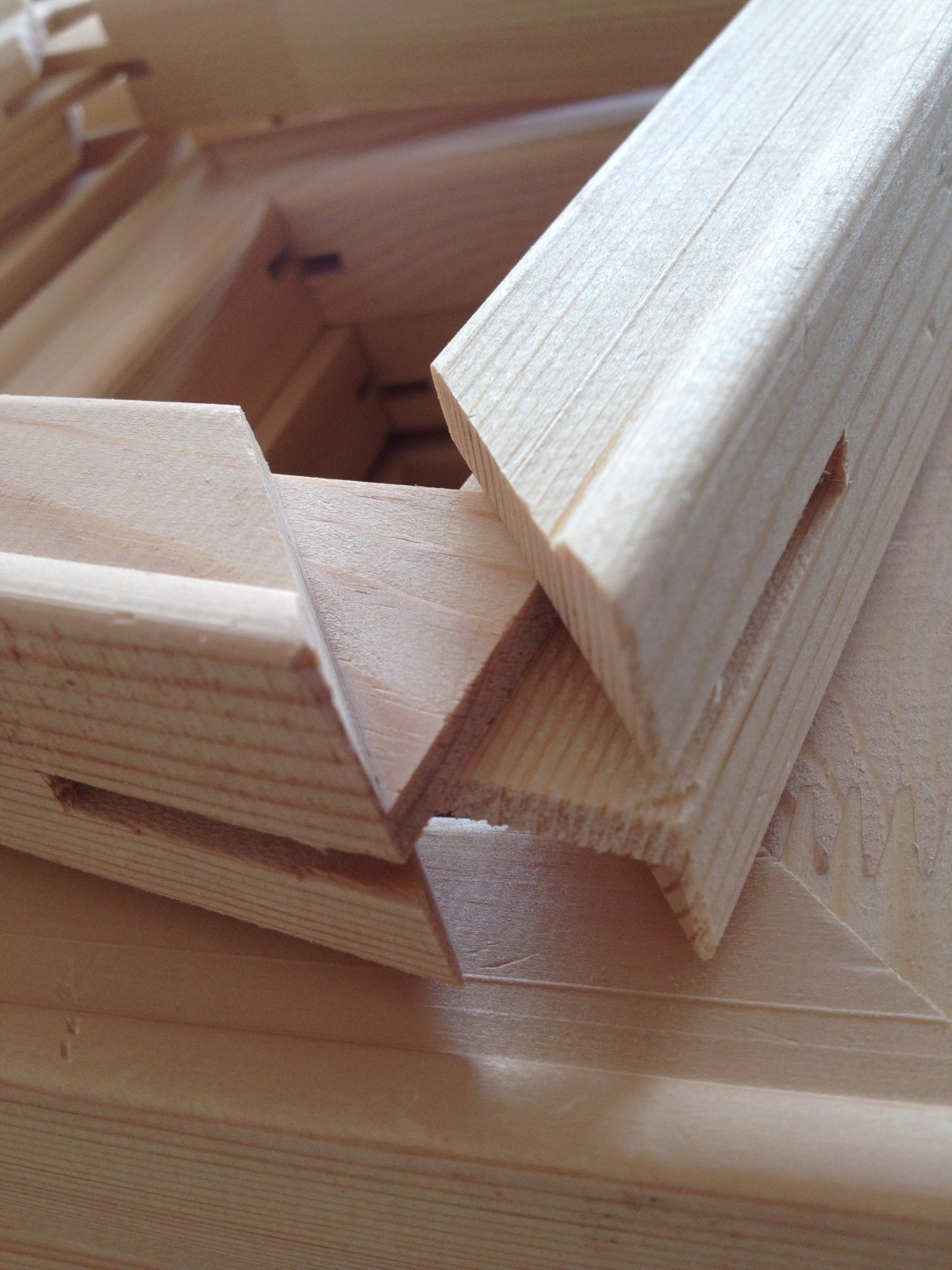
For tenoned or interlocking systems, joint geometry becomes particularly important. If machining varies too much, the joint may become too loose, too tight or inconsistent during assembly.
For tenoned stretcher bars, accurate machining and dimensional consistency help maintain reliable joint fit during frame assembly.
Moisture control supports stable production, but it cannot compensate for inaccurate machining. Both must be controlled separately.
16. What Happens When the Bars Become a Finished Frame?
Professional buyers are not ultimately purchasing a moisture reading. They are purchasing wooden components that need to work reliably when assembled into finished canvas frames.
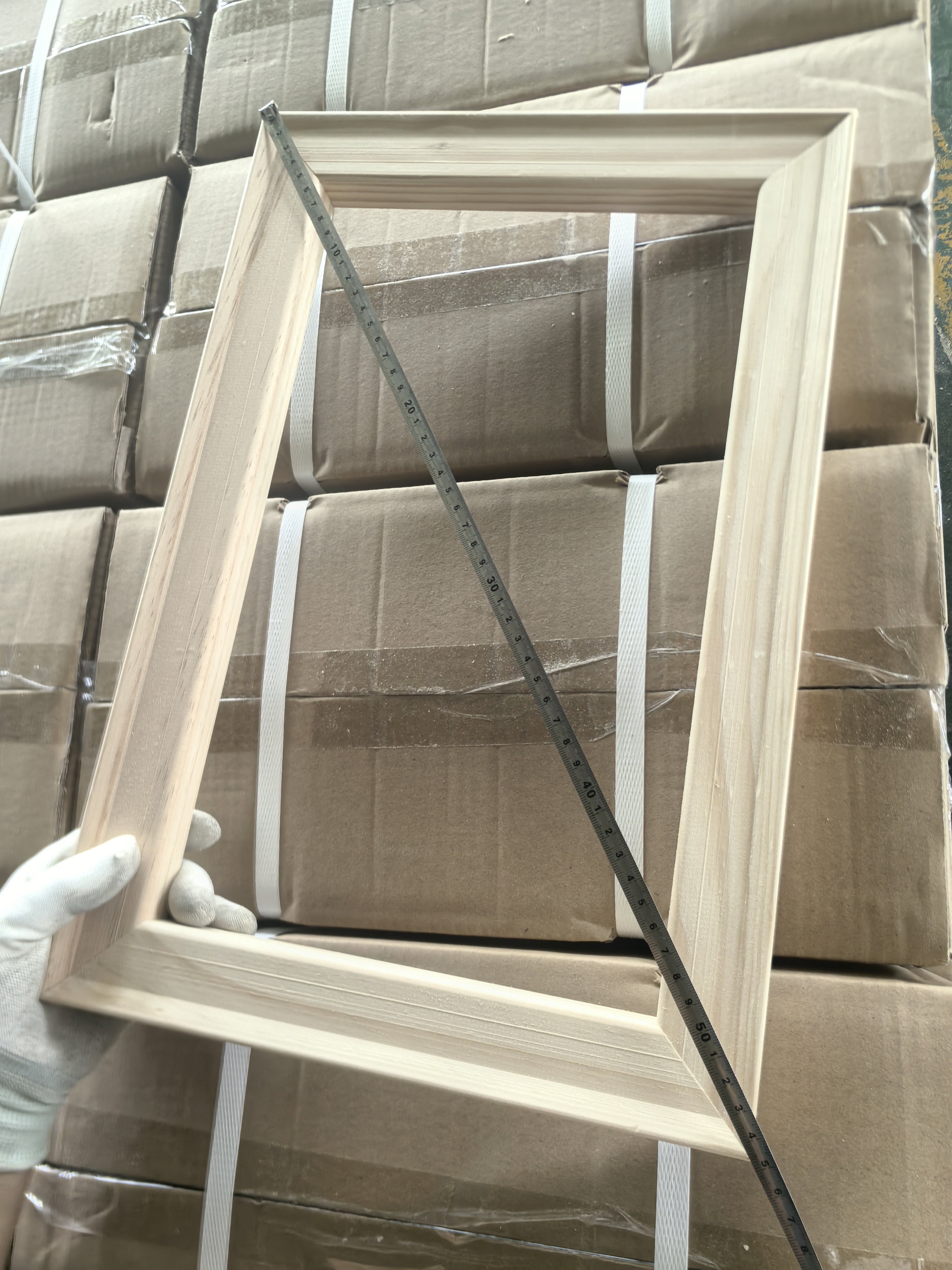
Checking only width and height does not always provide a complete picture of an assembled frame.
A practical additional check is to compare the two diagonal measurements. Consistent diagonals help verify that the assembled frame is square.
Comparing both frame diagonals helps verify squareness after the wooden stretcher bars have been assembled.
This becomes increasingly important on larger frames, where relatively small component deviations can become more noticeable.
18. Why Packing and Transport Still Matter
Finished stretcher bars may spend days or weeks in storage and international transport before reaching the buyer's production facility.
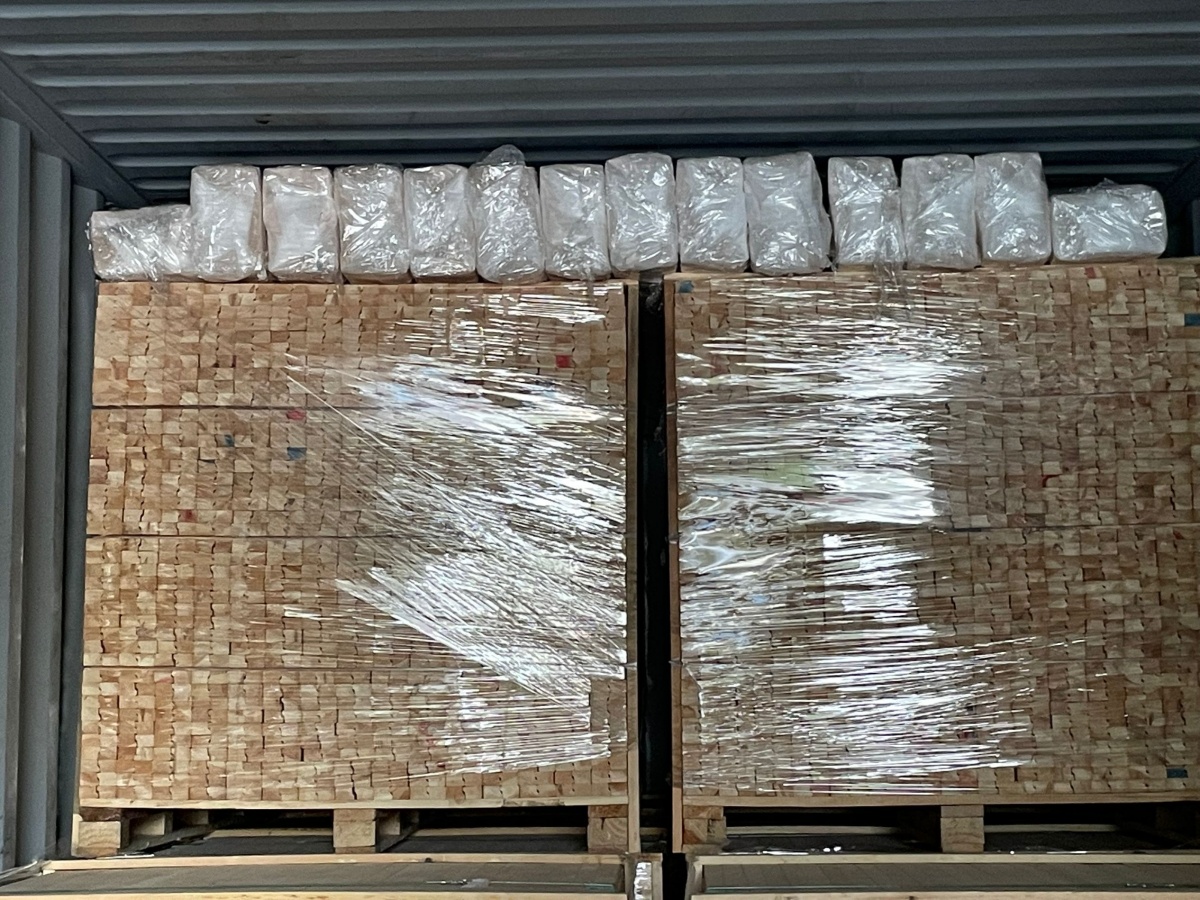
Packing cannot correct an already unstable or incorrectly machined bar, but appropriate arrangement and protection help reduce unnecessary movement and physical damage during handling and transport.
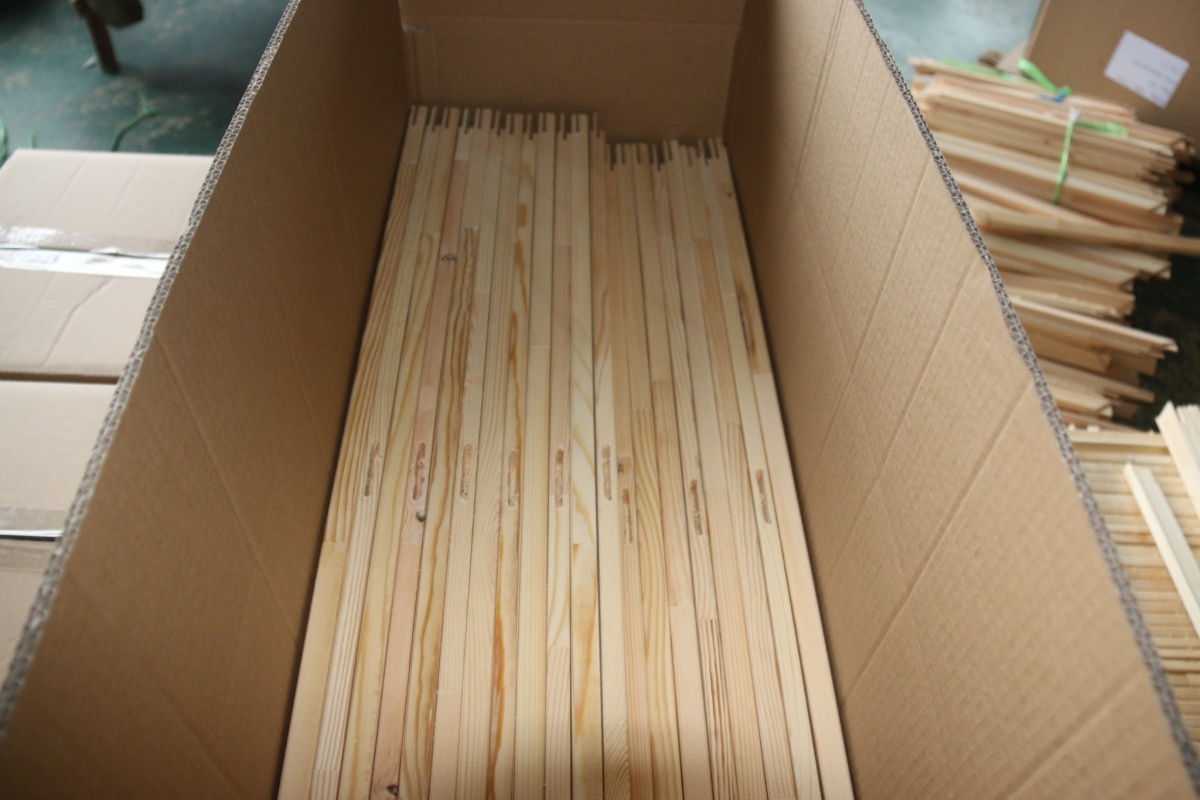
Finished wooden stretcher bars are arranged and protected during packing to help reduce movement and physical damage during storage and international transport.
19. Can Ocean Shipping Affect Wooden Stretcher Bars?
Ocean shipping does not automatically cause wooden stretcher bars to warp. However, wood continues to respond to its surrounding environment, so transport and destination conditions remain part of the overall stability picture.
Relevant factors include:
Finished-product condition before packing
Storage before loading
Packing and physical support
Container environment
Shipping duration
Destination climate
Storage after arrival
For export orders, wood stability should be considered from factory quality control through packing, container transport and destination storage.
20. What Should Professional Buyers Check Before Shipment?
For a B2B buyer, asking only “What is your moisture content?” does not provide enough information to evaluate a stretcher bar supplier.
QC Item
Why It Matters
Timber selection
Influences grain, natural defects and material consistency
Raw-material moisture condition
Provides information about timber before machining
Finished-product moisture
Confirms moisture condition before shipment
Straightness
Identifies bow, crook or twist that a moisture meter cannot detect
Profile geometry
Affects canvas clearance and finished-bar performance
Profile dimensions
Supports consistent cutting and assembly
Finished length
Directly affects finished frame dimensions
45° miter accuracy
Influences corner closure and alignment
Tenon / joint fit
Influences assembly consistency and frame stability
Surface and edge condition
Affects handling and canvas contact
Finished frame dimensions
Confirms the required assembled size
Diagonal comparison
Helps verify frame squareness
Cross bars / braces
Provide additional support where the frame design requires it
21. Moisture Content vs Warping: What Is the Real Relationship?
Moisture content and warping are related, but they should not be treated as the same thing.
Moisture changes can contribute to shrinkage, swelling and dimensional movement. But when a stretcher bar bows, crooks or twists, moisture is not automatically the only cause.
Other contributing factors may include:
Grain direction
Natural timber characteristics
Internal stress
Drying condition
Profile geometry
Bar length
Machining
Storage and support
Packing and transportation conditions
This distinction is especially important when investigating a customer complaint. A moisture reading taken after arrival does not by itself prove that moisture was the sole cause of an earlier deformation.
22. A Better Way to Evaluate Stretcher Bar Quality
The most useful way to evaluate wooden stretcher bars is to look at the complete production and quality-control chain:
Stable stretcher bars are the result of a controlled process, not one moisture-meter reading.
23. Final Takeaway
Moisture content is an important specification when sourcing wooden canvas stretcher bars, but it should never be evaluated in isolation.
At Colors Art, moisture control begins with the pine timber and continues through production. Finished wooden stretcher bars are required to have a moisture content of 12% or below before shipment.
But a compliant moisture reading does not automatically guarantee straightness, dimensional accuracy, correct joint machining or a square finished frame.
Professional stretcher bar QC should therefore combine moisture control with timber selection, straightness inspection, profile and dimensional checks, machining inspection, frame geometry and suitable packing.
The better question for a professional buyer is not simply:
“What is the moisture content?”
It is:
“How do you control timber condition, moisture, straightness, profile dimensions and machining from raw material to finished stretcher bar?”
What moisture content does Colors Art require for finished wooden stretcher bars?
Colors Art requires finished wooden stretcher bars to have a moisture content of 12% or below before shipment. Moisture is evaluated together with other quality-control characteristics rather than being used as the only acceptance criterion.
Does Colors Art check moisture only after the stretcher bars are finished?
No. Moisture condition can be checked at the pine timber stage as part of raw-material control, and the finished wooden stretcher bar is checked again during quality control.
Does lower moisture content always mean better stretcher bars?
No. A lower moisture reading does not automatically guarantee better straightness, dimensional consistency or frame stability. The objective is appropriately dried and stable timber combined with proper machining and quality control.
Can kiln-dried wood absorb moisture again?
Yes. Wood remains hygroscopic after kiln drying and can absorb or release moisture as temperature and relative humidity change.
Can a stretcher bar warp even when its moisture content is below 12%?
Yes. Meeting the moisture requirement does not eliminate every possible cause of deformation. Grain direction, natural timber characteristics, internal stress, drying condition, profile geometry, bar length, machining, storage and support can also influence straightness.
What is the difference between bow, crook and twist?
Bow generally describes curvature along the length of a bar, crook describes sideways curvature along the edge, and twist describes rotation of the cross-section along the bar's length.
Why are long stretcher bars more sensitive to straightness problems?
Small deviations become more visible across greater lengths. Long bars therefore deserve particular attention to timber selection, moisture condition, straightness, profile machining, support and packing.
Is moisture content enough to evaluate a stretcher bar supplier?
No. Professional buyers should also evaluate timber quality, straightness, profile dimensions, finished length, machining accuracy, joint fit, frame squareness and packing.
Can ocean shipping cause stretcher bars to warp?
Ocean shipping does not automatically cause warping. However, wood continues responding to its environment, so finished-product condition, packing, transport conditions, destination climate and storage should all be considered.