News & Insights
How Colors Art Tests Printable Canvas for Consistent Printing Performance
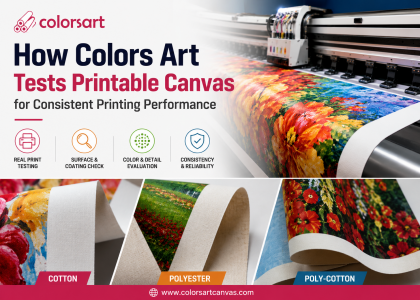
For professional printing companies, a printable canvas needs to do more than look good in a sample. It must deliver reliable color reproduction, stable ink response, consistent surface performance and predictable results during actual production.
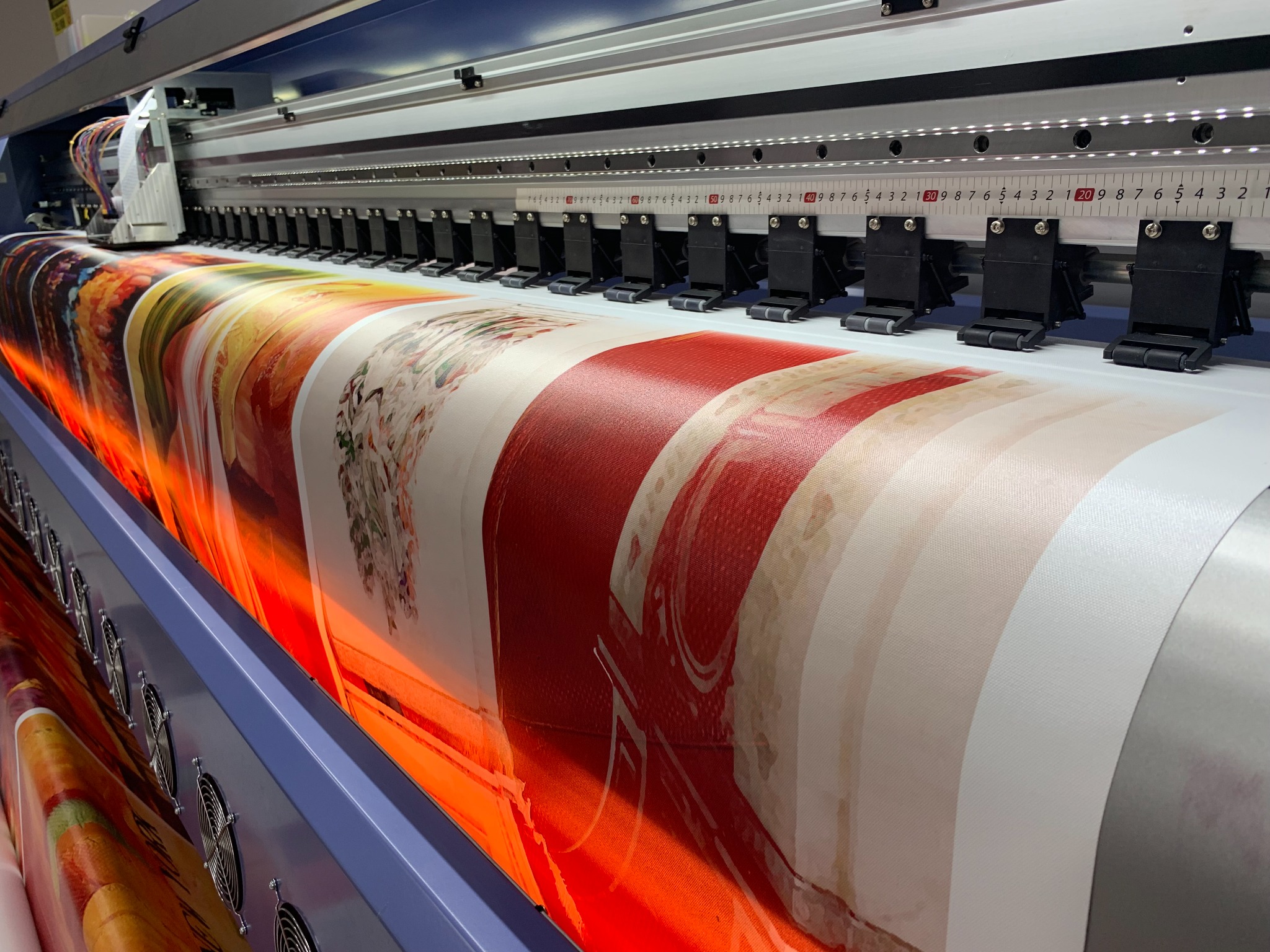
At Colors Art, actual printing evaluation is an important part of printable canvas development and quality control. Different canvas constructions and coating systems are tested according to their intended printing applications so that performance can be reviewed under real printing conditions rather than by specifications alone.
Why Actual Printing Tests Matter
Specifications such as material, GSM, thickness and roll width are important, but they cannot fully predict how a printable canvas will behave on a printer. Two canvas products with similar technical specifications may still produce different results because of differences in coating formulation, surface texture, ink absorption and base fabric construction.
This is why actual printing evaluation is valuable when developing or selecting professional inkjet canvas. A real print can reveal characteristics that are difficult to judge from a technical data sheet alone, including color density, image sharpness, surface response and overall visual consistency.
What We Evaluate During Printable Canvas Testing
Printable canvas testing is not based on one single characteristic. Depending on the canvas model, coating system and intended application, several performance factors may be reviewed together.
These can include color reproduction, image detail, ink absorption, ink coverage, surface appearance, coating response and the uniformity of the printed result. The goal is to understand how the base fabric, coating and ink work together during actual printing.
This is particularly important for professional printing companies, photo labs, canvas print producers and distributors that require predictable output across repeated jobs and different image types.
Surface Texture and Coating Performance Matter
The visible appearance of a printable canvas is strongly influenced by its coating surface. A well-designed coating needs to receive ink evenly while maintaining the intended canvas texture and surface characteristics.
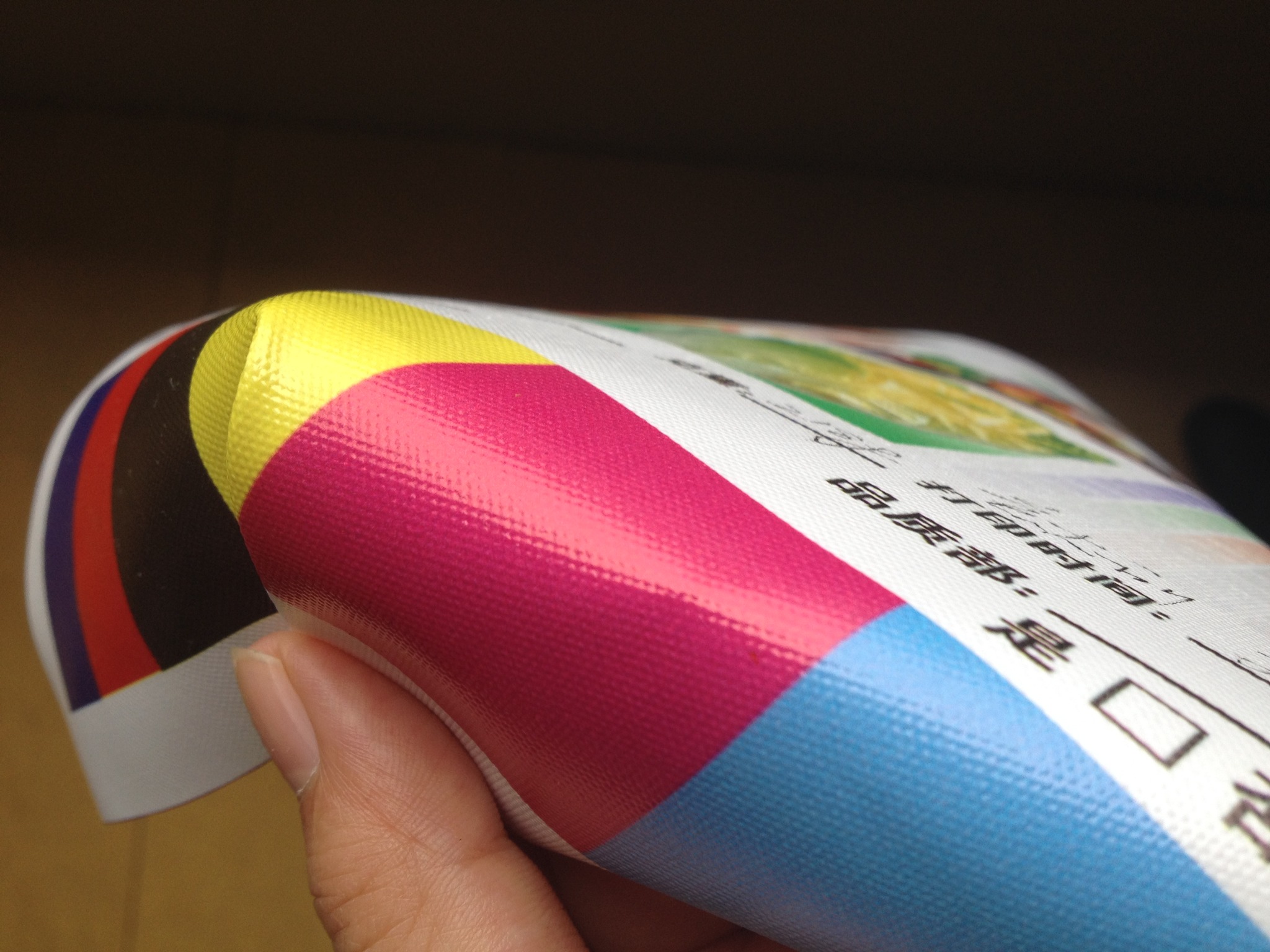
During printing evaluation, we examine not only the reproduced colors but also how the ink interacts with the coated canvas surface. Color density, ink coverage, image definition and the visibility of the underlying canvas texture can all influence the final printed appearance.
The printed canvas can also be handled and gently flexed during evaluation to observe the surface under normal handling conditions. This helps provide a more practical understanding of the relationship between the base fabric, coating and printed image.
Different Printing Technologies Need Different Canvas Coatings
A coating developed for one printing technology may not provide the same performance with another ink system. Printable canvas therefore needs to be selected according to the intended printer, ink technology and final application.
Colors Art manufactures printable canvas options for different professional printing applications, including selected products developed for aqueous pigment, solvent, eco-solvent, latex and UV printing systems.
Compatibility depends on the individual canvas model and coating formulation. For customers using a specific printer or ink system, sample testing on the actual production printer is recommended before bulk purchasing.
Consistency Matters Beyond the First Sample
For commercial printers, photo labs, canvas print producers and distributors, a successful first sample is only the beginning. The media also needs to perform predictably when it is reordered for regular production.
Changes in coating condition, surface characteristics or ink absorption can require additional printer adjustments and may result in color variation, wasted media or reprints.
For this reason, production consistency is an important consideration when manufacturing printable canvas for professional B2B customers. Repeatable coating and controlled production help reduce unnecessary adjustments when the same canvas specification is used across ongoing print jobs.
Comparing Cotton, Polyester and Poly-Cotton Inkjet Canvas
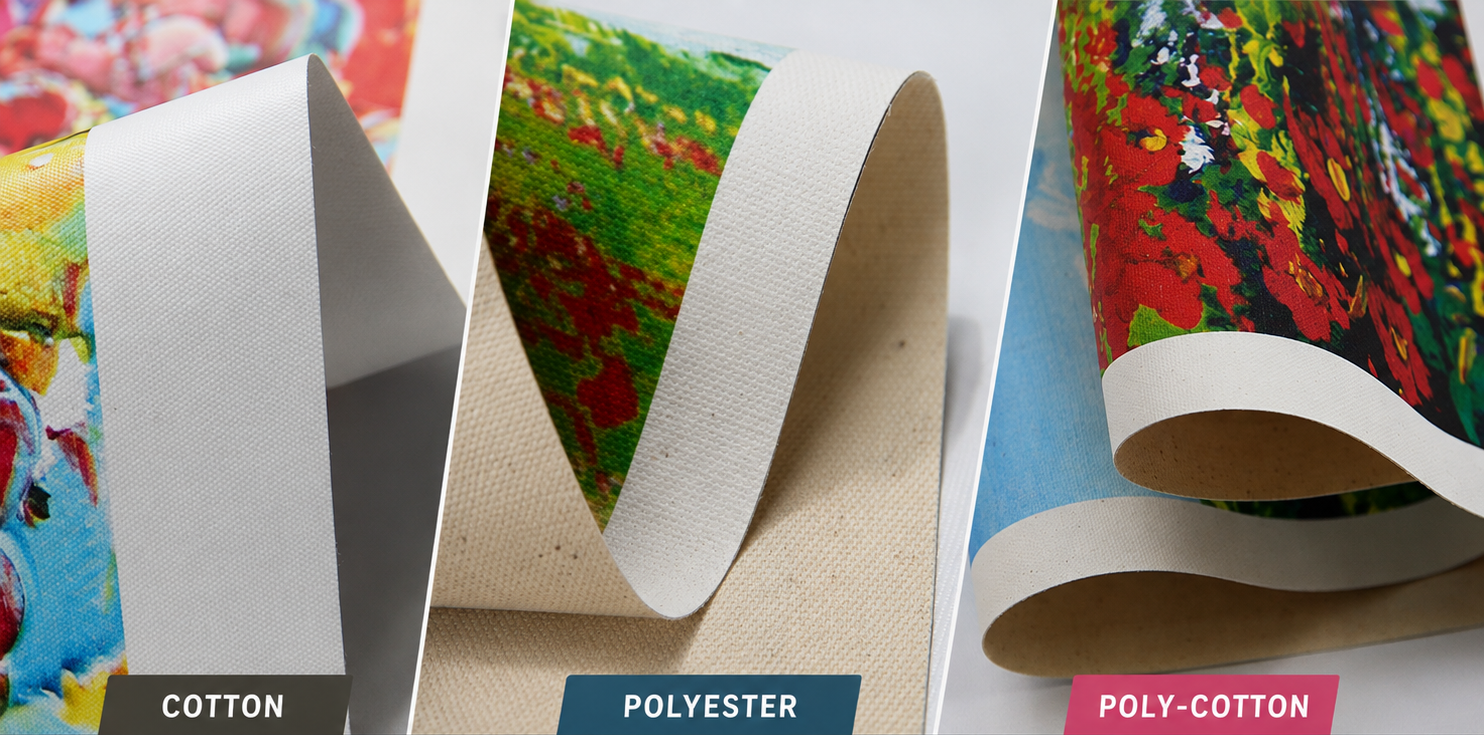
Different canvas constructions can produce different surface characteristics, handling properties and visual results. Cotton, polyester and poly-cotton are three of the most common base materials used for professional inkjet printable canvas.
Cotton canvas provides a natural textile character and traditional canvas appearance. Polyester canvas offers good dimensional stability and allows manufacturers to control surface consistency and texture more precisely. Poly-cotton canvas combines characteristics of both fibers and is widely used for photographic, decorative and commercial canvas printing.
However, base material alone does not determine printing quality. The coating formulation, fabric construction, surface texture, GSM and compatibility with the intended ink technology all influence the final result. For professional buyers, actual sample printing remains one of the most practical ways to compare different canvas options before selecting a product for production.
Choosing Printable Canvas for a Specific Printer
Printer model and ink technology are important information when selecting printable canvas. Other requirements such as material, GSM, surface finish, texture, roll width, roll length, core size and final application should also be considered.
For example, a commercial canvas printing company may prioritize production consistency and efficient handling, while a fine-art or photographic printing application may place greater emphasis on surface texture, color reproduction and image detail.
For new projects, testing a sample on the customer’s own printing equipment is often the most practical way to confirm whether a canvas meets the required printing and finishing expectations.
From Coating Development to Real Printing Evaluation
Printable canvas performance is the result of several factors working together: the base fabric, coating formulation, surface finish, printer, ink system and printing conditions. Looking at only one specification does not provide the complete picture.
By combining coating development with actual printing evaluation, Colors Art can compare different canvas constructions under practical printing conditions and recommend suitable options according to the customer’s printer and application.
For professional buyers, this also means that canvas selection can be based on actual printing performance rather than GSM or material description alone.
Need to test printable canvas on your printer?
Send Colors Art your printer model, ink technology, preferred canvas material, GSM, finish, texture and roll size. We can recommend suitable printable canvas options for sample evaluation before bulk ordering.