How to Find the Best Inkjet Canvas Manufacturer in China | 2026 Buyer’s Guide
How to Find the Best Inkjet Canvas Manufacturer in China
Selecting the right inkjet canvas manufacturer is one of the most important decisions for distributors, printing companies, wall art brands and wholesalers. Product quality, coating consistency, delivery reliability and technical support directly influence your production efficiency and customer satisfaction.
This complete buyer's guide explains how professional importers evaluate manufacturers, compare canvas materials, verify production capability and reduce sourcing risks before placing bulk orders.
Request Free Samples
Professional Manufacturing
Stable production and consistent coating quality.
OEM & Private Label
Customized packaging and branding services.
Strict Quality Control
Multiple inspection procedures throughout production.
Global Export Experience
Serving distributors and manufacturers worldwide.
Quick Answer
The best inkjet canvas manufacturer is not necessarily the one offering the lowest price. Professional buyers evaluate coating technology, raw material consistency, production capacity, quality management, OEM capability, export experience and long-term supply stability before making purchasing decisions. Reliable manufacturers provide consistent quality across production batches, technical support and customized solutions rather than simply supplying products.
✔ Manufacturing Expertise
Look for manufacturers specializing in printable canvas instead of general textile factories.
✔ Stable Quality
Consistent coating performance is more valuable than occasional low prices.
✔ OEM Capability
Professional suppliers should support private-label packaging and customized production.
✔ Technical Support
Experienced manufacturers help optimize printing performance and reduce production issues.
Introduction
China has become the world's leading manufacturing center for printable inkjet canvas. Thousands of printing companies, distributors, wholesalers, photography studios and wall art manufacturers purchase canvas rolls from Chinese suppliers every year because of the country's mature supply chain, advanced coating technology and competitive production costs.
However, choosing a manufacturer based solely on price often leads to inconsistent quality, delayed deliveries and unexpected production problems. A professional sourcing strategy requires evaluating much more than quotations. Buyers should assess manufacturing capability, quality management systems, technical expertise, raw material selection and long-term production consistency before establishing a supply partnership.
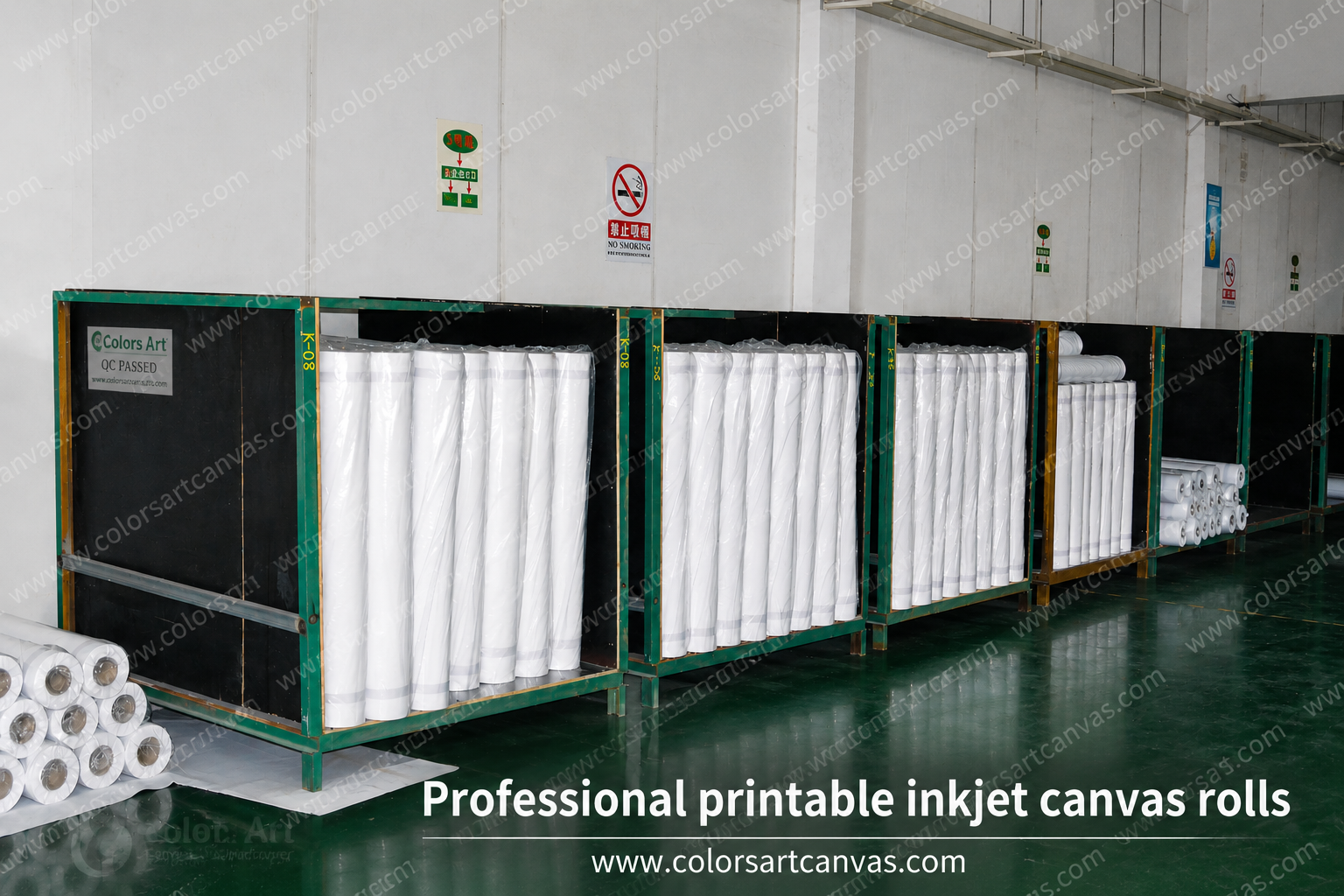
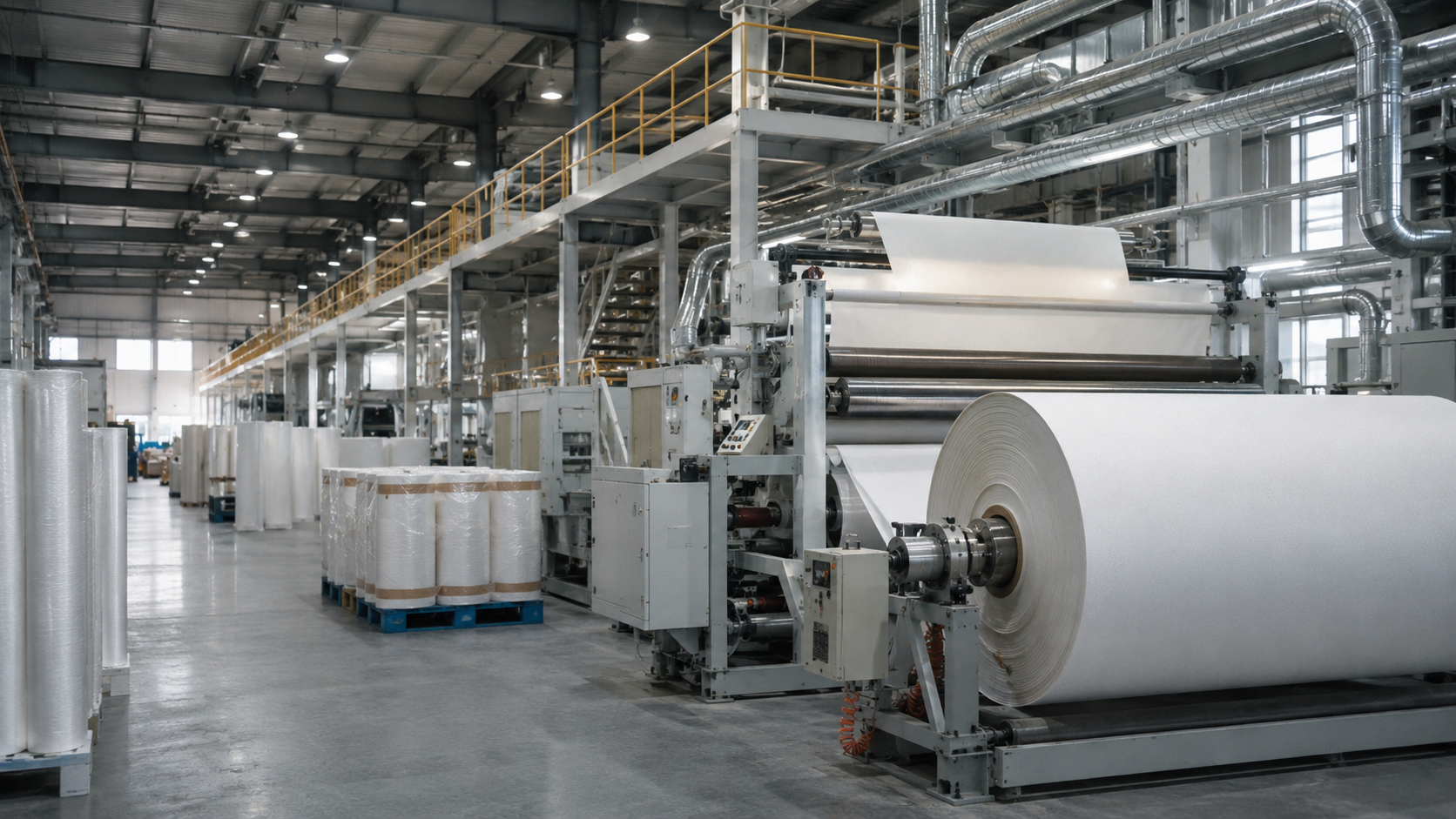 Advanced inkjet canvas coating production workshop featuring an automated coating line that ensures consistent coating quality and stable printing performance for professional inkjet canvas manufacturing.
 Professional sourcing is about minimizing total purchasing risk—not simply obtaining the lowest unit price.
Chapter 1 – What Is Inkjet Canvas?
Inkjet canvas is a specially engineered printable fabric designed for digital printing systems. Unlike traditional artist canvas, printable inkjet canvas features a precision coating that controls ink absorption, drying speed, color reproduction and image sharpness. This coating enables high-resolution printing while maintaining the flexibility required for stretching, framing and long-term display.
Today, inkjet canvas is widely used for gallery wrapped canvas, photographic reproductions, fine art printing, commercial decoration, hospitality projects, museum displays and personalized wall décor. As demand for premium wall art continues to grow, choosing the right printable canvas has become increasingly important for print shops and manufacturers seeking consistent production quality.
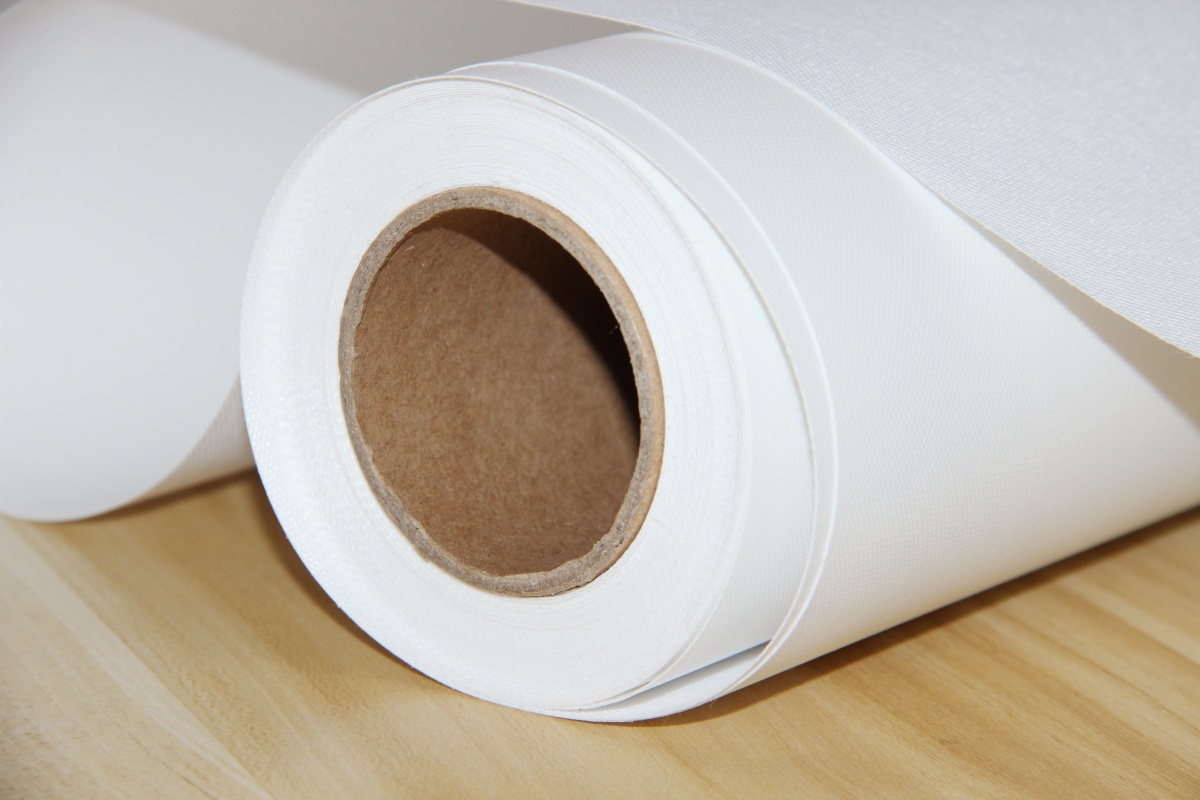
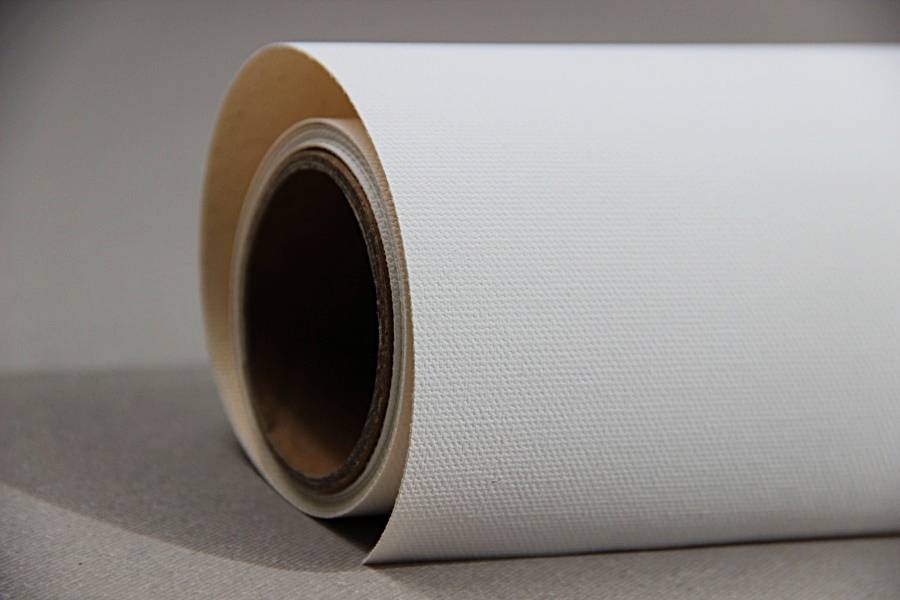
Figure 2. High-quality printable inkjet canvas designed for professional digital printing.
How Inkjet Canvas Differs from Traditional Artist Canvas
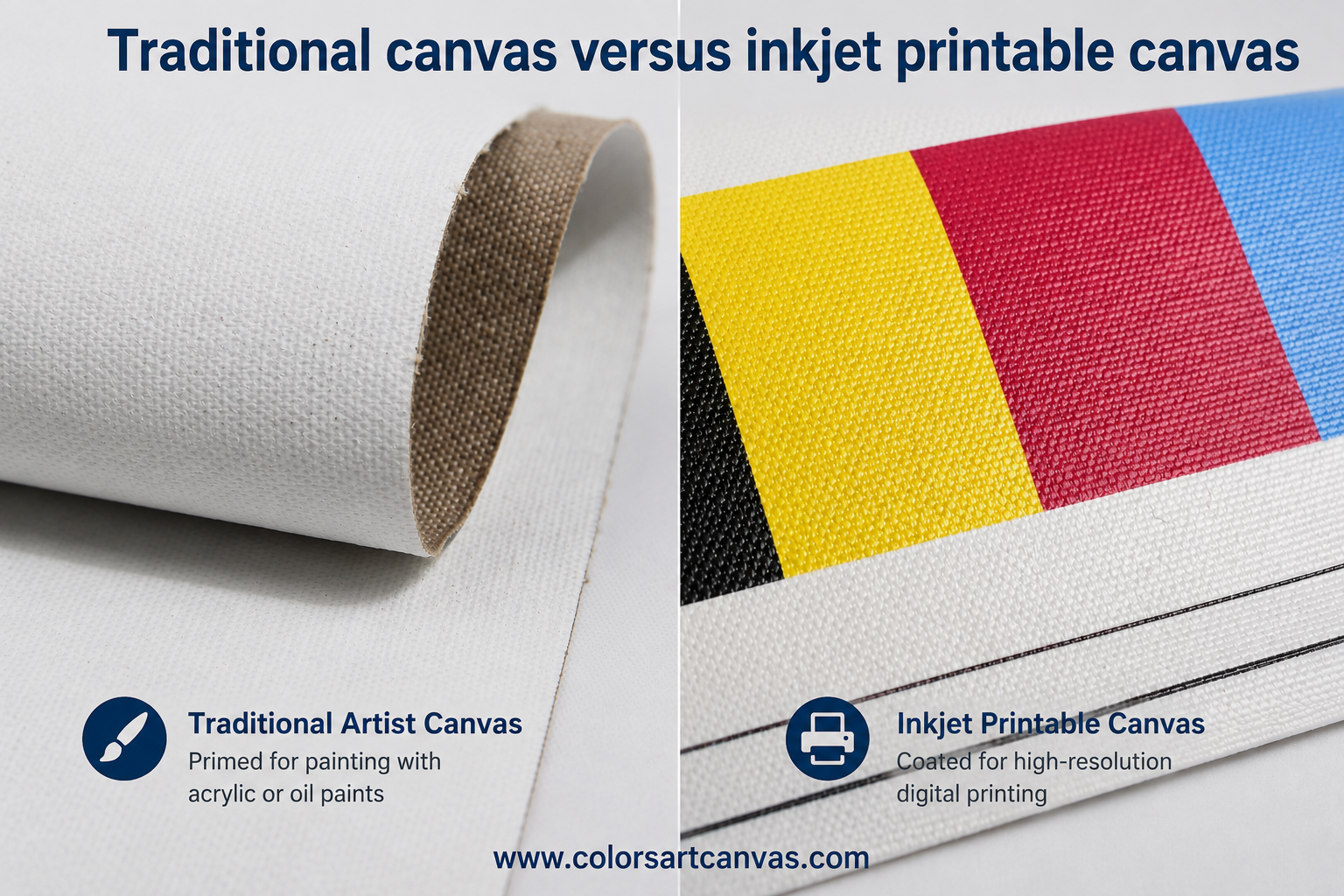
Many buyers mistakenly believe that ordinary artist canvas can be used for digital printing. In reality, the two products are manufactured for completely different purposes. Traditional canvas is intended for hand painting using acrylic or oil paints, whereas inkjet canvas is specifically engineered to receive microscopic ink droplets from digital printers.
Without a professional ink-receiving coating, ordinary canvas often produces blurred images, poor color density, slow drying times and excessive ink bleeding. Professional printable canvas eliminates these issues by applying a carefully formulated coating that delivers excellent color accuracy and consistent print quality.
| Comparison |
Traditional Artist Canvas |
Inkjet Printable Canvas |
| Main Application |
Oil & Acrylic Painting |
Digital Printing |
| Surface Coating |
None |
Ink Receiving Coating |
| Image Resolution |
Not Applicable |
High Resolution Printing |
| Drying Performance |
Paint Dependent |
Fast Drying |
| Gallery Wrapping |
Possible |
Optimized for Stretching |
Figure 3. Surface comparison between traditional artist canvas and printable inkjet canvas.
Typical Applications
Printable canvas is one of the most versatile substrates in the digital printing industry. Professional manufacturers use it for high-end wall art, interior decoration, photography, advertising graphics and customized retail products. The same material can be used in both small custom print shops and fully automated production facilities.
| Industry |
Typical Products |
Main Requirements |
| Wall Art Manufacturing |
Gallery Wrapped Canvas |
Excellent Stretchability |
| Photography Studios |
Photo Canvas Prints |
High Color Accuracy |
| Interior Decoration |
Hotel & Office Artwork |
Long-Term Durability |
| Advertising |
Display Graphics |
Fast Production |
| Retail Brands |
Customized Canvas Products |
OEM Packaging |
Figure 4. Gallery wrapped canvas remains one of the fastest-growing applications for printable canvas.
What Determines Printing Quality?
High-quality printing is influenced by much more than the printer itself. The base fabric, coating formulation, coating thickness, drying process and production consistency all contribute to the final image quality. Even two products with identical weight specifications can produce dramatically different printing results because of differences in coating technology.
Professional buyers therefore evaluate printable canvas as a complete production system rather than focusing on a single specification such as GSM or thickness. Reliable manufacturers carefully control every stage of production—from raw fabric inspection to finished roll packaging—to ensure consistent performance across every batch.
Excellent print quality begins with consistent manufacturing, not simply with a better printer.
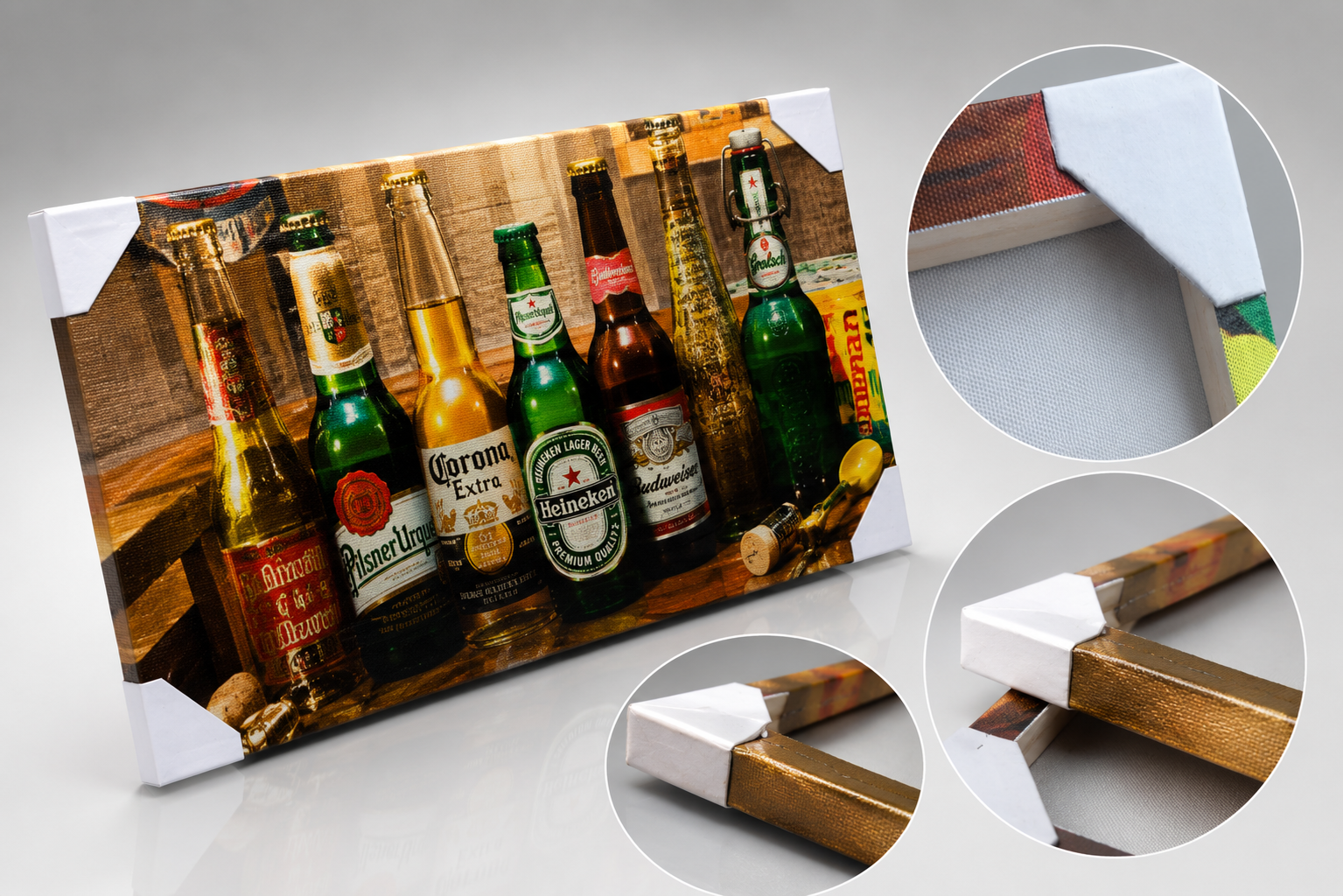 Figure 5. Standardized print testing helps evaluate color gamut, image sharpness and coating consistency.
 Chapter 2 – Types of Inkjet Canvas
Choosing the appropriate canvas material is one of the most important purchasing decisions. Different fiber compositions provide different levels of flexibility, durability, moisture resistance and print quality. Understanding these differences allows buyers to select the most suitable product for their specific production requirements instead of simply comparing prices.
Polyester Inkjet Canvas
Polyester inkjet canvas is widely used in commercial printing because of its outstanding dimensional stability and resistance to environmental humidity. Compared with natural fibers, polyester is less likely to expand or shrink during seasonal climate changes, making it ideal for automated production lines and large-volume manufacturing.
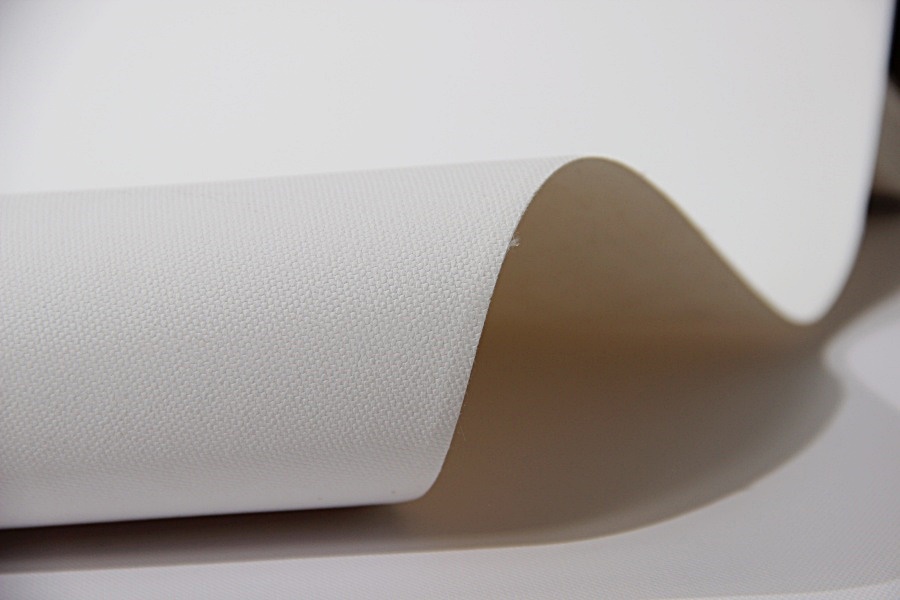
Figure 6. Polyester canvas offers excellent production consistency and dimensional stability.
Another important advantage is its smooth feeding performance during printing. High-quality polyester canvas typically produces fewer feeding interruptions, less edge curling and more consistent roll tension, helping improve production efficiency and reduce waste.
Cotton Inkjet Canvas
Cotton inkjet canvas is highly valued for its natural texture, elegant appearance and premium artistic feel. Fine art publishers, museums, professional photographers and luxury home décor brands often prefer cotton canvas because it closely resembles traditional artist canvas while providing excellent image quality for digital printing.
Compared with polyester, cotton fibers have greater moisture absorption. This characteristic creates a softer and more natural surface texture but also requires stricter environmental control during manufacturing, storage and transportation. Professional manufacturers carefully regulate humidity, coating temperature and drying conditions to ensure stable production quality.
Figure 7. Cotton inkjet canvas provides a premium natural texture for fine art reproduction.
| Advantages |
Considerations |
| Natural artistic texture |
More sensitive to humidity |
| Excellent fine art appearance |
Generally higher material cost |
| Premium image presentation |
Requires careful storage |
| Museum-quality applications |
Longer conditioning time after transport |
Poly-Cotton Inkjet Canvas
Poly-cotton canvas combines polyester fibers with natural cotton to achieve a balance between production stability and artistic appearance. It has become one of the most popular materials for gallery wrapped canvas because it offers excellent stretching performance while maintaining a natural woven texture.
Many wall-art manufacturers choose poly-cotton because it performs consistently during printing, stretching and framing. It also provides greater dimensional stability than pure cotton while preserving a premium visual appearance suitable for home decoration products.
Figure 8. Poly-cotton canvas combines stability with a premium artistic texture.
Surface Finish Options
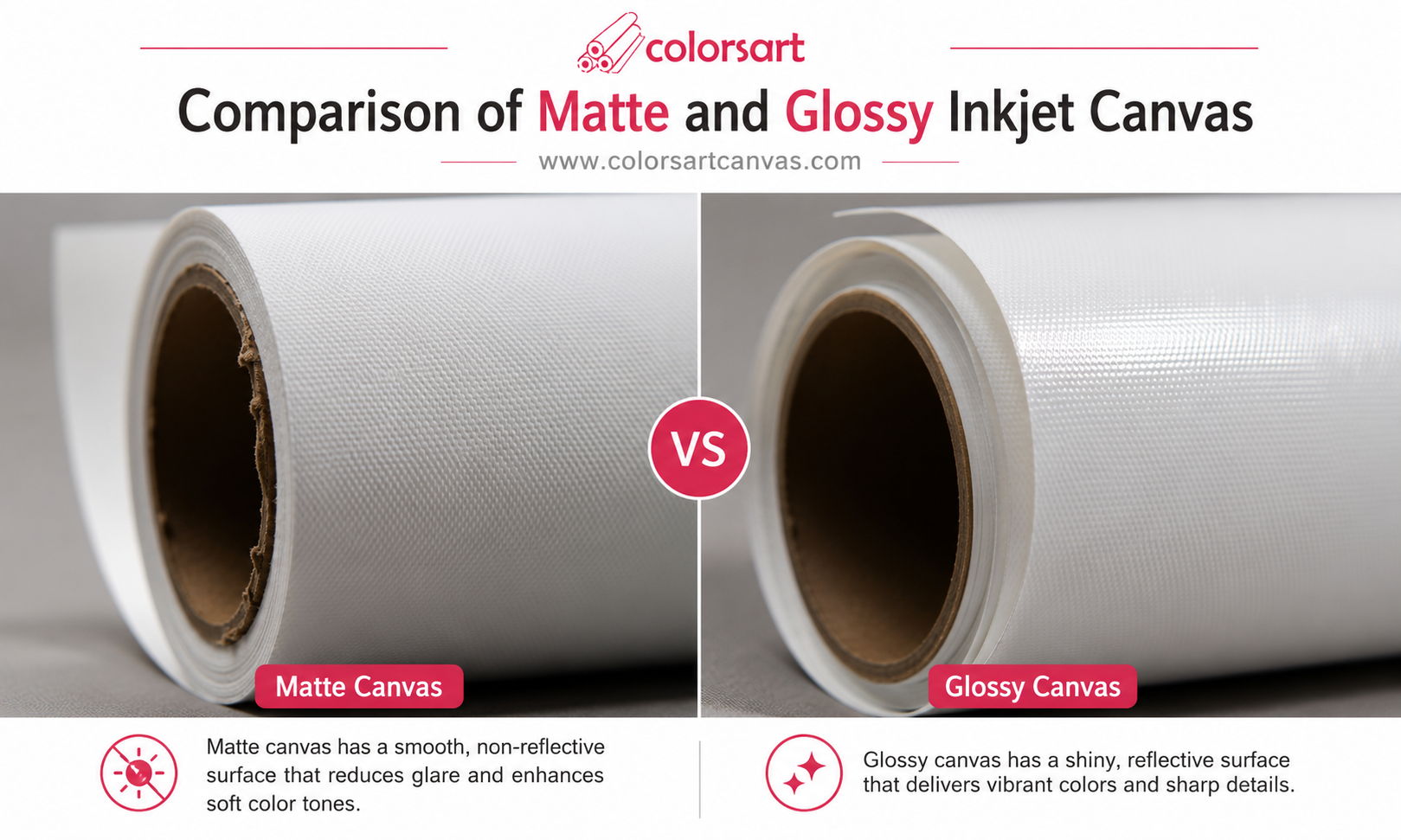
Beyond the base fabric itself, the surface finish has a significant impact on the final visual effect. Matte, satin and glossy coatings each provide different characteristics depending on the intended application. Selecting the correct finish improves customer satisfaction while reducing unnecessary product returns.
| Surface Finish |
Characteristics |
Typical Applications |
| Matte |
Low reflection, elegant appearance |
Fine art, gallery wraps, interior decoration |
| Satin |
Balanced gloss and color depth |
Photography, premium wall décor |
| Gloss |
Maximum color vibrancy |
Commercial displays, promotional graphics |
Figure 9. Different surface finishes produce different visual effects under lighting conditions.
Printer Compatibility
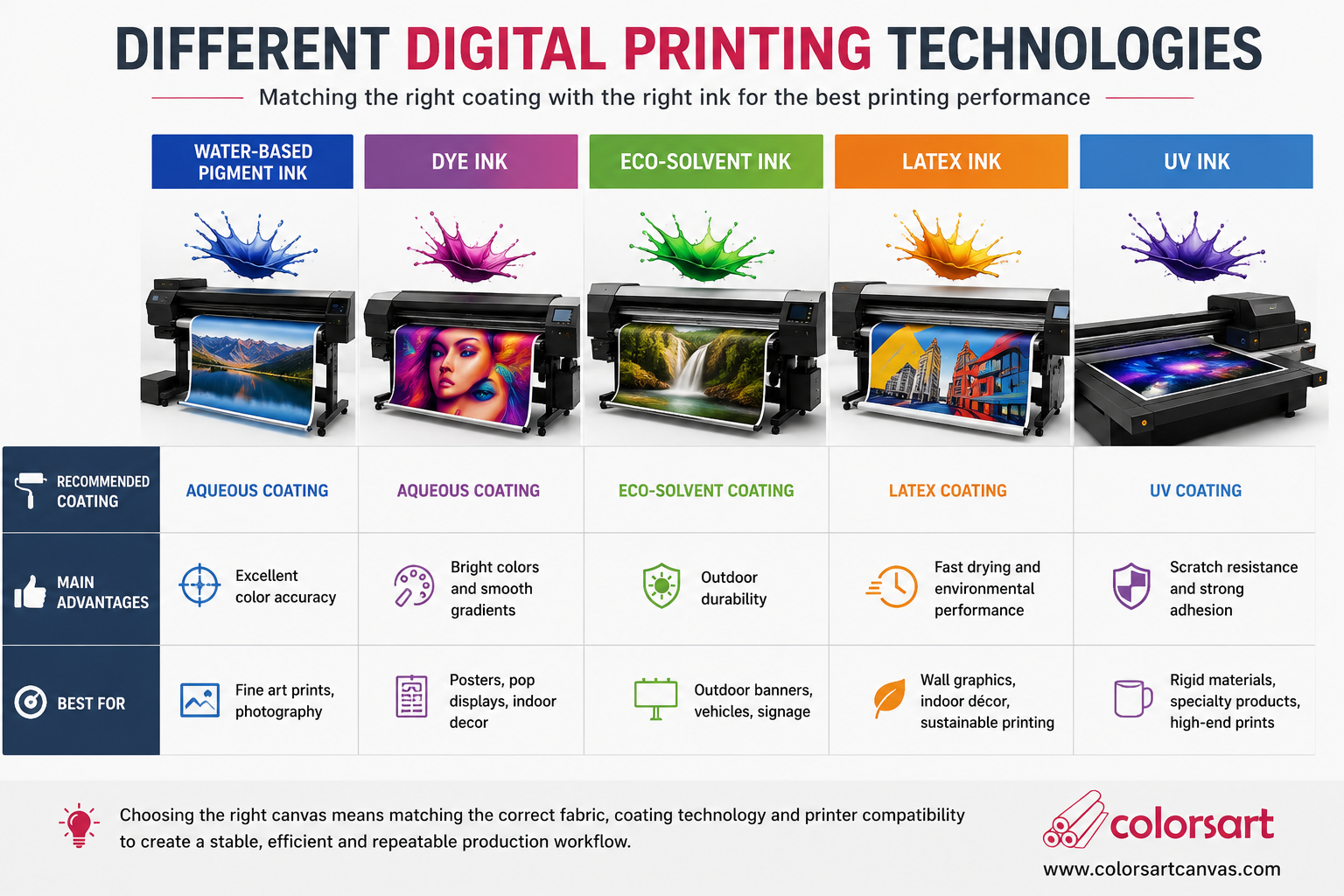
Professional manufacturers usually offer different coating systems optimized for specific printing technologies. Before ordering, buyers should always provide printer models, ink types and production requirements so the manufacturer can recommend the most suitable canvas.
| Printing Technology |
Recommended Coating |
Main Advantages |
| Water-based Pigment Ink |
Aqueous Coating |
Excellent color accuracy |
| Dye Ink |
Aqueous Coating |
Bright colors and smooth gradients |
| Eco-Solvent Ink |
Eco-Solvent Coating |
Outdoor durability |
| Latex Ink |
Latex Coating |
Fast drying and environmental performance |
| UV Ink |
UV Coating |
Scratch resistance and strong adhesion |
Choosing the right canvas is not simply about selecting a material. It is about matching the correct fabric, coating technology and printer compatibility to create a stable, efficient and repeatable production workflow.
Figure 10. Matching the correct coating system with your printer technology is essential for achieving consistent production quality.
Chapter 3 – How to Evaluate an Inkjet Canvas Manufacturer
After selecting the appropriate canvas material, the next step is evaluating the manufacturer. Many suppliers can provide similar quotations, but their manufacturing capability, quality management systems and technical expertise often differ significantly. A structured evaluation process helps buyers reduce purchasing risks and establish long-term supply partnerships.
1. Manufacturing Experience
Years of experience alone should not be the only evaluation criterion, but manufacturers specializing in printable canvas generally possess more advanced coating technology, better process control and a deeper understanding of digital printing requirements than general textile factories.
Professional buyers should ask manufacturers about their primary export markets, production specialization, quality management procedures and experience serving printing companies, distributors and wall-art manufacturers.
2. Raw Material Inspection
Consistent product quality starts with high-quality raw materials. Reliable manufacturers inspect incoming fabrics for weight, weaving density, width tolerance, moisture content and surface cleanliness before beginning production. Strict incoming quality control reduces the risk of downstream manufacturing defects.
3. Coating Technology
The coating process is one of the most critical manufacturing stages for printable canvas. A high-quality coating controls ink absorption, color density, drying speed and image sharpness while maintaining sufficient flexibility for stretching and framing. Even small variations in coating thickness or formulation may result in visible differences in print quality.
Professional manufacturers continuously monitor coating viscosity, coating weight, drying temperature and production speed throughout manufacturing. Automated process control helps ensure that every production batch delivers consistent printing performance.
4. Quality Management System
Reliable manufacturers implement quality control throughout the entire production process instead of relying solely on final inspection. Every production stage should be documented, monitored and traceable to reduce quality variation and improve long-term consistency.
| Production Stage |
Main Inspection Items |
Purpose |
| Incoming Materials |
Weight, width, weaving quality |
Prevent unsuitable raw materials |
| Coating Process |
Coating thickness, viscosity, drying temperature |
Maintain coating consistency |
| Finished Products |
Appearance, dimensions, winding quality |
Verify final product quality |
| Packaging |
Labels, cartons, moisture protection |
Ensure safe international shipping |
5. Production Capacity
Production capacity should be evaluated according to your purchasing requirements rather than simply choosing the largest factory. Buyers should confirm monthly output, available coating lines, roll widths, inventory management and production lead times during peak seasons.
Stable production scheduling often provides greater value than extremely high production volume. Reliable suppliers prioritize on-time delivery while maintaining consistent quality across every shipment.
6. OEM & Private Label Capability
Many distributors and e-commerce brands require customized packaging and private-label products. Professional manufacturers should provide customized labels, branded cartons, barcode stickers, pallet labels and packaging designs that align with the customer's brand identity.
Before confirming an OEM project, buyers should discuss artwork approval, minimum order quantity, packaging specifications and production lead times to avoid unnecessary delays during mass production.
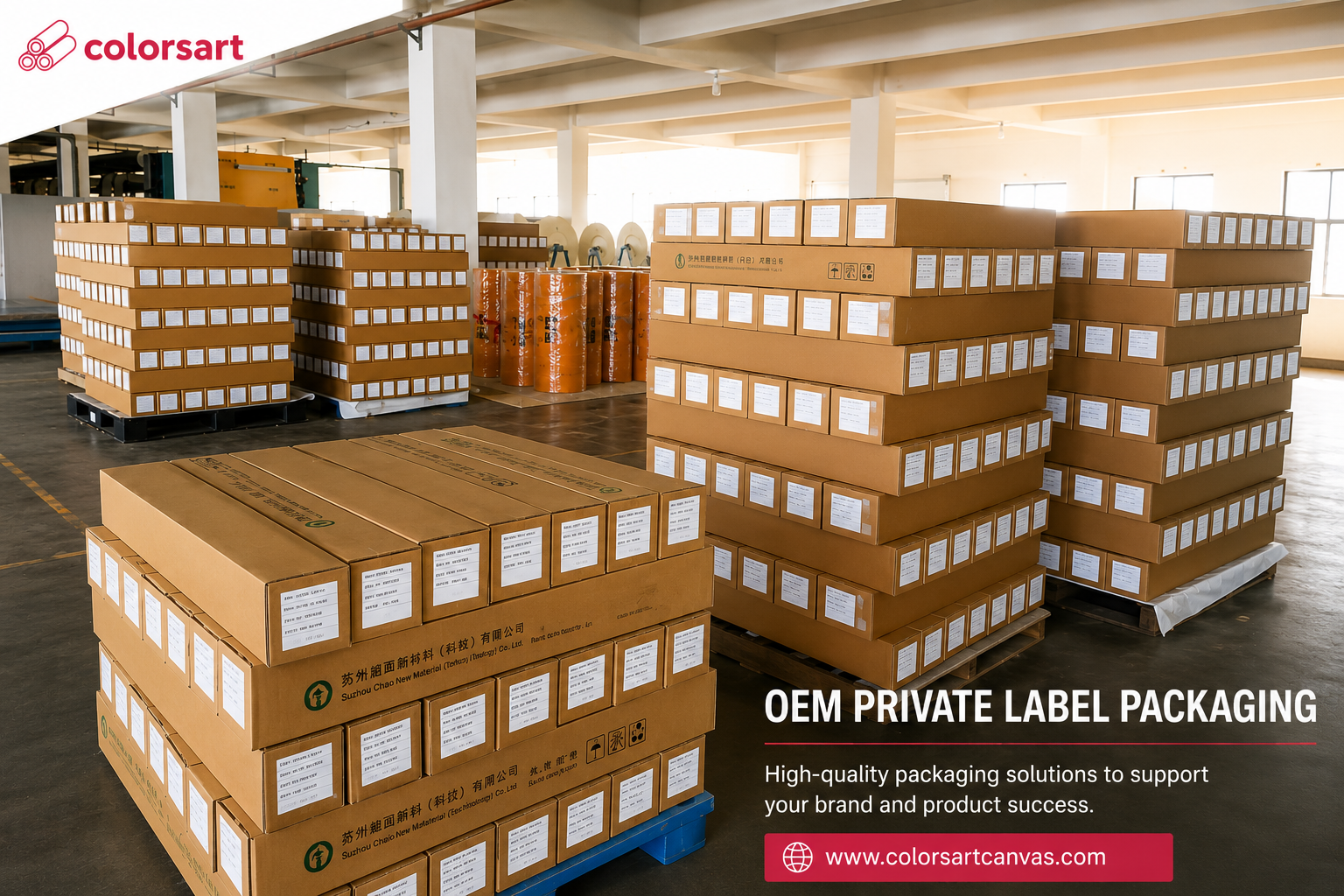 Figure 16. OEM packaging services help distributors build stronger brand recognition.
 A reliable supplier should be capable of growing together with your business by providing stable quality, flexible customization and dependable technical support.
Chapter 4 – How to Test Inkjet Canvas Before Placing Bulk Orders
Requesting product samples is only the first step in supplier evaluation. Professional buyers always conduct systematic testing under actual production conditions before approving commercial orders. The objective is to verify whether the material performs consistently throughout the complete manufacturing workflow—from printing to packaging.
1. Visual Inspection
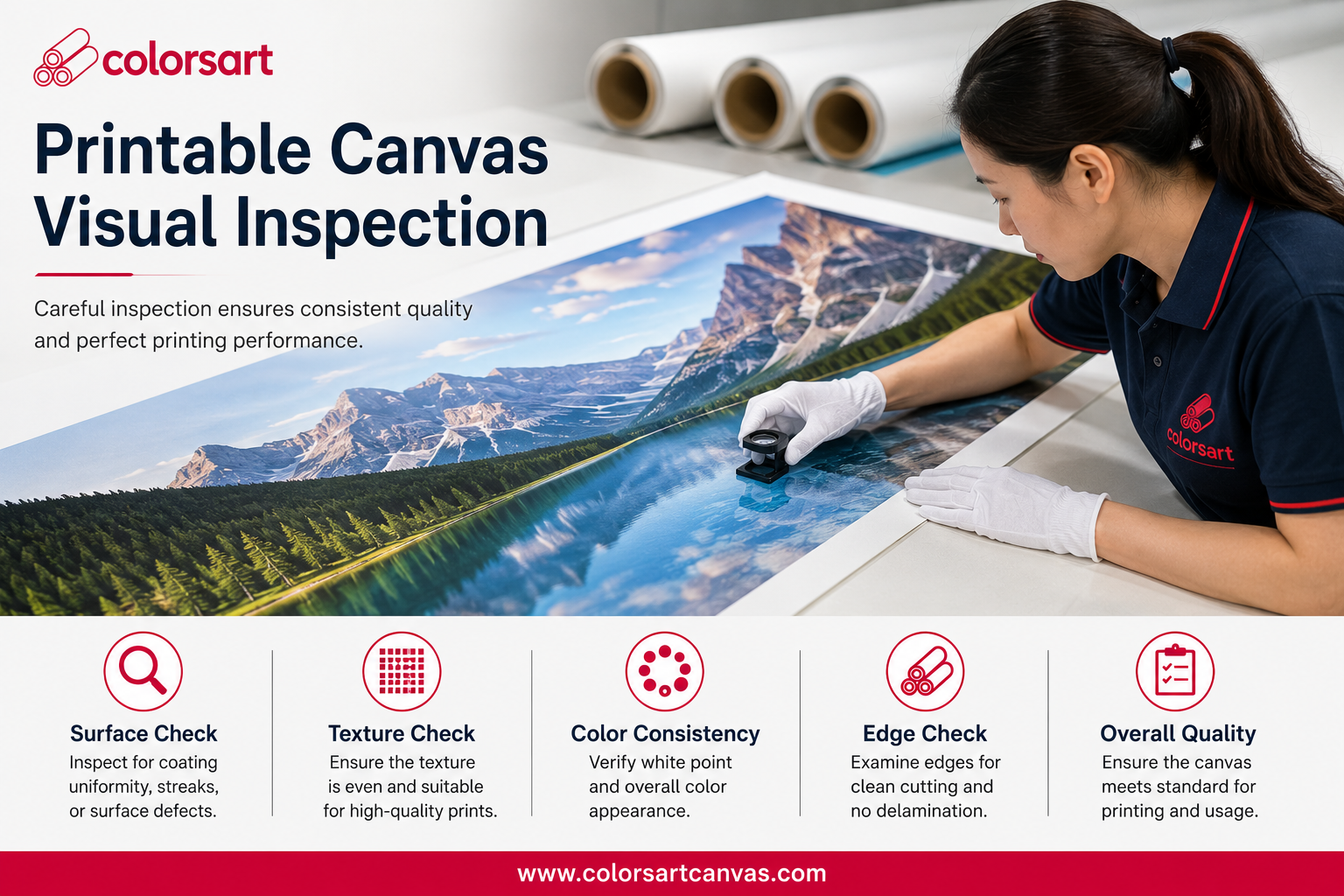
Before printing, inspect every sample carefully under sufficient lighting. Check for wrinkles, coating streaks, scratches, contamination, weaving defects and edge damage. Rolls should also be examined for winding quality, straight edges and correct labeling.
Figure 17. Visual inspection identifies defects before production testing begins.
2. Printing Performance Evaluation
Samples should always be tested using the same printer, RIP software, ICC profile and ink system used during normal production. Test files should include photographs, gradients, fine text, solid colors and grayscale images to evaluate overall print quality.
| Evaluation Item |
Inspection Method |
Expected Performance |
| Color Accuracy |
Reference color chart |
Natural and consistent colors |
| Black Density |
Solid black image |
Deep and uniform blacks |
| Image Sharpness |
High-resolution photograph |
Clear details without feathering |
| Gradient |
Continuous tone image |
Smooth transitions without banding |
| Drying Speed |
Touch test after printing |
Fast, even drying |
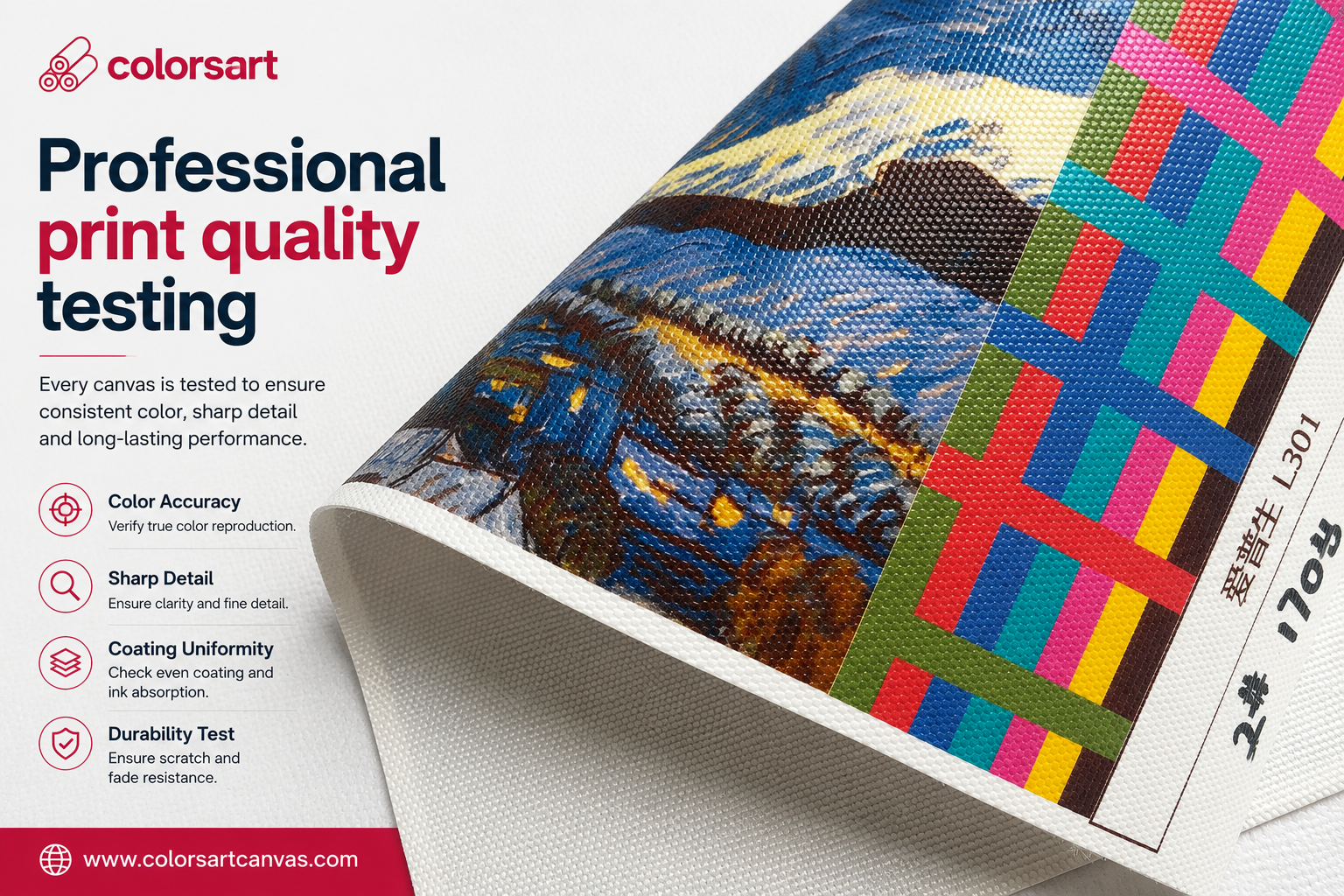
Figure 18. Standardized print testing helps compare different canvas products objectively.
3. Scratch Resistance
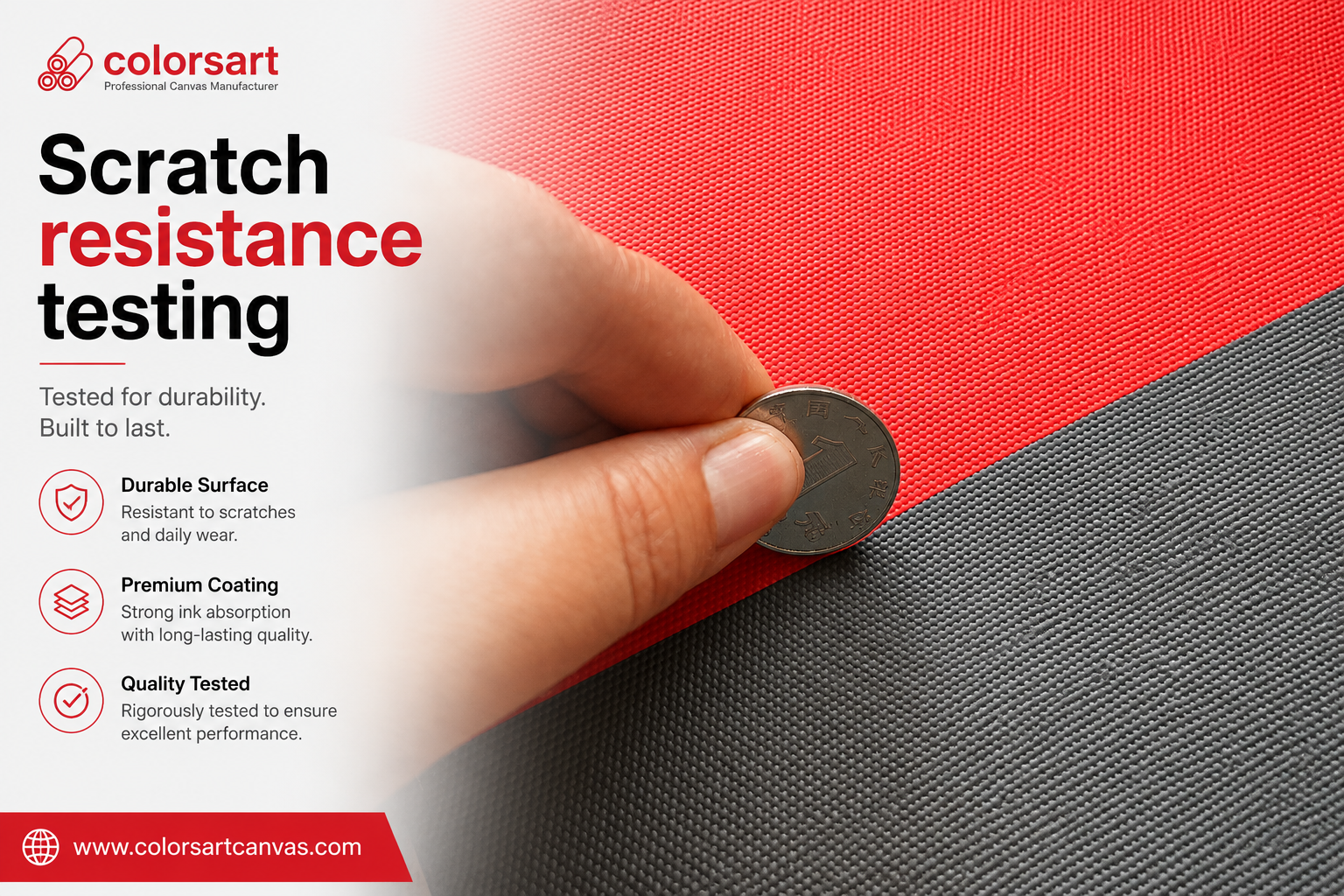
During production, printed canvas is repeatedly handled during trimming, stretching, framing and packaging. The printed surface should therefore withstand light abrasion without noticeable image damage. Manufacturers often perform simple rubbing tests or laboratory abrasion testing depending on customer requirements.
Figure 19. Surface durability testing reduces the risk of damage during production and transportation.
4. Gallery Wrapping Test
For wall-art manufacturers, stretching performance is one of the most important evaluation criteria. After printing has fully dried, the canvas should be stretched over the same wooden stretcher bars used during normal production. Inspect every corner carefully for coating cracks, whitening, image distortion and edge damage.
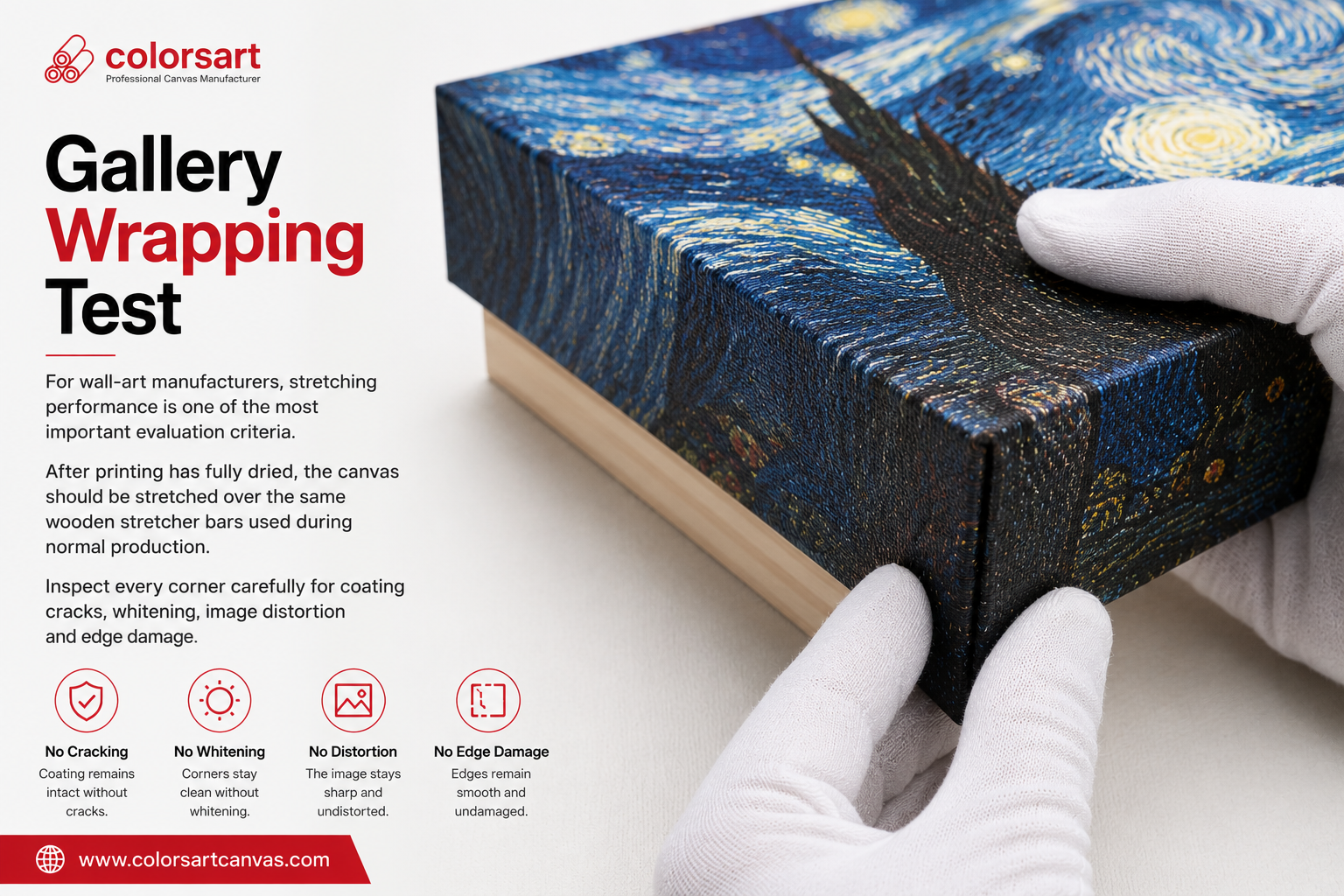 Figure 20. A high-quality coating should remain flexible during gallery wrapping.
 5. Export Packaging Evaluation
High-quality packaging protects printable canvas from moisture, compression and physical damage during international transportation. Buyers should inspect paper core strength, protective wrapping, carton quality, pallet stability and product labeling before approving commercial shipments.
Testing should reproduce your actual production process. Only after successful evaluation should a supplier proceed to pilot production or full-container orders.
Chapter 5 – Common Mistakes Buyers Make When Sourcing Inkjet Canvas
Even experienced importers occasionally encounter sourcing problems because they focus on price instead of evaluating the complete manufacturing process. Understanding the following common mistakes can significantly reduce purchasing risks, improve product consistency and establish stronger long-term supplier relationships.
Mistake 1 – Choosing Suppliers Based Only on Price
One of the most common purchasing mistakes is selecting the supplier with the lowest quotation. Although a lower price may reduce the initial purchasing cost, inconsistent coating quality, unstable raw materials and poor process control often result in higher production costs later.
Production interruptions, excessive material waste, customer complaints and product returns frequently cost far more than the savings achieved through a lower quotation. Professional buyers therefore evaluate the total cost of ownership instead of comparing only unit prices.
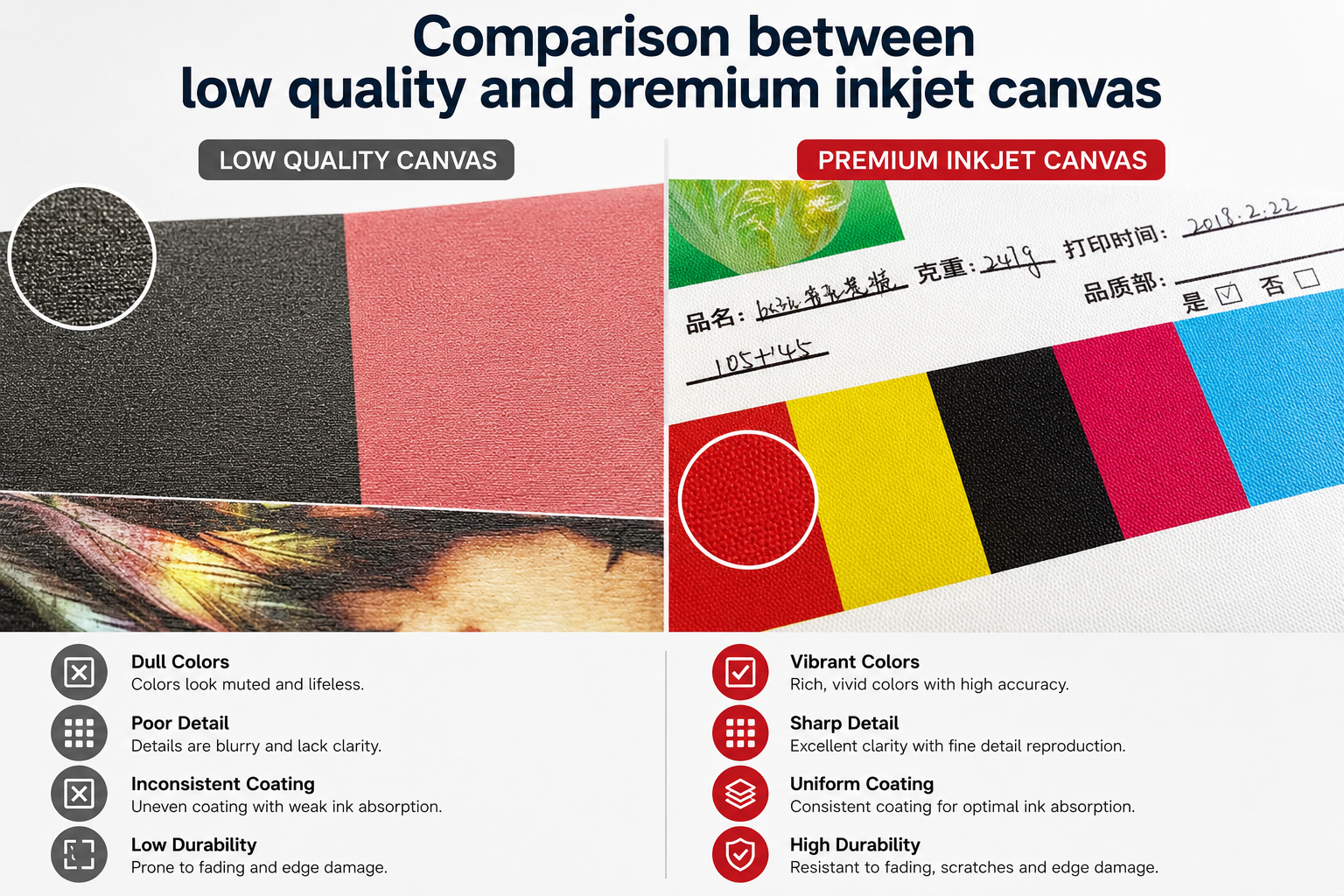 Figure 22. Lower purchasing prices often result in inconsistent production quality and increased long-term costs.
 Mistake 2 – Ignoring Production Consistency
Approving one sample does not guarantee consistent quality across future production batches. Professional manufacturers maintain standardized production procedures, batch traceability and documented quality records to minimize variation over time.
Ask potential suppliers how they control formulation changes, production records and batch identification. Consistency is one of the most valuable characteristics of a reliable manufacturing partner.
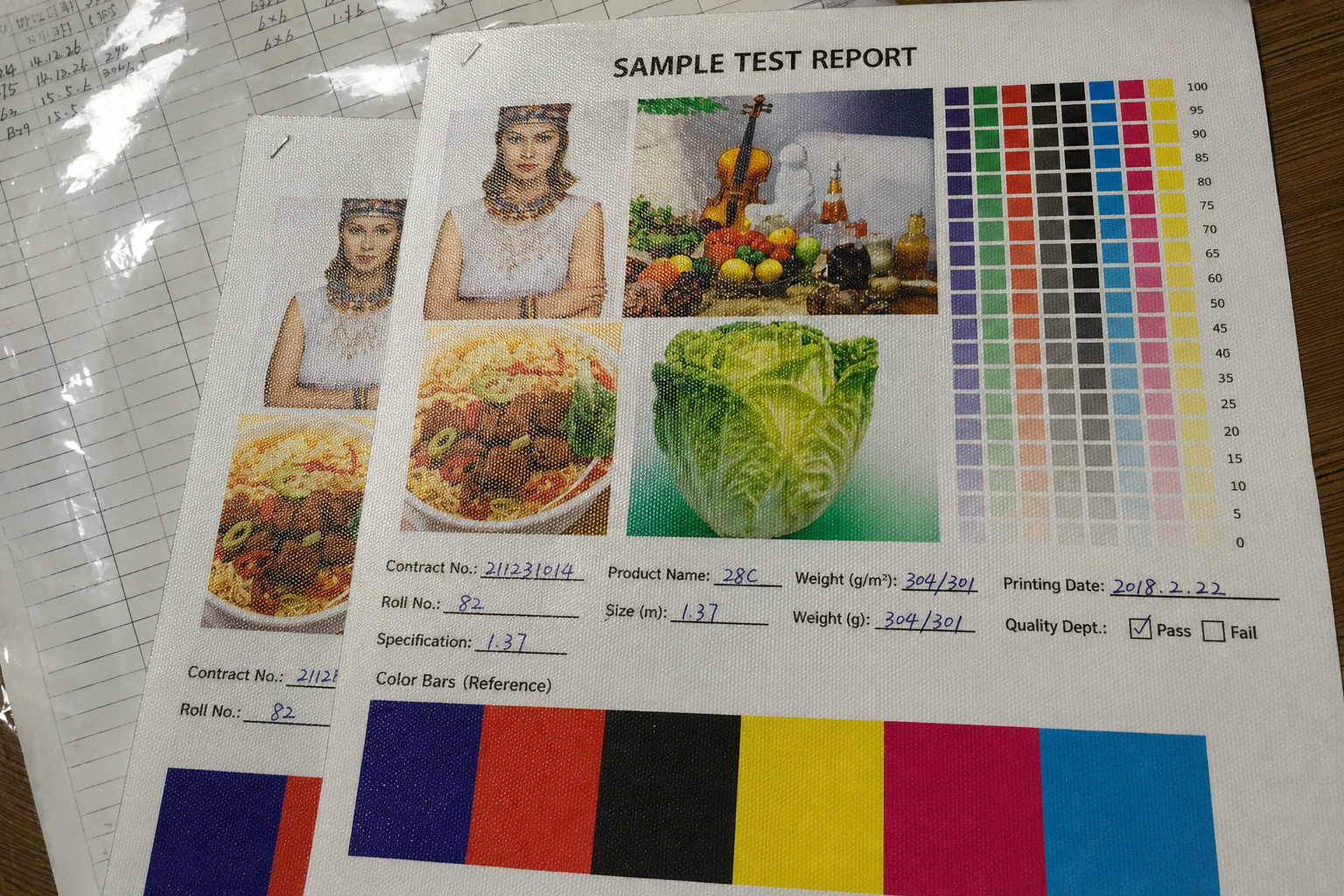 Figure 23. Consistent manufacturing ensures repeatable print quality across multiple production batches.
 Mistake 3 – Skipping Pilot Orders
Some importers move directly from sample approval to full-container orders in an attempt to save time. This approach significantly increases purchasing risk. A pilot order allows buyers to verify product consistency, export packaging, documentation accuracy and logistics performance before committing to large-volume purchases.
Pilot production also provides an opportunity to identify potential improvements before mass manufacturing begins, reducing the likelihood of expensive quality issues later.
Mistake 4 – Ignoring Gallery Wrapping Performance
Excellent print quality alone is not sufficient for wall-art production. Printable canvas must also remain flexible during stretching. Poor coating formulations may crack around frame corners, particularly after heavy ink coverage or during seasonal climate changes.
Figure 24. Evaluate stretching performance before approving commercial production.
Mistake 5 – Overlooking Packaging Quality
International transportation exposes printable canvas to vibration, humidity fluctuations and stacking pressure. Weak cartons, damaged paper cores or inadequate moisture protection can compromise product quality before the shipment even reaches the customer's warehouse.
Professional manufacturers consider packaging an essential part of the finished product rather than an afterthought.
Professional Buyer Checklist
- ✔ Verify manufacturing experience.
- ✔ Review quality management procedures.
- ✔ Inspect coating technology.
- ✔ Confirm raw material consistency.
- ✔ Test actual printing performance.
- ✔ Evaluate gallery wrapping flexibility.
- ✔ Verify export packaging quality.
- ✔ Place a pilot order before mass production.
- ✔ Confirm OEM and private-label capability.
- ✔ Establish long-term technical communication.
Chapter 6 – Why Global Buyers Source Inkjet Canvas from China
China has developed one of the world's most comprehensive manufacturing ecosystems for printable canvas. From textile weaving and coating technology to slitting, packaging and international logistics, buyers benefit from an integrated supply chain capable of supporting both standard and customized production.
Complete Industrial Supply Chain
Unlike many regions where production is divided among multiple subcontractors, many Chinese manufacturers integrate weaving, coating, inspection, rewinding and packaging within one coordinated production system. This integrated structure improves manufacturing efficiency and allows better quality control.
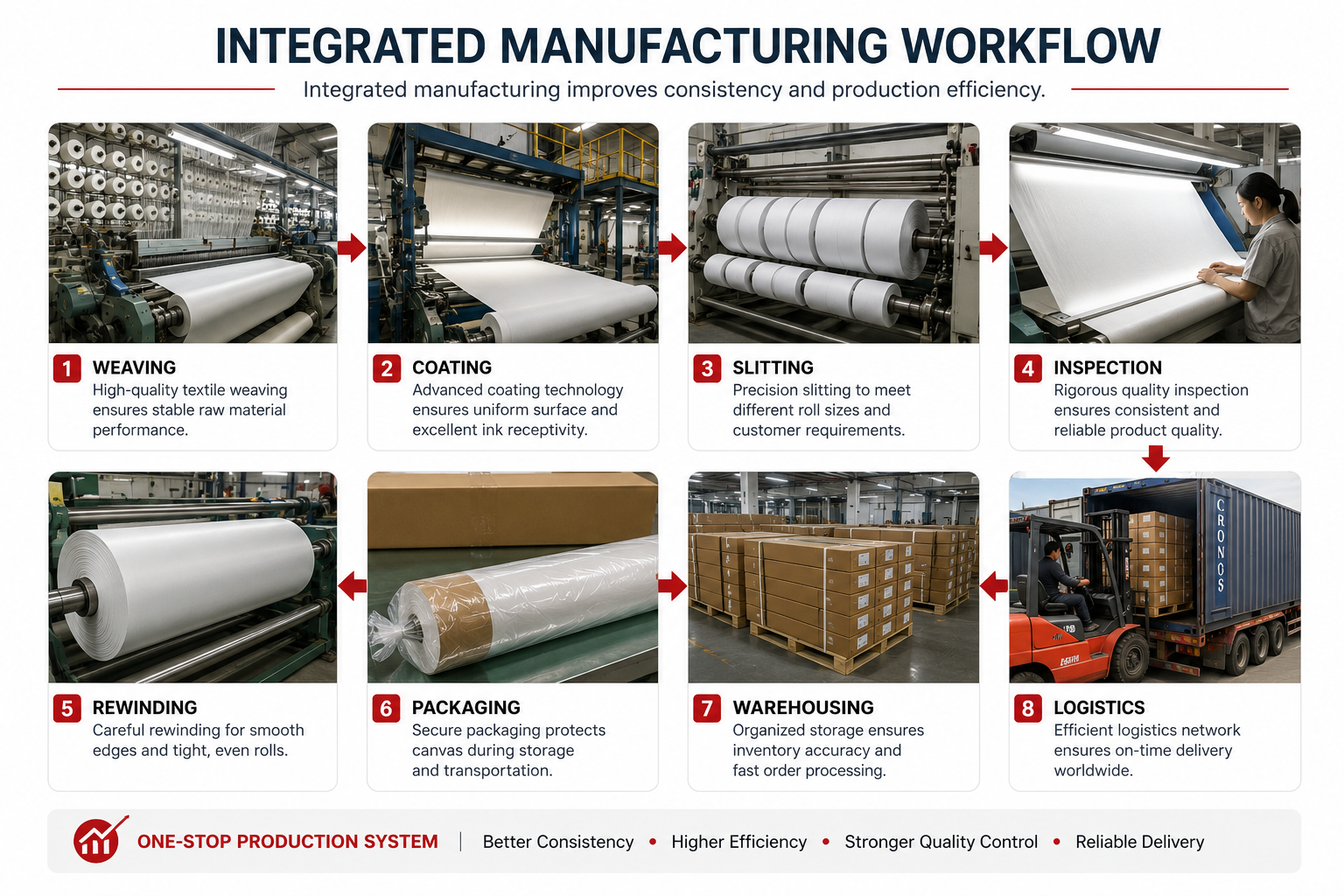 Figure 26. Integrated manufacturing improves consistency and production efficiency.
 Competitive Manufacturing Efficiency
Continuous investment in automation, coating technology and quality management enables manufacturers to produce high-quality printable canvas while maintaining competitive production costs. Efficient manufacturing also contributes to shorter lead times and more stable delivery schedules.
Broad Product Portfolio
Professional manufacturers typically supply polyester canvas, cotton canvas, poly-cotton canvas and coating systems compatible with aqueous, eco-solvent, latex and UV printing technologies. Buyers can therefore consolidate multiple purchasing requirements through a single qualified supplier.
| Capability |
Buyer Benefits |
| Integrated Production |
Better quality control |
| OEM Services |
Private-label branding |
| Export Experience |
Reliable international logistics |
| Multiple Product Lines |
One-stop sourcing |
| Technical Support |
Reduced production risk |
Figure 27. Organized container loading supports safe and efficient international delivery.
Continuous Innovation
Leading manufacturers continuously improve coating formulations, automate production processes and strengthen quality management systems to meet evolving market requirements. Buyers increasingly value suppliers that invest in long-term product development rather than competing only on price.
The most successful supplier relationships are built on consistent quality, transparent communication and continuous improvement—not simply the lowest quotation.
Chapter 7 – Why Choose Colors Art
Choosing the right manufacturing partner is about more than selecting a product. It involves finding a supplier capable of supporting your business through consistent quality, dependable delivery, technical expertise and responsive customer service. At Colors Art, we focus on building long-term partnerships with distributors, print providers, wall-art manufacturers and OEM brands worldwide.
Professional Product Portfolio
Our product range includes polyester inkjet canvas, cotton canvas, poly-cotton canvas, multiple coating systems, wooden stretcher bars and gallery wrapped canvas solutions. This enables customers to source complementary products through one experienced manufacturing partner.
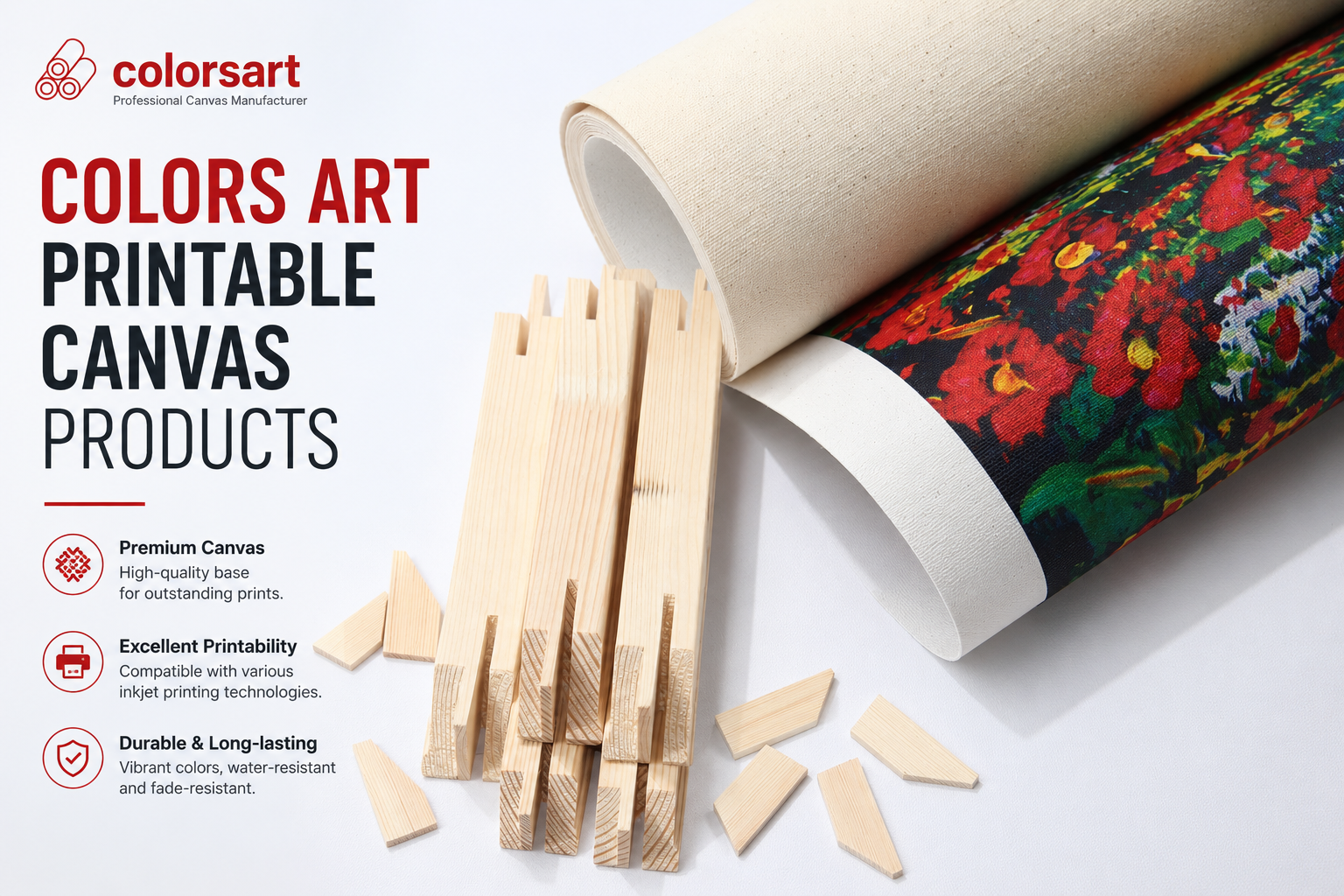 Figure 28. Comprehensive product solutions for professional wall-art manufacturing.
 Quality-Focused Manufacturing
Every production stage is carefully monitored to maintain coating consistency, stable dimensions and dependable printing performance. From raw material inspection through final packaging, quality management remains an integral part of our manufacturing philosophy.
OEM & Private Label Support
We assist customers with customized packaging, private-label branding, roll specifications and export documentation. Our goal is to provide flexible manufacturing solutions that support the long-term growth of your business.
Figure 29. Customized OEM solutions help strengthen customer brands in international markets.
Global Customer Support
Whether you are sourcing printable canvas for commercial printing, gallery wrapped wall art or wholesale distribution, our team is available to provide product recommendations, sample support and technical assistance throughout the purchasing process.
Our objective is not simply to manufacture
printable canvas, but to become a dependable long-term partner supporting your continued business growth.
Frequently Asked Questions
1. What is the best material for inkjet canvas?
There is no single "best" material for every application. Polyester canvas offers excellent dimensional stability and production efficiency, cotton canvas provides a premium natural texture for fine-art printing, while poly-cotton combines the advantages of both materials and is one of the most popular choices for gallery wrapped canvas.
2. Which printing technologies are compatible with inkjet canvas?
Professional printable canvas can be manufactured for water-based pigment inks, dye inks, eco-solvent inks, latex inks and UV-curable inks. Always inform your supplier about your printer model before placing an order so the correct coating system can be recommended.
3. How should I evaluate a new supplier?
A professional supplier should be evaluated based on manufacturing experience, coating technology, quality management systems, production consistency, OEM capability, export experience and technical support rather than price alone.
4. Should I request samples before placing a bulk order?
Absolutely. Samples should always be tested under your actual production conditions, including printing, drying, stretching and packaging, before approving commercial production.
5. Can printable canvas crack during gallery wrapping?
High-quality printable canvas should remain flexible during stretching. However, low-quality coating formulations may crack around frame corners, particularly after heavy ink coverage. Performing gallery wrap testing before approving mass production is strongly recommended.
6. Do you provide OEM and private-label services?
Yes. Professional manufacturers should support customized labels, branded cartons, roll dimensions, barcode labels, pallet markings and private-label packaging according to customer requirements.
7. How should printable canvas be stored?
Store printable canvas in a clean, dry environment away from direct sunlight and excessive humidity. Keep rolls in their original protective packaging until they are ready for production to maintain optimal printing performance.
8. What information should I provide when requesting a quotation?
Providing details such as printer model, ink type, roll width, roll length, surface finish, order quantity, packaging requirements and destination country enables suppliers to recommend the most suitable product and prepare an accurate quotation.
About the Author
This article was prepared by the Colors Art Technical Team, a professional manufacturer specializing in inkjet printable canvas, artist canvas, stretcher bars and OEM wall art materials.
With over 15 years of manufacturing experience, our engineering team works closely with printing studios, distributors, wholesalers and OEM brands across Europe, North America and Australia.
Last Updated: July 2026