Blog
Artist Linen Canvas: How to Choose the Right Linen Surface for Fine Art and Canvas Production
Artist linen canvas is widely used for premium oil paintings, acrylic work, fine-art reproduction, gallery collections, and high-end wall décor. Made from flax fibres, linen offers a natural woven character, a strong fabric structure, and a refined surface that many artists and art brands prefer over standard cotton canvas.
However, choosing the right linen canvas is not only about selecting “100% linen.” The weave, weight, primer system, absorbency, roll format, and stretching method all affect how the canvas performs during production and how the final artwork looks.
For artists, studios, canvas brands, art material distributors, and wall-art manufacturers, this guide explains how to select the right artist linen canvas for oil painting, acrylic painting, custom stretching, and professional production.
Need help selecting a linen canvas?
Share your preferred paint or ink system, required surface finish, canvas weight, roll width, and target application. Colors Art can recommend suitable linen canvas options and arrange sample material for evaluation.
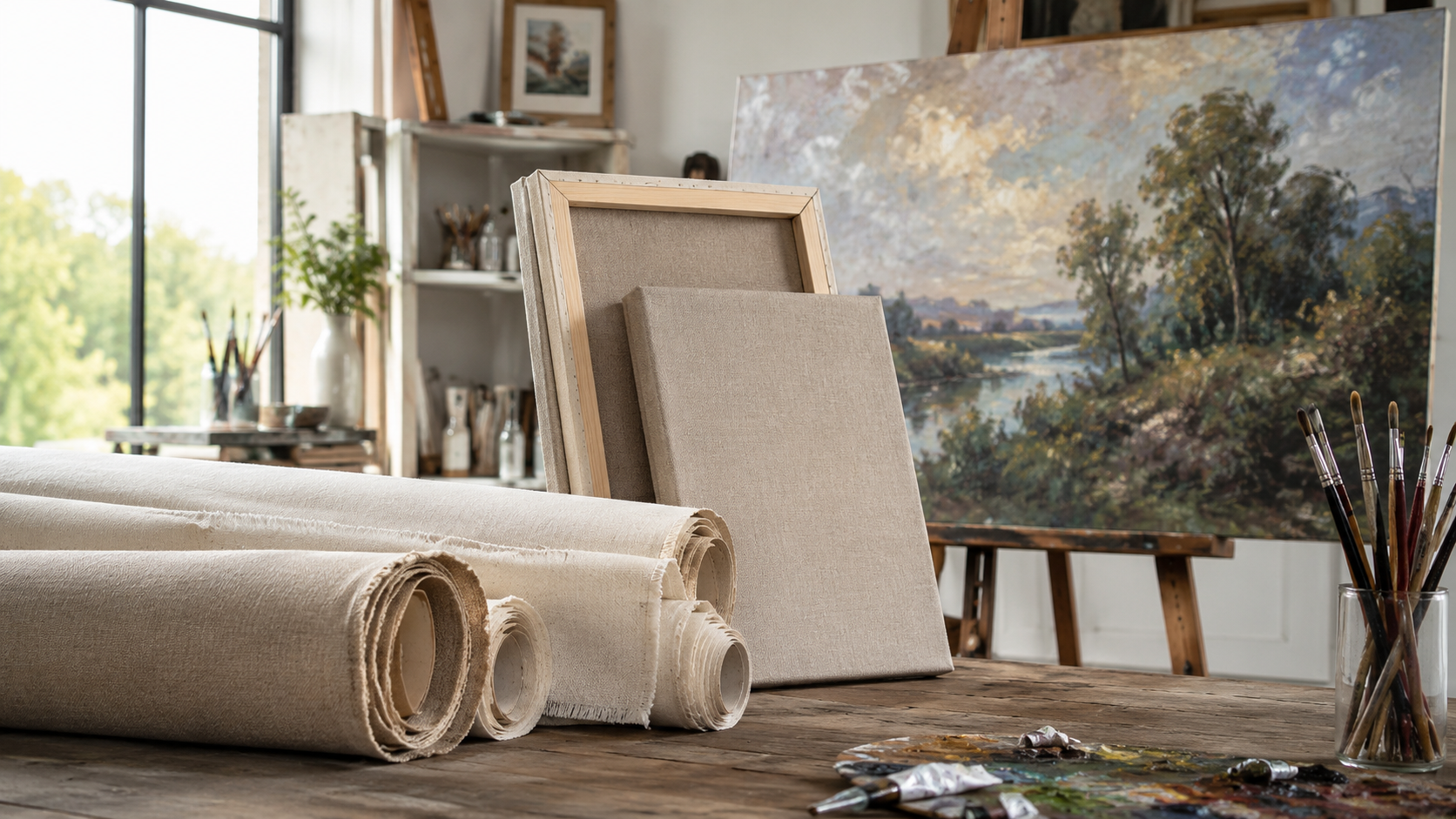 Caption: Artist linen canvas is available in rolls, stretched formats, and different priming systems for fine-art applications.
What Is Artist Linen Canvas?
Artist linen canvas is a painting surface made from flax fibres. Linen has been used in fine art for centuries because of its distinctive weave, natural strength, and premium appearance.
Unlike mass-market cotton canvas, linen often has a more organic texture. The weave may remain subtly visible beneath paint layers, giving the finished piece a more traditional and expressive character.
Professional linen canvas is commonly supplied in several formats:
-
Raw linen canvas
-
Acrylic-primed linen canvas
-
Oil-primed linen canvas
-
Stretched linen canvas
-
Linen canvas panels
-
Fine, medium, and rough weave linen
The best choice depends on the painting medium, desired texture, canvas size, surface absorbency, and final market position.
For example, fine oil-primed linen is often selected for detailed portraits and realistic oil painting. Medium-weave acrylic-primed linen is more versatile for studios and general fine-art work. Rough linen canvas can suit large landscapes, expressive painting, and textured palette-knife techniques.
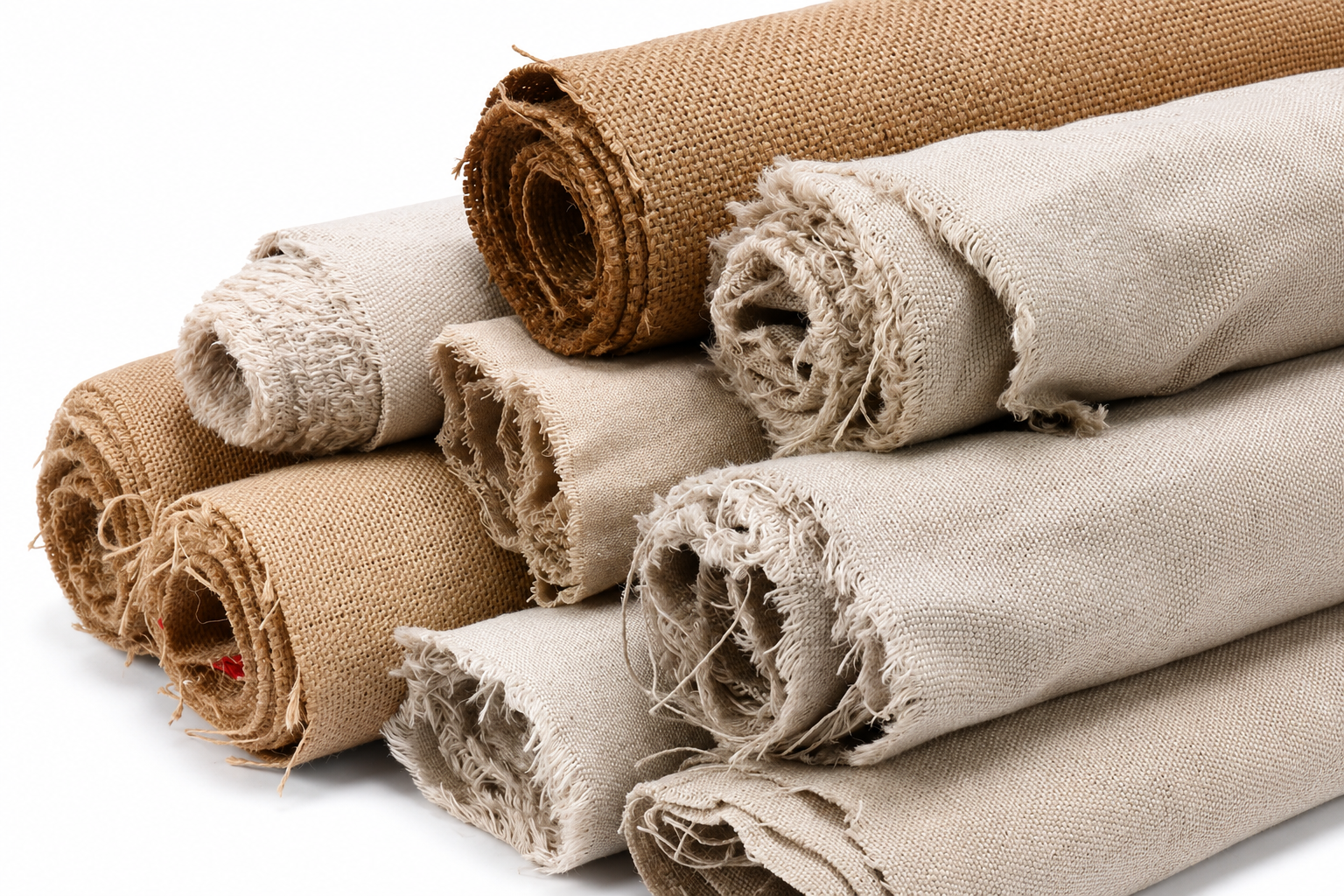
Caption: The natural weave of linen gives artwork a subtle texture and a premium visual character.
Why Choose Linen Canvas for Fine Art?
Linen canvas is not necessarily the right choice for every project. Cotton canvas remains practical, affordable, and widely used. However, linen offers several advantages for artists and buyers looking for a more premium painting surface.
Natural Texture and Surface Character
Linen has a distinctive woven appearance that can add depth to a painting. Depending on the weave, the texture can be almost smooth, lightly visible, or intentionally pronounced.
This makes linen especially popular for artists who want the surface itself to contribute to the final visual effect.
Strong, Stable Fibre Structure
Flax fibres are known for their tensile strength. When properly stretched, sized, and primed, linen can provide a stable painting ground for professional artwork.
Because linen is less elastic than cotton, correct tensioning and suitable stretcher-bar support are important, especially for large-format work. A well-built linen canvas should combine the right fabric weight with proper frame construction.
Refined Brush and Paint Response
The primer applied to linen has a major effect on brush response. Oil-primed linen generally creates a smoother, less absorbent surface. Acrylic-primed linen usually offers more tooth and a slightly more absorbent feel.
This allows artists to choose a surface that matches their technique rather than simply selecting linen based on price or fabric weight.
Premium Positioning for Art Brands and Retailers
For art brands, galleries, studios, and wall décor suppliers, linen canvas can help support a higher-value product range. It is often associated with professional art, traditional oil painting, limited-edition collections, and premium framed artwork.
Linen Canvas vs Cotton Canvas: What Is the Difference?
Both linen and cotton can be excellent painting surfaces. The decision should be based on the application, price position, desired texture, and production requirements.
| Feature | Linen Canvas | Cotton Canvas |
|---|---|---|
| Fibre Source | Flax fibres | Cotton fibres |
| Surface Appearance | Natural, organic, refined | More uniform and consistent |
| Texture | Available in fine, medium, and rough weaves | Usually smoother or more regular |
| Typical Price Level | Premium | More economical |
| Painting Feel | Distinctive, often firmer and more traditional | Familiar, versatile, and widely used |
| Best Applications | Fine art, oil painting, premium wall décor | General painting, student work, studio use |
| Large-Format Use | Suitable with proper fabric weight and frame support | Suitable, depending on cotton quality and tension |
| Product Positioning | Gallery, professional, high-end retail | Entry-level to professional, depending on grade |
For buyers, the best strategy is often to offer both options. Cotton canvas can serve mainstream and price-sensitive applications, while artist linen canvas can support a premium collection for professional artists and higher-end customers.
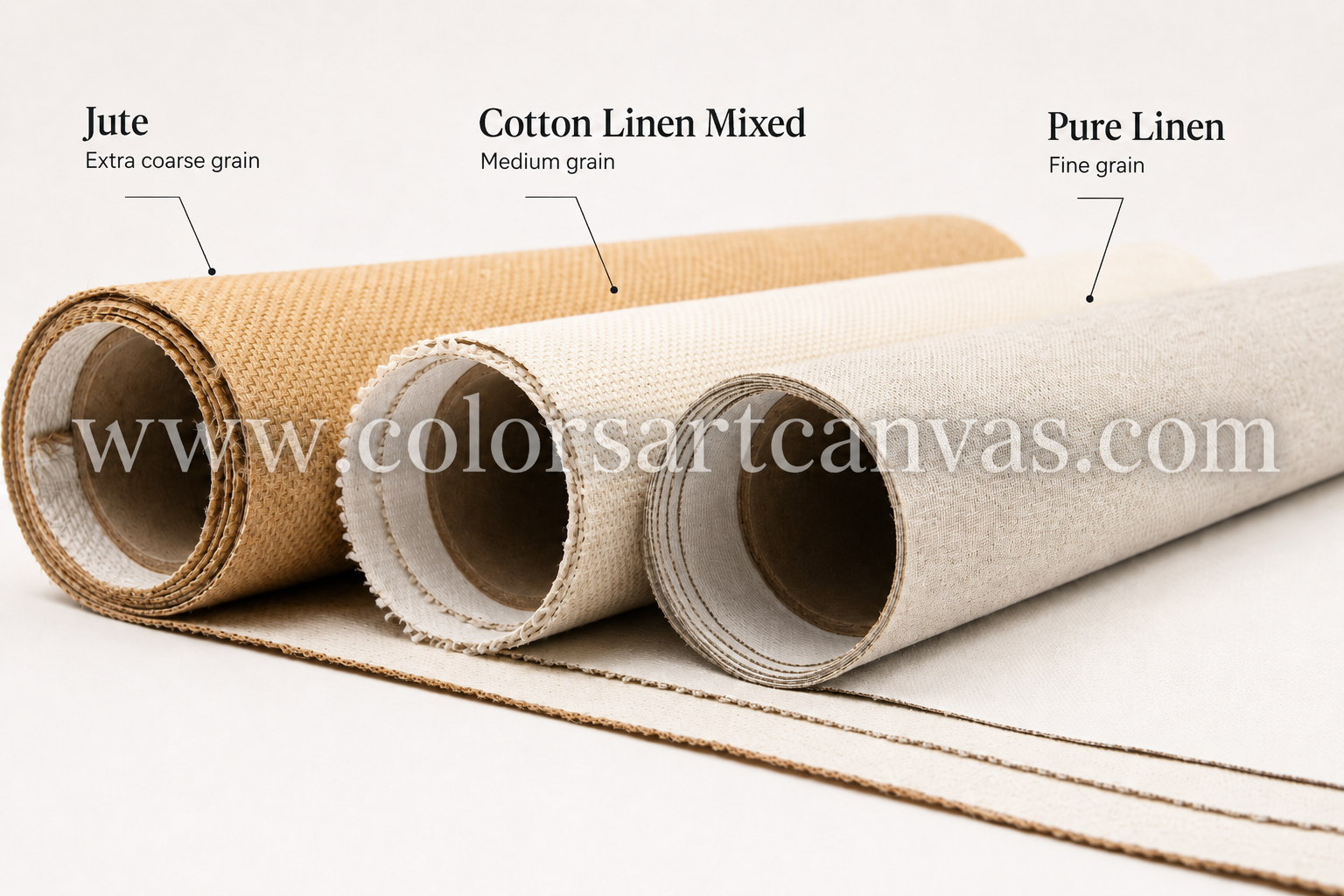
Caption: Linen and cotton canvas differ in weave character, surface feel, price position, and painting performance.
Fine, Medium, and Rough Linen Canvas Weaves
The weave is one of the most important specifications when purchasing artist linen canvas. It affects brush control, paint coverage, visible texture, and the final style of the artwork.
Fine-Weave Linen Canvas
Fine-weave linen has a tighter and smoother surface. It is well suited to detailed brushwork and paintings where the artist wants control over edges, glazing, and fine marks.
Common uses include:
-
Portrait painting
-
Botanical art
-
Still-life painting
-
Realistic oil painting
-
Detailed illustration
-
Fine brushwork and glazing
Fine linen canvas can be an excellent choice for premium portrait and figurative collections.
Medium-Weave Linen Canvas
Medium-weave linen provides a balance between surface texture and versatility. The weave is visible enough to give the painting character, while still allowing controlled brushwork.
Common uses include:
-
Landscape painting
-
Contemporary art
-
Figurative work
-
General fine-art painting
-
Oil and acrylic painting
-
Professional studio work
For many art brands and distributors, medium-weave linen is the most broadly useful option because it works across several painting styles.
Rough-Weave Linen Canvas
Rough linen has a more open, visible, and tactile surface. It is ideal for artists who want a strong canvas texture to remain part of the finished image.
Common uses include:
-
Large-format landscapes
-
Abstract painting
-
Palette-knife work
-
Impasto techniques
-
Decorative wall art
-
Expressive oil painting
Rough weave linen is often selected for bold, textural artwork where the canvas surface should remain visually present.
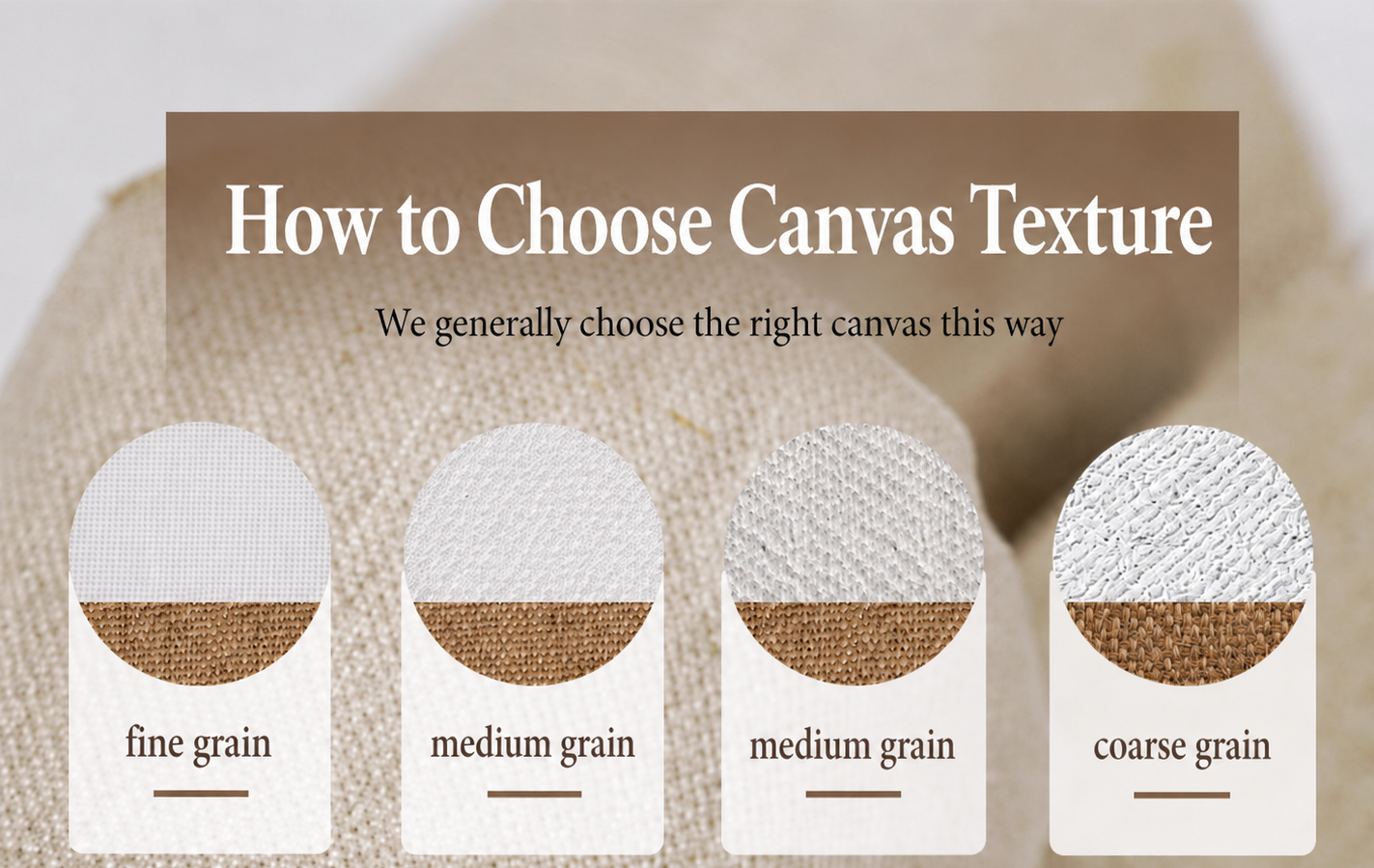
Caption: Fine, medium, and rough linen weaves create different levels of texture and brush response.
Oil-Primed vs Acrylic-Primed Linen Canvas
The fabric is only one part of the canvas system. The primer determines how paint sits on the surface, how much liquid is absorbed, and how the linen is protected.
Oil-Primed Linen Canvas
Oil-primed linen canvas is often preferred for traditional oil painting. It usually creates a smooth, firm, and less absorbent surface.
Because paint remains closer to the surface, colours can appear rich and brushstrokes may glide more easily. This makes oil-primed linen popular for artists using layered painting, controlled brushwork, glazing, and portrait techniques.
Oil-primed linen is commonly selected for:
-
Traditional oil painting
-
Portraits
-
Fine detail work
-
Layered glazing
-
Gallery-quality artwork
-
Premium oil-painting collections
Oil paint should not be applied directly to untreated linen. A proper sizing and priming system is important to protect the fibres and create a durable painting surface.
Acrylic-Primed Linen Canvas
Acrylic-primed linen canvas is often more flexible and more absorbent than oil-primed linen. It is widely used for acrylic painting and can also be suitable for oil painting when the primer system is designed for that use.
Acrylic-primed linen is commonly selected for:
-
Acrylic painting
-
Oil painting
-
Mixed media
-
Contemporary painting
-
Studio practice
-
Artists who prefer more surface tooth
For many commercial canvas ranges, acrylic-primed linen offers a practical balance between performance, versatility, and production efficiency.
Raw Linen Canvas
Raw linen has a warm, natural appearance and is sometimes used in contemporary art, textile-based work, and minimalist painting.
However, raw linen is not automatically ready for direct oil painting. Untreated fibres can absorb oil unevenly and may be affected over time. For most professional oil-painting applications, raw linen should be properly sized and primed before use.
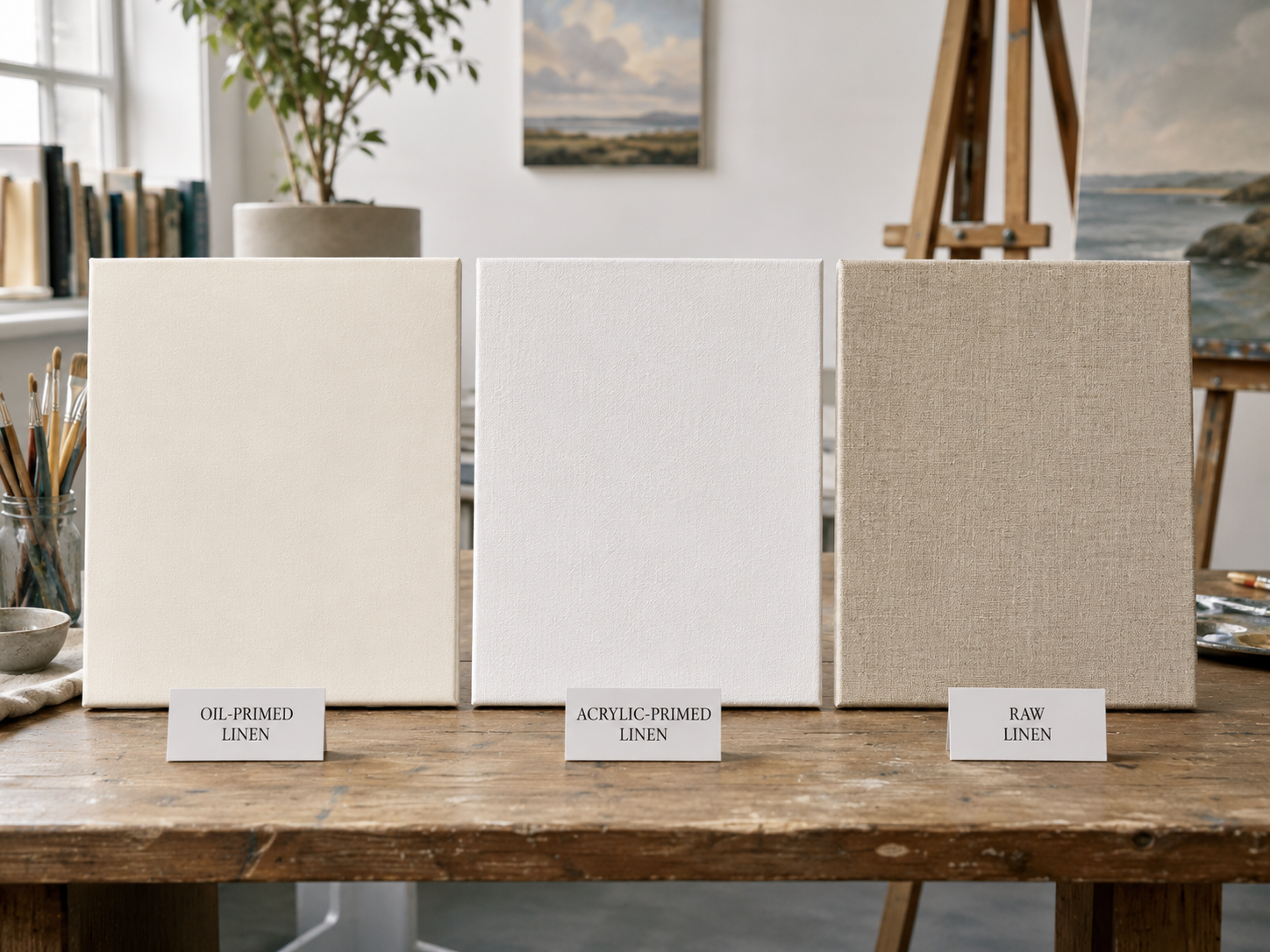
Caption: Primer type changes the absorbency, brush response, colour appearance, and suitable painting applications of linen canvas.
How Linen Canvas Weight Affects Stretching and Stability
Linen canvas weight is usually measured in GSM, or grams per square metre. While a higher GSM may indicate a heavier fabric, weight alone does not define quality.
A well-performing artist linen canvas should be evaluated by several factors:
-
Fibre quality
-
Weave consistency
-
Fabric weight
-
Surface preparation
-
Primer quality
-
Stretching method
-
Stretcher-bar structure
-
Final canvas size
Lightweight Linen
Lightweight linen can be suitable for smaller paintings, studies, and applications where a softer or more delicate surface is preferred.
It may be easier to stretch, but larger formats often require careful tension control and suitable frame support.
Medium-Weight Linen
Medium-weight linen is a versatile choice for general fine-art painting. It provides a practical balance between stability, flexibility, and ease of stretching.
This category often works well for portrait painting, landscapes, and regular studio production.
Heavyweight Linen
Heavy linen is commonly chosen for larger paintings, textured work, and applications where a more substantial surface is needed.
For large-format stretched linen canvas, the stretcher-bar profile should be strong enough to support the fabric. Cross braces may also be needed to maintain shape and tension over time.
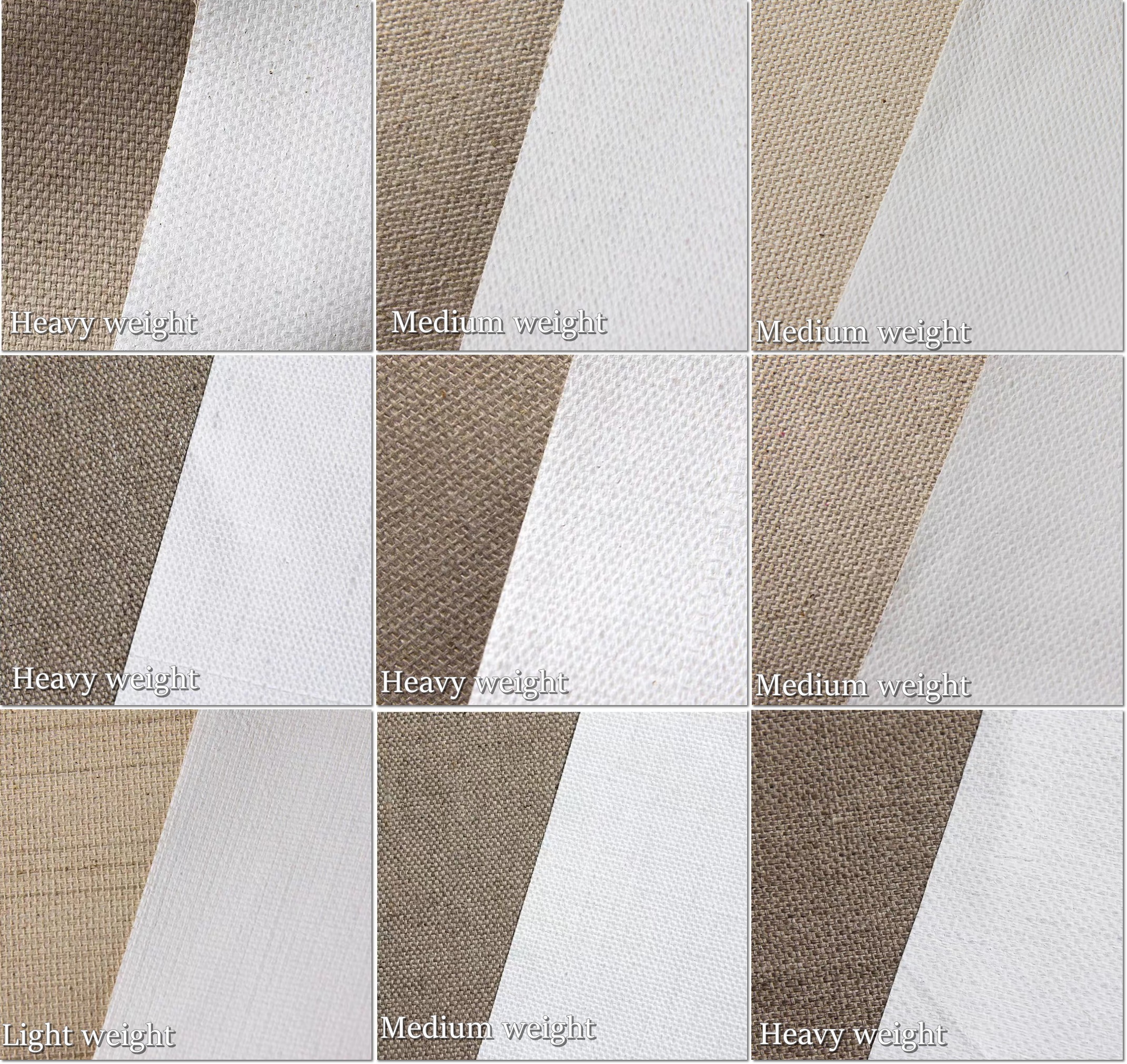
Caption: Canvas weight, weave, primer, and stretcher-bar structure should be selected together for stable performance.
Linen Canvas Rolls vs Stretched Linen Canvas
The right format depends on whether the buyer needs flexibility for custom production or a ready-to-paint product.
Linen Canvas Rolls
Linen canvas rolls are suitable for professional artists, distributors, canvas manufacturers, print studios, and stretcher-frame workshops.
They allow users to cut custom sizes, choose their own frame profiles, and produce made-to-order canvases.
Linen canvas rolls are commonly used by:
-
Art material distributors
-
Professional artists
-
Canvas manufacturers
-
Fine-art studios
-
Framing companies
-
Wall décor producers
-
Custom stretcher-frame workshops
When sourcing linen canvas rolls, buyers should confirm roll width, roll length, core size, priming type, fabric weight, and recommended application.
Stretched Linen Canvas
Stretched linen canvas is ready for painting and provides a more convenient retail or studio-ready product.
The quality of the stretcher frame matters as much as the fabric. Even premium linen can perform poorly if the frame is weak, warped, or incorrectly assembled.
A reliable stretched linen canvas should have:
-
Straight, dry wooden stretcher bars
-
Even fabric tension
-
Clean corner construction
-
Suitable frame depth
-
Reinforced corners where needed
-
Cross braces for larger formats
-
Uniform priming across the full surface
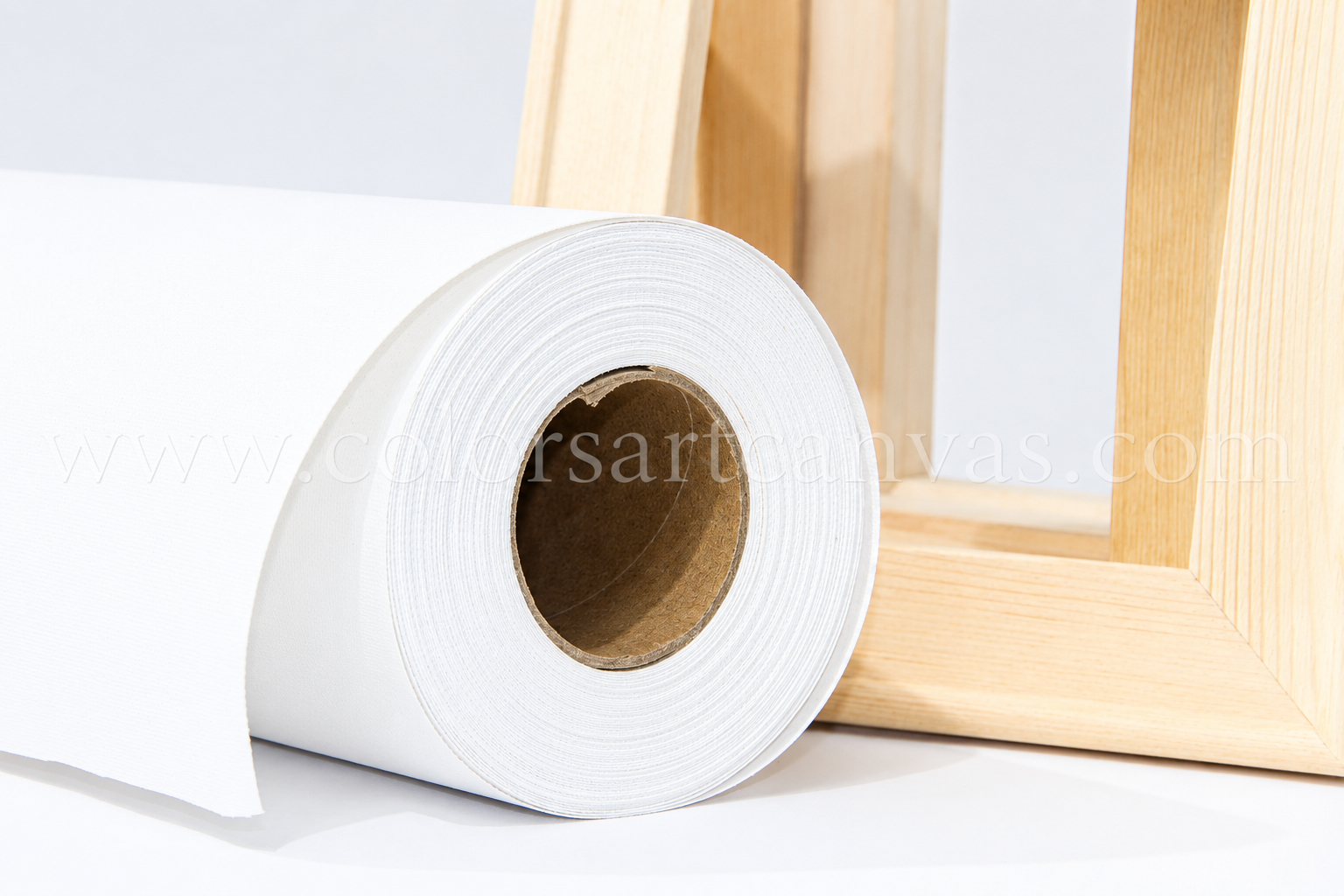
Caption: Linen canvas rolls provide flexibility for custom production, while stretched linen canvas offers a ready-to-paint solution.
What Should Buyers Ask a Linen Canvas Supplier?
For distributors, art brands, studios, and manufacturers, selecting a linen canvas supplier should involve more than comparing price per metre.
A reliable supplier should be able to explain the material construction clearly and provide samples for actual testing.
Before placing an order, ask for the following information:
| Specification | Why It Matters |
|---|---|
| Fibre Composition | Confirms whether the material is 100% linen or a linen blend |
| Fabric Weight / GSM | Affects handling, stretching, and large-format stability |
| Weave Type | Determines visible texture and painting response |
| Primer Type | Helps match the material to oil, acrylic, or mixed-media use |
| Surface Finish | Important for brush feel, print appearance, and product positioning |
| Roll Width and Length | Needed for production planning and cutting efficiency |
| Core Size | Important for roll storage and machine compatibility |
| Recommended Application | Helps match the material to the intended paint or print system |
| MOQ | Affects purchasing decisions and inventory planning |
| Sample Availability | Allows technical and visual evaluation before production orders |
| Lead Time | Important for seasonal production and supply planning |
| Packing Method | Helps protect material quality during international transport |
Request a Linen Canvas Sample Pack
For a more accurate recommendation, provide your target application, preferred weave, desired primer system, required roll width, and expected order volume. A focused sample selection is more useful than a large general catalogue.
How to Choose the Right Artist Linen Canvas
Use these four questions to narrow down the right material.
1. What Painting Medium or Production Process Will Be Used?
For traditional oil painting, oil-primed linen is often a strong choice.
For acrylic painting, acrylic-primed linen is usually more practical.
For mixed media or specialist applications, confirm that the primer and surface treatment are compatible with the intended materials.
2. How Much Texture Does the Final Artwork Need?
Choose fine weave for detailed work and smooth brush control.
Choose medium weave for a versatile fine-art surface.
Choose rough weave for expressive brushwork, impasto, and visible texture.
3. What Canvas Size Will Be Produced?
Smaller sizes can work with lighter linen materials.
Large-format canvas should be matched with the right GSM, stretcher-bar profile, and internal support structure.
4. Is the Product Positioned as Entry-Level, Professional, or Premium?
Cotton canvas may be suitable for value-focused or everyday ranges.
Professional linen canvas can support premium collections, gallery products, specialised artist materials, and higher-value wall-art programmes.

Caption: The right linen weave and primer can improve brush control, texture, and the final appearance of a painting.
Frequently Asked Questions About Artist Linen Canvas
Is linen canvas better than cotton canvas?
Linen canvas is often considered a premium painting surface because of its natural weave, refined texture, and strong fibre structure. However, cotton canvas can still be an excellent choice for many artists and commercial applications. The best option depends on the desired painting feel, target price, and final use.
Is linen canvas good for oil painting?
Yes. Linen is widely used for oil painting, especially when it is properly sized and oil-primed. It is commonly chosen for portraits, landscapes, glazing techniques, and professional studio work.
Can acrylic paint be used on linen canvas?
Yes. Acrylic paint can be used on properly acrylic-primed linen canvas. Buyers should always confirm that the primer system is designed for acrylic painting.
What is the best linen weave for portrait painting?
Fine-weave or medium-weave linen is often preferred for portrait painting. Fine weave is suitable for detailed realism, while medium weave gives a slightly more textured and natural surface.
What is the difference between oil-primed and acrylic-primed linen canvas?
Oil-primed linen is usually smoother and less absorbent. Acrylic-primed linen generally has more tooth and absorbency. The right choice depends on the paint medium and the artist’s preferred brush response.
Does linen canvas need to be primed?
For most oil-painting applications, yes. Raw linen should be properly sized and primed before oil paint is applied. Priming helps protect the linen fibres and creates a more stable painting surface.
Can I buy linen canvas in rolls?
Yes. Linen canvas rolls are widely used by artists, distributors, art brands, canvas manufacturers, and framing workshops. They allow custom cutting and stretching for different sizes and frame profiles.
Source Professional Artist Linen Canvas from Colors Art
The right artist linen canvas should match the painting method, desired surface texture, frame structure, and market position of the finished product.
A fine oil-primed linen may be ideal for detailed portrait work. Medium acrylic-primed linen may be better for versatile studio painting and professional art ranges. A rough heavyweight linen can create a distinctive surface for large landscapes, impasto, and expressive artwork.
Colors Art supplies canvas materials for art brands, distributors, studios, print businesses, and wall décor manufacturers. We can support linen canvas requirements based on fabric weight, weave, primer type, roll width, surface finish, and production application.
Contact our team to request technical specifications, discuss your required canvas construction, or arrange selected linen canvas samples for evaluation.
Contact Colors Art for Linen Canvas Samples and Specifications